What That Sound Coming From Your Garage Door Actually Means in Potomac
What a grinding, popping, or screeching garage door actually means in Potomac homes built 1938-2014, and when the noise is a $20 fix or a door you replace.
Read moreBlogPotomac, MD · 4 min read
Potomac homes built from 1938 to 2014 often have garage doors with little insulation, built before modern energy codes. Here's what that means for repairs.
Local detail
Potomac sits in a stretch of Montgomery County where the housing stock runs from 1938 up through 2014, with the median build year landing around 1970. That median matters: a door installed when your house went up in the 1960s or 70s almost never has foam core or a thermal break. It's a single layer of steel or wood, maybe with a thin vinyl backing, hung before anyone wrote an energy code that cared about garage doors. Across this part of the county, most of the 61 named communities do, from Cabin John three miles off to Darnestown eight miles out, sitting in that same main build-year band. If your house falls into that range, the door you're looking at was built to keep weather out, not heat in. Insulation wasn't a line item. It wasn't required, and builders didn't volunteer it. That's not a flaw in your door; it's just what doors were in 1970, and it's why so many of the service calls we get involve a panel that's original to the house.
The area
We don't have a flat number to hand you here - every uninsulated door we look at in Potomac is a different width, a different frame condition, a different amount of rot in the jamb wood that's been sitting for fifty-plus years. What we can tell you is the trade-off you're making. Median household income in this service area runs north of $105,000, which is enough that most owners here choose full replacement with an insulated steel or composite door rather than patch a decades-old single-layer panel. Of the roughly 104,445 owner-occupied houses across this service area, a large share were built before insulation standards existed, which is why replacement questions come up so often. Patching an old uninsulated door buys you a few more winters. Replacing it changes what happens on the other side of that wall - less cold radiating into an attached garage, less condensation on the inside of the panel on a hard freeze. We won't quote a number without seeing the actual door, the track, and what's behind the drywall. Anyone who gives you a firm price over the phone for a door they haven't looked at is guessing, and we'd rather tell you that than make something up.
What we find
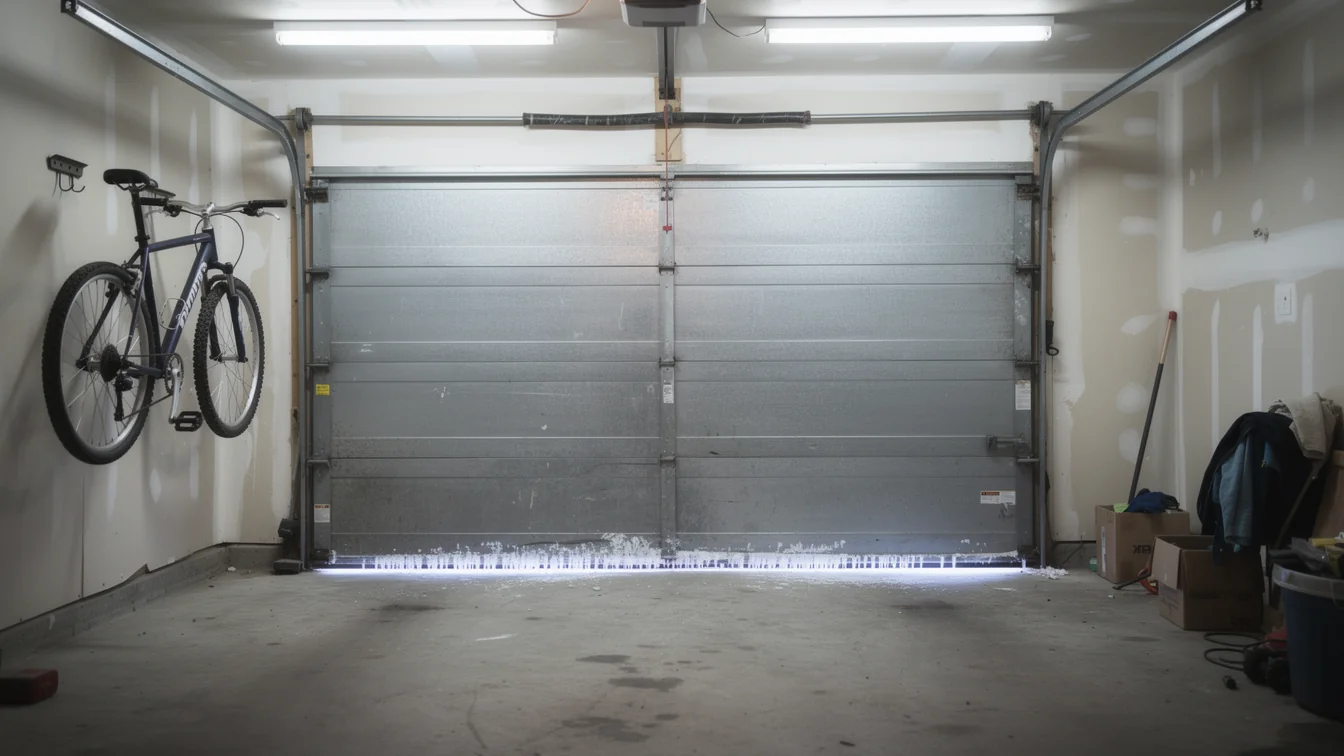
Call before the door fails outright if you can. On a door this old, the tells are usually in the seams: daylight showing between panels that used to sit flush, a bottom seal that's cracked and lets cold air pool along the slab, or a panel that sweats on the inside every time the temperature swings hard. None of that is an emergency by itself. It's a sign the door is doing less of its job than it did when it was installed. We'd rather hear about a door that's getting worse than get the call for a broken spring on a morning when it's well below freezing and you need the car out. If the frame and track are solid and only the panel or weatherstripping has gone, repair is usually the honest answer. If the door, the hardware, and the seals are all original to a house from that 1960s-70s band, replacement tends to be the one that actually fixes the problem instead of deferring it another winter.
How we work
This area sits in a cold, severe climate band, which means real freeze-thaw cycles every winter, not just an occasional cold snap. On a door with no insulation, that cycle works on the steel itself - contraction overnight, expansion by afternoon, over and over, for decades. On a door already built before anyone cared about thermal performance, that stress shows up as warped panels, stiff rollers, and torsion springs that lose tension faster in the cold than they would in a milder climate. None of that is dramatic. It's slow. But it's also why a door built in the 1960s in this part of Maryland is further along in its wear than a newer, insulated door would be after the same number of winters. The cold doesn't care how nice the house around it is, and it doesn't skip a year just because the door is original.
Questions
If your house was built anywhere in the 1938-2014 range common around Potomac, especially near that 1970 median, check the inside of the panel. A single flat steel or wood face with no foam backing and no visible layered construction means it was built before insulation was standard on garage doors. We can confirm it in a few minutes on site.
It depends on what's actually failed. If the track and frame are solid and only the panel or weatherstripping has worn out, repair makes sense. If the whole door is original to a house from that 1960s-70s band and the hardware is tired too, replacement with an insulated door usually solves more problems than a patch does.
Yes. This area sits in a cold, severe climate band, and the freeze-thaw cycle each winter works harder on a door that has no insulation and no thermal break. Panels warp, rollers stiffen, and springs lose tension faster than they would on a newer, insulated door.
No, and we wouldn't trust anyone who does. Every older door in this area has a different frame, a different amount of hidden wear, and a different repair-versus-replace answer. We quote after we've actually looked at the door and track.
Recommendation
More garage door guides for Potomac homeowners.
What a grinding, popping, or screeching garage door actually means in Potomac homes built 1938-2014, and when the noise is a $20 fix or a door you replace.
Read more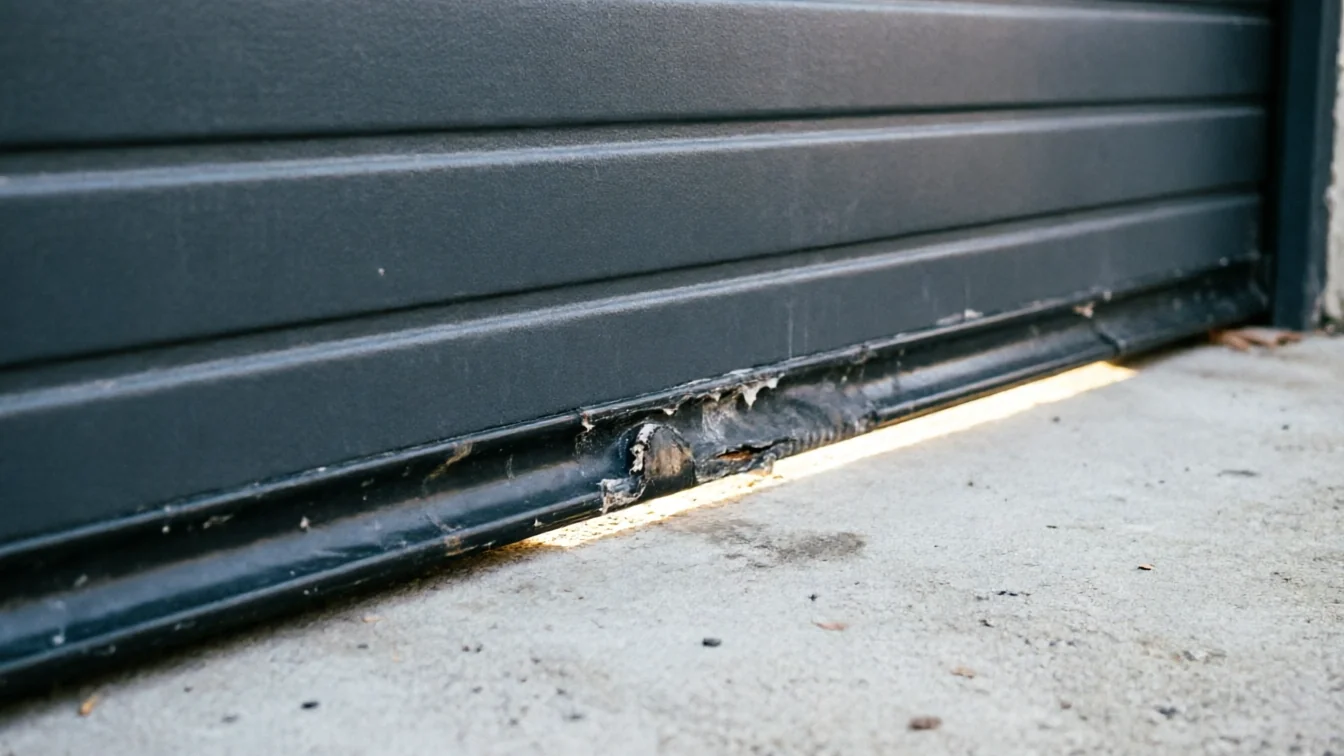
Potomac homes built 1938-2014 lose heat through worn garage door seals in cold winters.
Read more
How Potomac's 1960s-70s housing stock and cold winters change what detached and attached garage doors need, from insulation to spring sizing to service calls.
Read moreReady when you are
Potomac Garage Door Pros repairs and installs garage doors, springs and openers in Potomac, MD and the surrounding area.