How Long You Are Without the Door
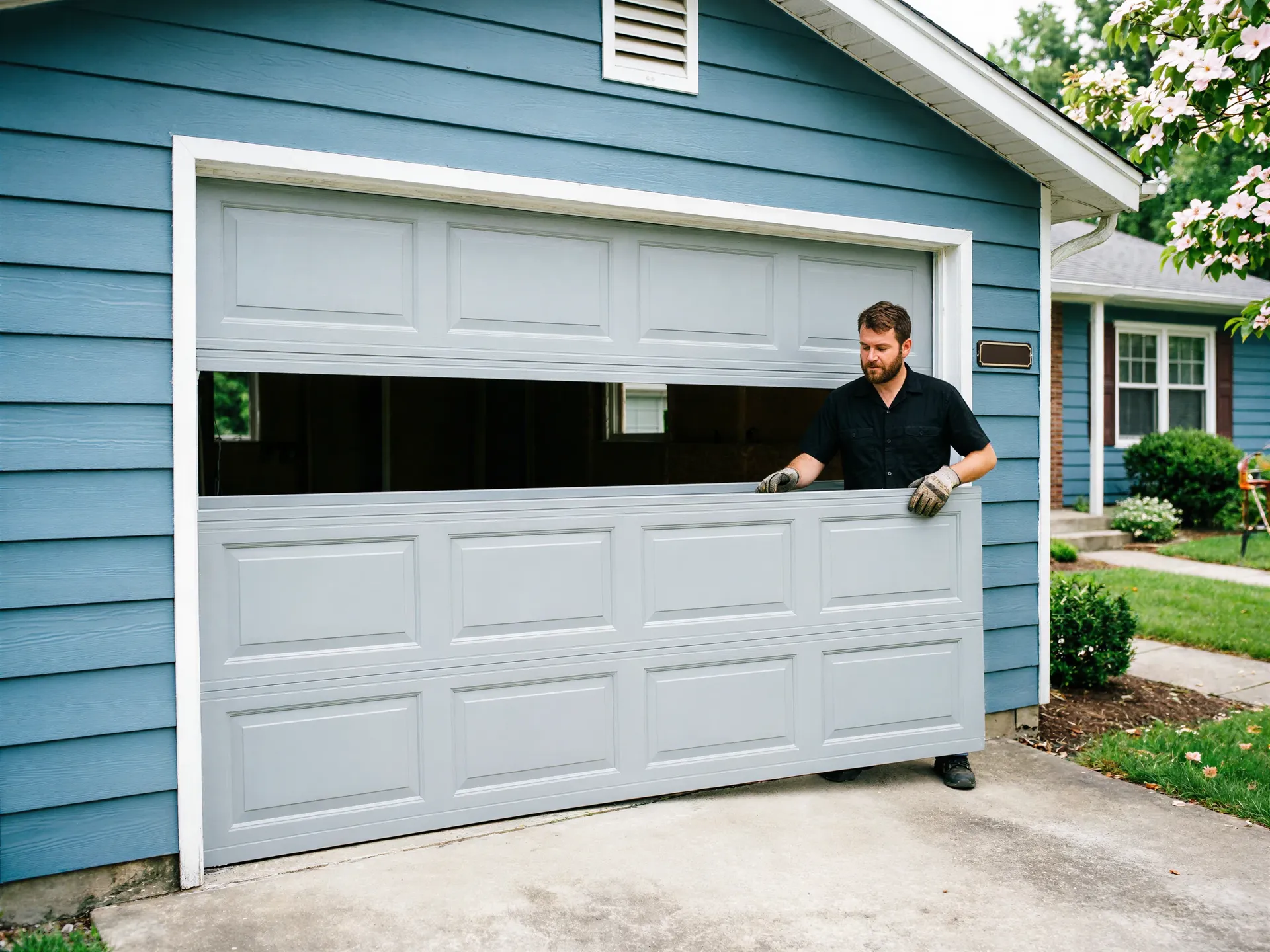
A broken lifting cable doesn't mean a slow decline - it usually means the door is stuck right where it was when the cable let go, often half-open or jammed crooked in the tracks.
Repeated button presses damage
The opener will keep trying to run the motor even though the door isn't moving the way it should, which can strip the gears or burn out the unit if you keep hitting the button.
Opposite cable overloaded
Once a cable snaps or starts to unravel at the drum, the door is not safe to force by hand either, because the opposite cable is now carrying weight it wasn't built to carry alone. We don't give a blanket number for how fast we get to a stuck door, because that depends on the day and where the call falls on the route.
Quick cable swap timing
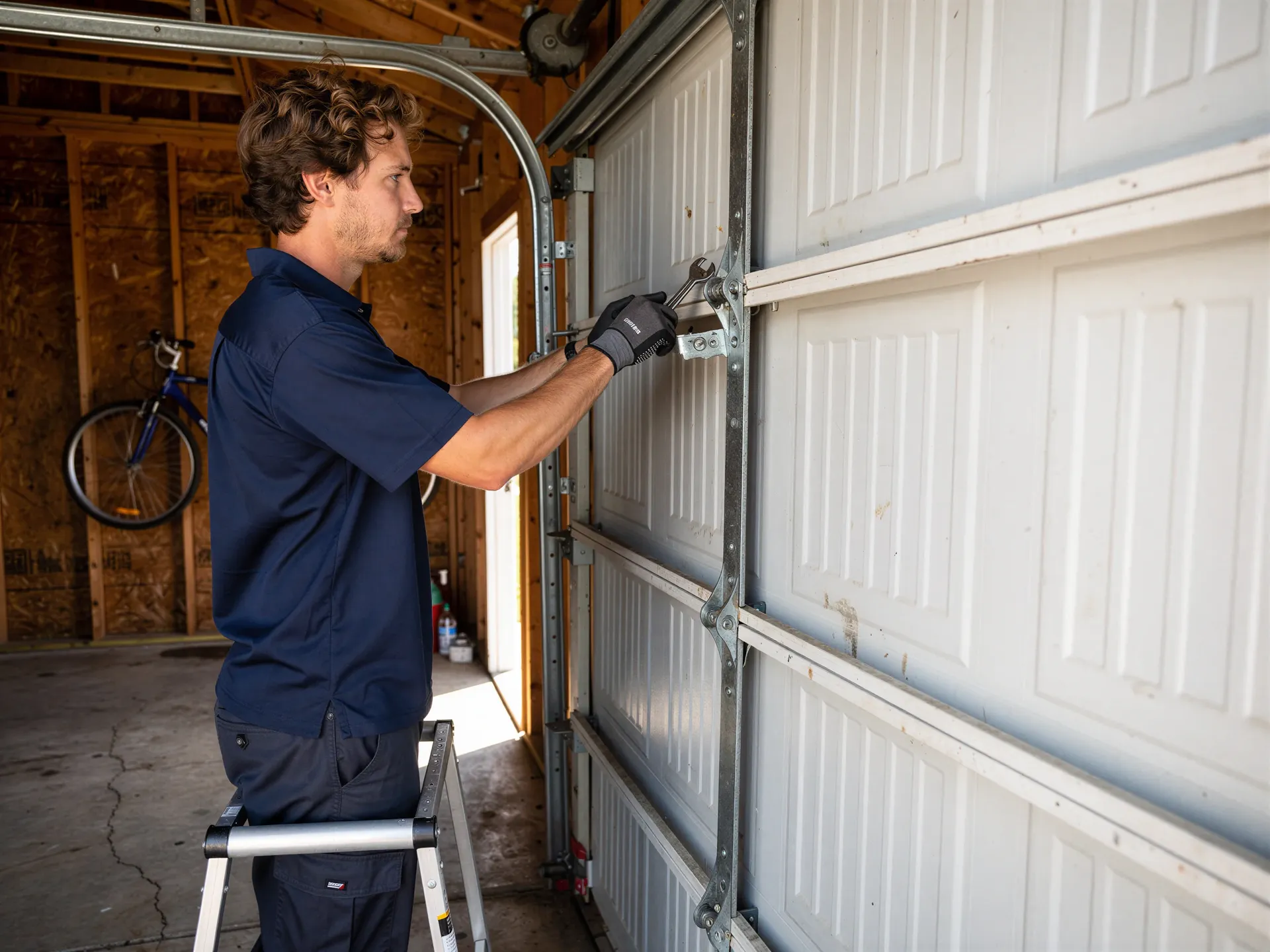
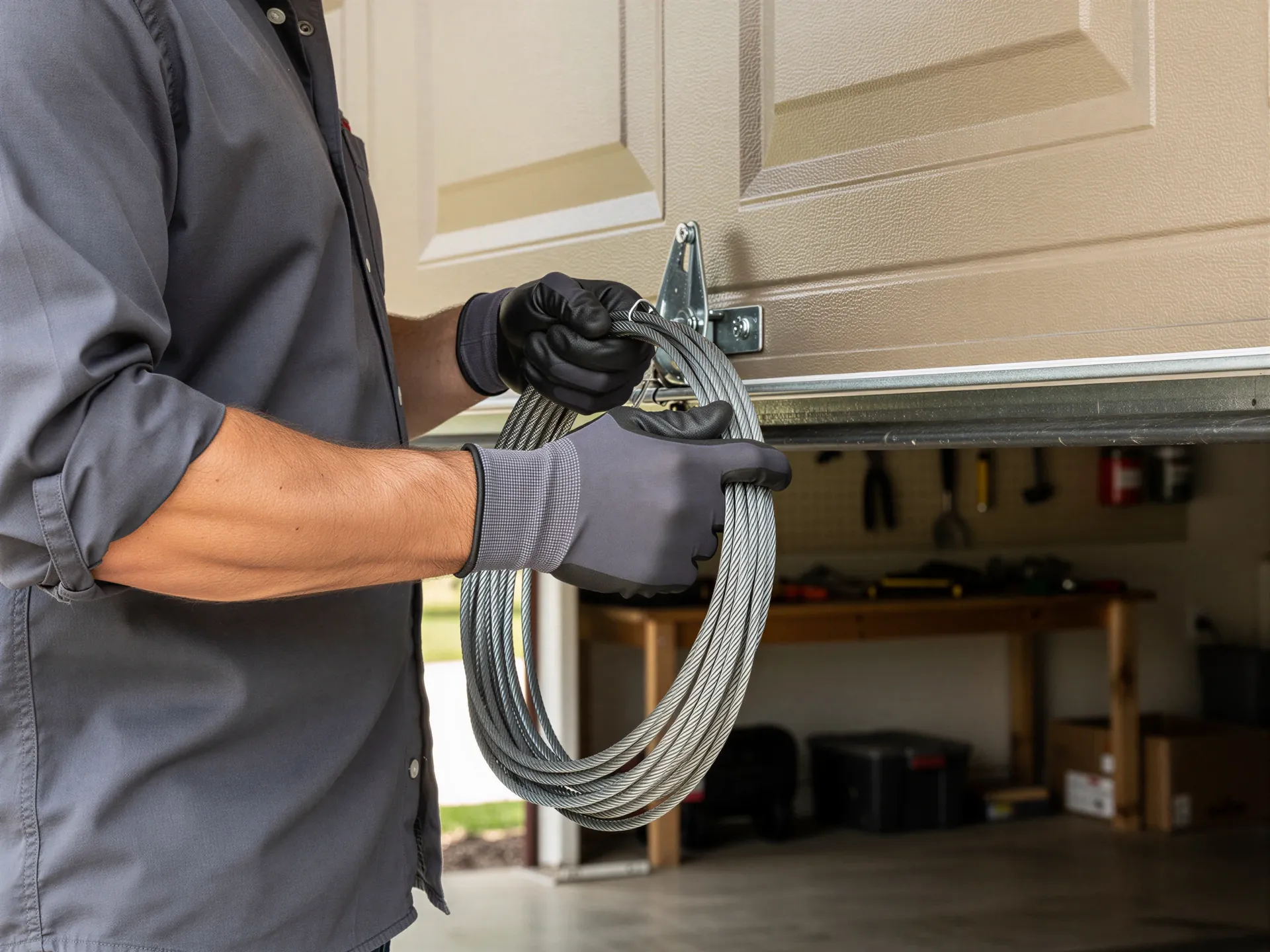
What we can tell you is that cable work itself is not a long job once a tech is on site - it's pulling the old cable, checking the drum and spring for matching wear, and running a new cable at the right tension.
Post-install balance check
The slower part is usually making sure the door is balanced afterward, because a cable replaced on an unbalanced door just fails again in a year. If both cables are original to the house, we'll say so and recommend doing both sides at once rather than coming back out for the second one in a few months.
How It Shows Up
Most cable failures don't come out of nowhere. The door starts to hang a little crooked, dropping faster on one side than the other, or you notice a faint fraying sound right before it closes.
Strands fraying at drum
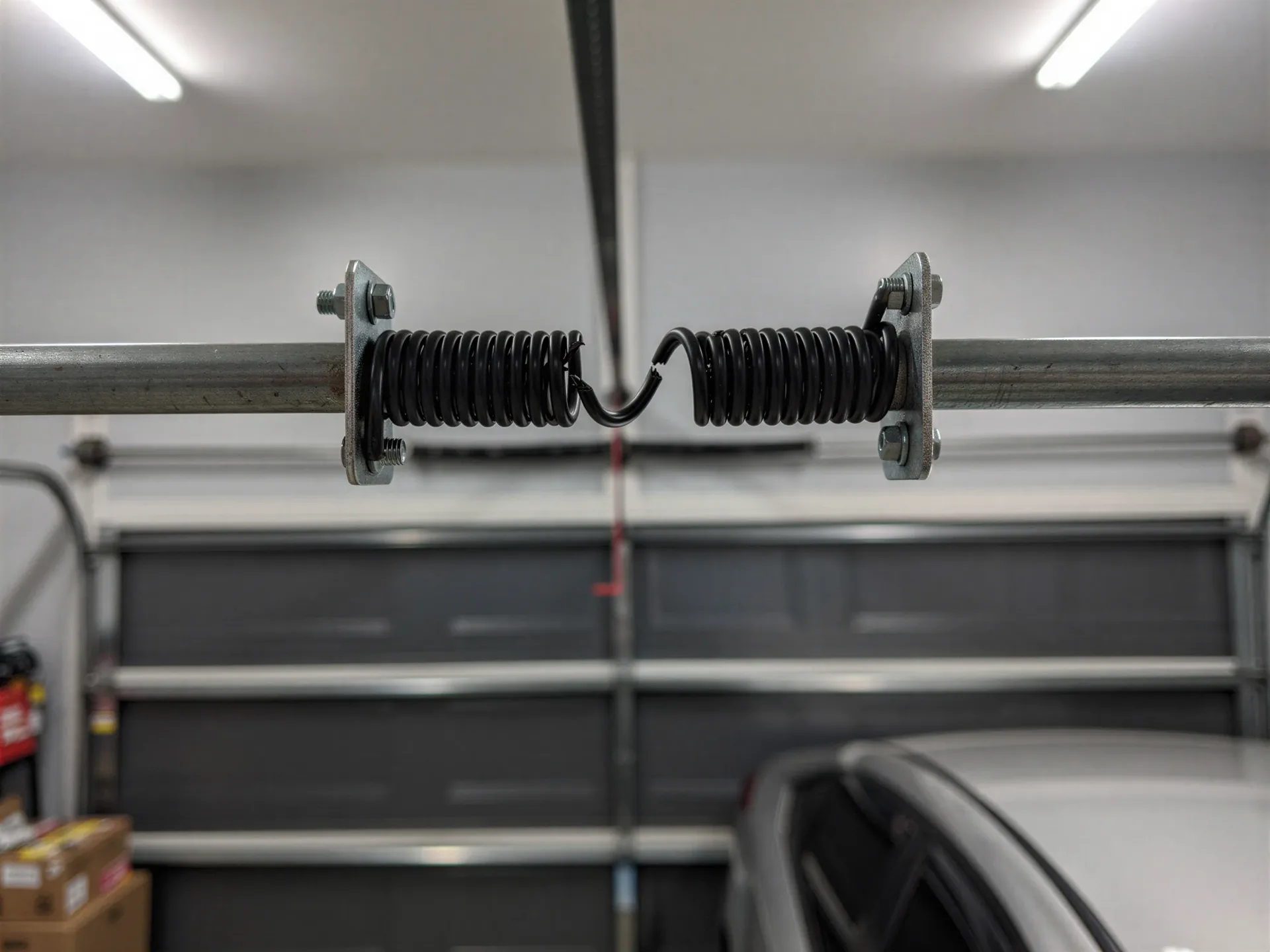
Look at the cable where it wraps around the drum at the top corners of the door - that's where strands separate first, usually on the side that takes more cycles if one car uses the garage more than the other. A full snap is loud.
Uneven track travel
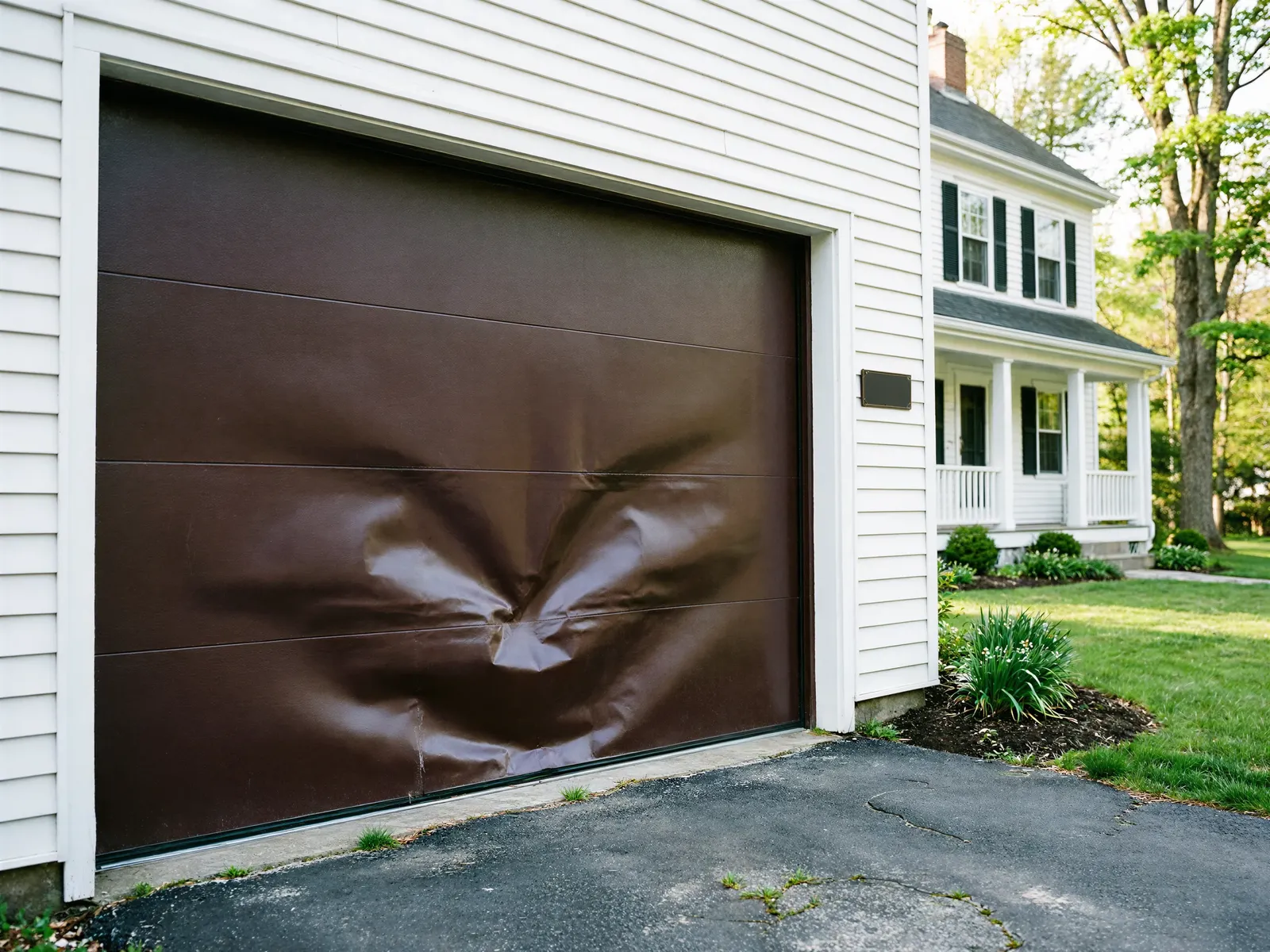
The door drops hard on one side, sometimes bangs against the frame, and won't travel evenly on the track after that. Some owners catch it mid-fray: a visible kink, a few broken strands poking out, rust bloom where the cable meets the bottom bracket. That's the point to call, because a partially frayed cable under torsion spring tension is not something to keep testing with the opener.
Double-door angle binding
On double doors especially, a cable going on one side puts the whole panel at an angle, which can bind the rollers in the track and bend the track itself if the door keeps trying to run. That turns a cable repair into a track and roller job too. The earlier it's caught, the more likely it stays a cable-only fix.
What You Pay
We're not going to put a number here that doesn't hold up once a tech is actually looking at your door, because cable jobs vary with cable gauge, drum condition, and whether the spring needs attention at the same time.
Companion cable same age
What we can say is that a cable almost never fails alone on a door that's been in service a long time - if one cable is frayed, the other one is the same age and under the same load, so most owners choose to do both rather than pay for a second visit later.
Full swap preferred locally
Across the area we serve, median household income runs around $105,966, and what we see in practice is that owners in that range tend to replace rather than patch - a full cable swap over a partial splice, a matched pair over a single side.
Cable cost versus labor
That's a reasonable call on a part that costs little compared to the labor of getting back out to the house. The honest limitation: if the drums, bearing plates, or torsion tube are also worn from age, cable replacement can turn into a bigger job once we're inside the header. We'll tell you that before we start, not after.
What Causes It Around Here
Housing across this service area was mostly built between 1938 and 2014, with the median closer to 1970, and a lot of garages still run the torsion hardware that came with the house - same drums, same cable gauge, same bottom brackets. Cable is a wear part with a working life, and on a door pushing fifty years of cycles, the galvanized coating that protects the strands from rust has usually worn thin at the drum end long before anyone notices.
The climate band here is classed as cold and severe, and that matters more for cable than people expect. Cold stiffens steel cable and the lubricant inside the strand lay, so the cable flexes less smoothly around the drum on a 20-degree morning than it does in July. Combine stiff cable with an original, aging drum edge that's gone slightly rough with rust, and you get the fraying pattern we see most: wear concentrated right at the point of contact, worse in winter.
It's also common in 1960s and 70s construction to find single-cable setups on doors that were later upgraded to heavier insulated panels without upgrading the cable gauge to match. That mismatch - a heavier door running on old-spec cable - shortens cable life further, independent of how old the house is.
Talk to a local pro
Garage door service in Potomac?
Same-day service with honest, upfront quotes.