Garage Door Openers and Power Cuts in Potomac Homes
Garage door repair for Potomac, MD.
Read moreBlogPotomac, MD · 4 min read
Potomac's older double-wide garage doors flex and bow in sustained wind. Here's why this housing stock is vulnerable and what to watch for before a panel fails.
Local detail
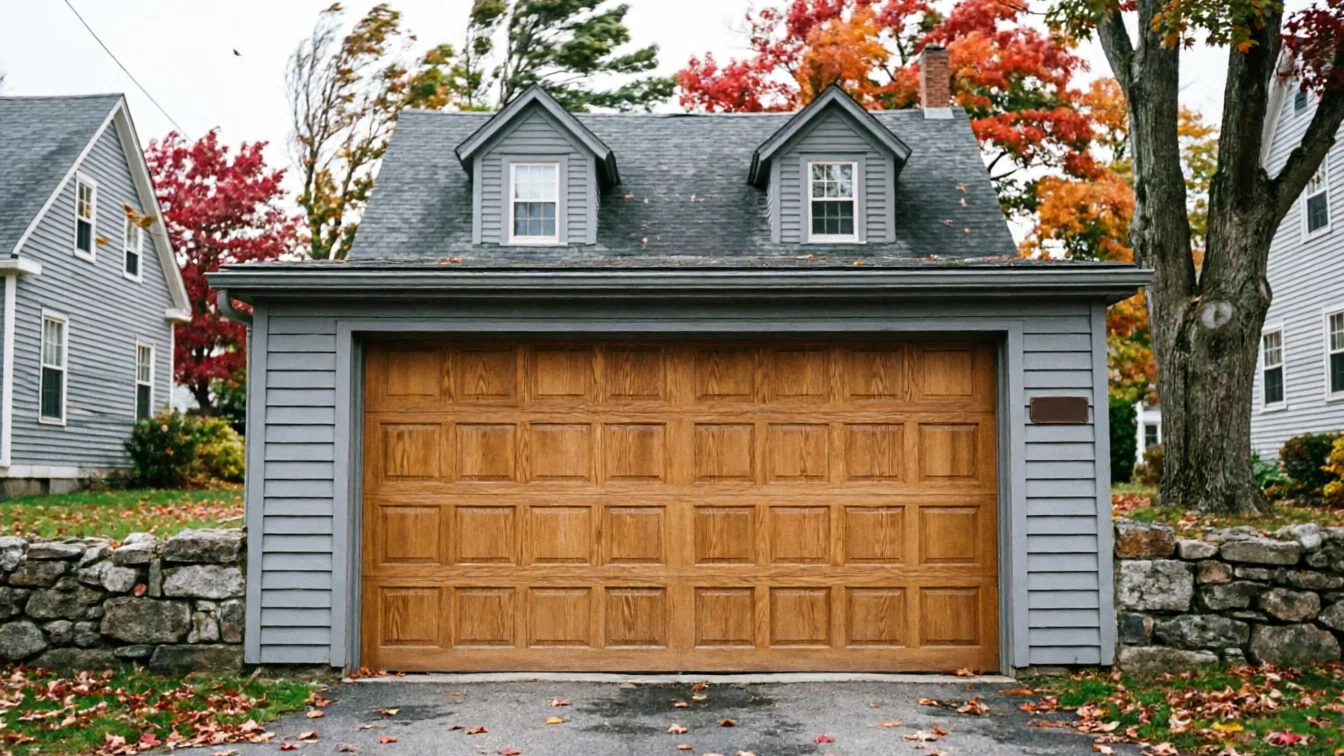
A two-car garage door is the widest moving object on most houses, and width is exactly what wind fights against. A 16-foot door has a lot of surface area for air to push on, and if the panel, the track, or the horizontal struts behind it aren't built to resist that load, the door bows toward you or away from you with every gust. You can usually see it happen on an older section: the middle of the panel flexes while the edges stay pinned in the track.
This matters more here than it would on newer construction. Potomac's housing runs from 1938 to 2014, with a median build year around 1970, which puts a lot of these garages squarely in the era of single-layer steel or wood panel doors hung on hardware that predates any wind-load rating at all. Retrofitting struts after the fact is possible, but a lot of original doors never got it, and nobody notices until a bad storm shows them why it matters.
The failure point usually isn't the panel face - it's the track brackets and the top roller fasteners, which take the twisting force every time the door racks under pressure. Loosened brackets are quiet until the day they aren't.
The area
We don't have a flat number to put on this page, because the fix depends entirely on what the wind actually did - a bracket that worked loose is a different job than a bowed panel that needs replacing, and a full double-door replacement is a different job than either. What we can tell you is what drives the cost: whether the damage is isolated to hardware (cheaper, faster) or has deformed the panel itself (usually means replacing that section or the whole door, since a bowed steel panel doesn't bend back true).
One honest limitation: if a panel has visibly bowed and stayed that way, we're not going to try to hammer it flat and call it fixed. Steel that's been stressed past its yield point is weaker there permanently, even if it looks okay for a season. On a wide door, that's the section most likely to go again in the next windstorm, and we'd rather tell you that up front than sell you a patch.
What we find
Call before the door fails completely, not after. The tells on a wide door are specific: a visible curve across the middle panel when the door is closed, a grinding or popping sound as it travels (rollers binding against a track that's racked slightly out of plane), or a cable that's jumped off its drum at one side - which usually means the door fought an uneven load and one side gave first.
If you can see daylight at the edge of a closed double door that wasn't there before, that's wind-driven movement working the weatherstrip and seal loose, not just cosmetic wear. And if the door still opens and closes but noticeably more slowly or with more effort on one side than the other, the track alignment has already shifted - waiting on that usually turns a bracket adjustment into a bent track replacement.
How we work
Potomac sits in a cold-weather climate band with severe conditions, which means the garage door hardware deals with two separate stresses, not one. Wind load is the obvious one - it's the force trying to flex a wide panel. The less obvious one is what cold does to the steel and the seals at the same time: metal contracts, gaskets stiffen, and a track that was running true in summer can bind slightly in January, right when a gust is asking the most of it.
That combination - stiff hardware plus wind pressure - is why older doors in this area tend to show damage in winter storms rather than summer ones, even though summer storms can bring higher gusts. The door is least forgiving exactly when the weather is working against it hardest. It's not a reason to panic every time it's windy and cold, but it's a reason not to ignore a door that's already flexing or dragging before the next front comes through.
Questions
Width is the main factor. A two-car door has roughly twice the surface area catching wind that a single-car door does, so the same gust puts more total force on it. If the door is original to a house built in the 1960s or 70s, it likely doesn't have reinforcing struts behind the panel, which is what actually resists that flex.
Once steel has bowed and held that shape, it's been stressed past the point where it springs back true. We won't try to flatten it and call it solved - a straightened panel is still the weak point and is more likely to fail again in the next wind event. Usually that section, or the full door on older wide units, needs replacing.
Usually both at once. Cold stiffens seals and contracts metal slightly, which can bind a track that ran fine in warmer months. Wind then puts flexing load on a door that's already less forgiving. That combination is why older doors in this area tend to show real damage during winter storms rather than isolated summer wind.
Recommendation
More garage door guides for Potomac homeowners.
Garage door repair for Potomac, MD.
Read more
Why Potomac's 1960s-70s housing stock and cold winters cause torsion springs to snap, what it costs to fix, and when to call versus wait until morning.
Read more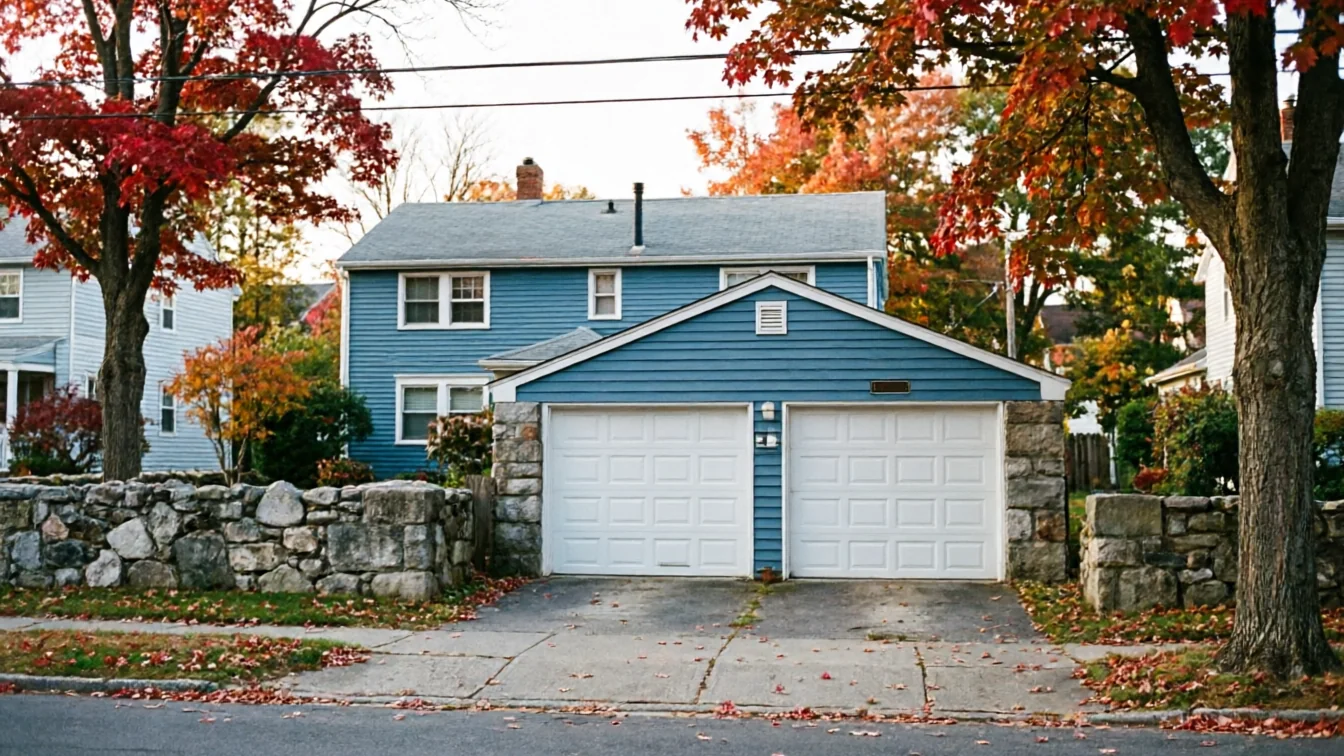
How Potomac's 1960s-70s housing stock and cold winters change what detached and attached garage doors need, from insulation to spring sizing to service calls.
Read moreReady when you are
Potomac Garage Door Pros repairs and installs garage doors, springs and openers in Potomac, MD and the surrounding area.