When a Spring Goes in Cold Weather Here in Potomac
Why Potomac's 1960s-70s housing stock and cold winters cause torsion springs to snap, what it costs to fix, and when to call versus wait until morning.
Read moreBlogPotomac, MD · 5 min read
Potomac's housing dates mostly to the 1960s and 70s, and the cold winters here stress track hardware that's never been replaced. Here's what actually happens.
Local detail
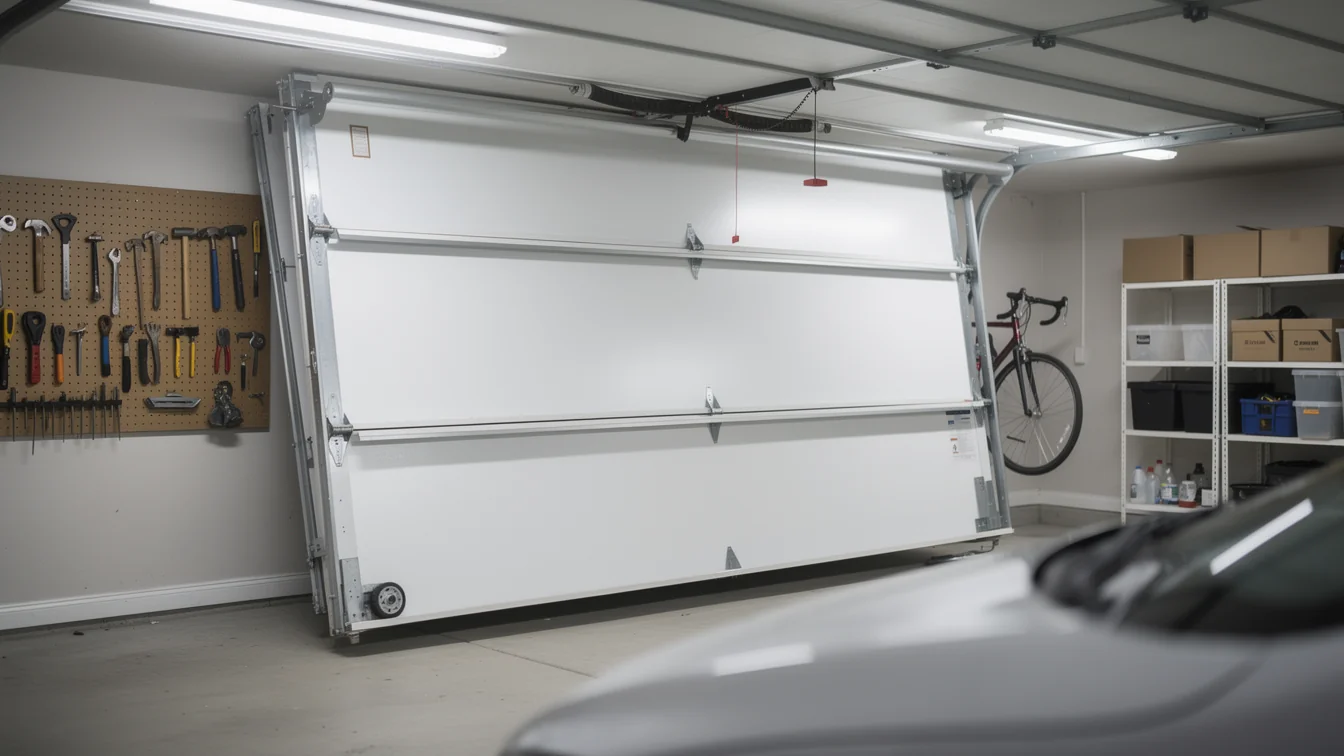
A door goes off track when the rollers slip out of the vertical rail, usually because the rail itself has bent, a bracket has pulled loose from the jamb, or a roller has worn down enough that it no longer sits square in the channel. In Potomac, this shows up more than you'd expect because most of the housing stock here went up between 1938 and 2014, with the median build year sitting at 1970. That means a huge share of doors in this area are still running on the original track brackets and hinge hardware from a 1960s or 70s build - steel that's had fifty-plus years to loosen at the lag screws.
We also see it after a hard impact - a car bumper, a kid's bike, a mover's dolly - that knocks the rail out of alignment just enough that the rollers start climbing the edge instead of riding inside it. On older jamb framing, one knock can be enough because the wood around the bracket has already dried and shrunk over the decades.
Sometimes it's not the track at all - a broken cable on one side lets that corner of the door drop, which twists the whole panel stack sideways and forces the rollers out. That's a different repair than a bent rail, and it's not one we'd want you pulling the cable loose to check yourself.
The area
We're not going to put a number here that doesn't match what a real diagnosis turns up, so we won't guess at one. A bent section of rail that just needs re-aligning is a different job than a track that has to come off and get replaced because the bracket tore out of old jamb wood. A door that's off track from a snapped cable needs that cable dealt with before anyone touches the rail, and that adds to the visit.
What we can tell you honestly: if the track is original to a 1960s or 70s Potomac build, replacing the whole run with new galvanized rail and hardware is often the better call rather than patching a fifty-year-old bracket back into tired wood. Patch jobs on that old hardware tend to come loose again within a season or two, and then you're paying for the visit twice.
We'll always tell you flat-out when a repair isn't worth it compared to swapping the hardware. That's not us trying to upsell you - it's that re-bending old rail back into true and re-anchoring it to brittle framing rarely holds the way fresh hardware does.
What we find
Stop using the opener the moment you notice the door hanging crooked, a gap along one side of the track, or a grinding noise as the rollers scrape metal instead of rolling in it. Running the opener against a door that's already off track puts a lot of strain on the motor and can bend the rail further or snap a cable that's already under load from the misalignment.
If you can see a roller sitting outside the channel, or the door is wedged at an angle in the opening, don't try to force it back by hand. A door off track is heavier and less predictable than it looks, and the springs are still under tension even when the door won't move - that's exactly the setup that leads to a finger or hand getting caught in the track or the panel seam.
Call for help right away if the door is stuck halfway open or closed. That's usually a sign a cable has let go on one side, and leaving it there overnight in freezing temperatures just adds more stress to the parts that are still holding.
How we work
Potomac sits in a cold-severe climate band, and that matters more for track alignment than most homeowners realize. Steel track contracts in cold weather, and on a run of rail that's been slightly bent or loosely anchored for years, that contraction is often enough to pull a bracket the rest of the way loose or let a roller pop free on the next cold morning.
Ice is the other half of it. Water that gets into the track channel during a thaw and refreezes overnight stiffens the rollers and can glaze the rail just enough that the door binds going up, then lurches free all at once - which is a common way a roller jumps the track in winter. Grease and lubricant also thicken in hard cold, so hardware that was marginal in October can seize or bind by January.
We're not going to tell you to re-lubricate every rail in town before first frost - most doors don't need that. But if your track hardware is already original to a 1960s or 70s Potomac build, a cold snap is often the thing that finally pushes a loose bracket or worn roller over the edge.
Questions
We'd rather you didn't. The springs stay under tension even when the door is stuck, and a panel that's off track is heavier and less predictable than it looks. If a roller has popped free or the door sits crooked in the opening, call it in rather than forcing it by hand.
Usually the track. If the opener runs but the door doesn't move smoothly, or you can see a gap where a roller should sit inside the channel, that's a track or roller problem, not the motor. Forcing the opener to keep trying can bend the rail further.
Potomac's winters fall in a cold-severe band, and steel track contracts in the cold. On rail that's already a little loose or slightly bent, that contraction is often what finally lets a roller jump the channel or a bracket pull free.
Depends on the hardware's age and condition. A lot of Potomac homes still run original track from a 1960s or 70s build, and re-anchoring that into brittle old jamb wood rarely holds for long. We'll tell you straight if new rail makes more sense than patching the old one.
Recommendation
More garage door guides for Potomac homeowners.
Why Potomac's 1960s-70s housing stock and cold winters cause torsion springs to snap, what it costs to fix, and when to call versus wait until morning.
Read more
How Potomac's 1960s-70s housing stock and cold winters change what detached and attached garage doors need, from insulation to spring sizing to service calls.
Read more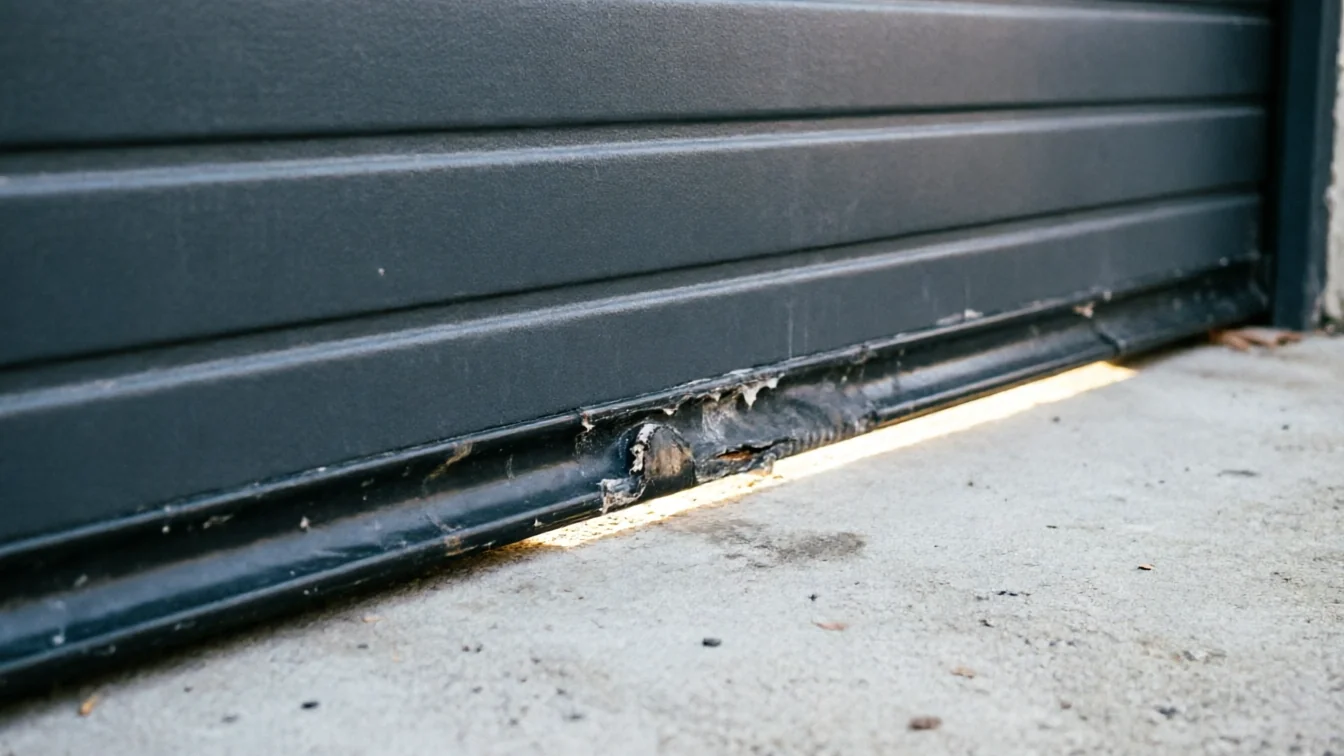
Potomac homes built 1938-2014 lose heat through worn garage door seals in cold winters.
Read moreReady when you are
Potomac Garage Door Pros repairs and installs garage doors, springs and openers in Potomac, MD and the surrounding area.