How Long You Are Without the Door
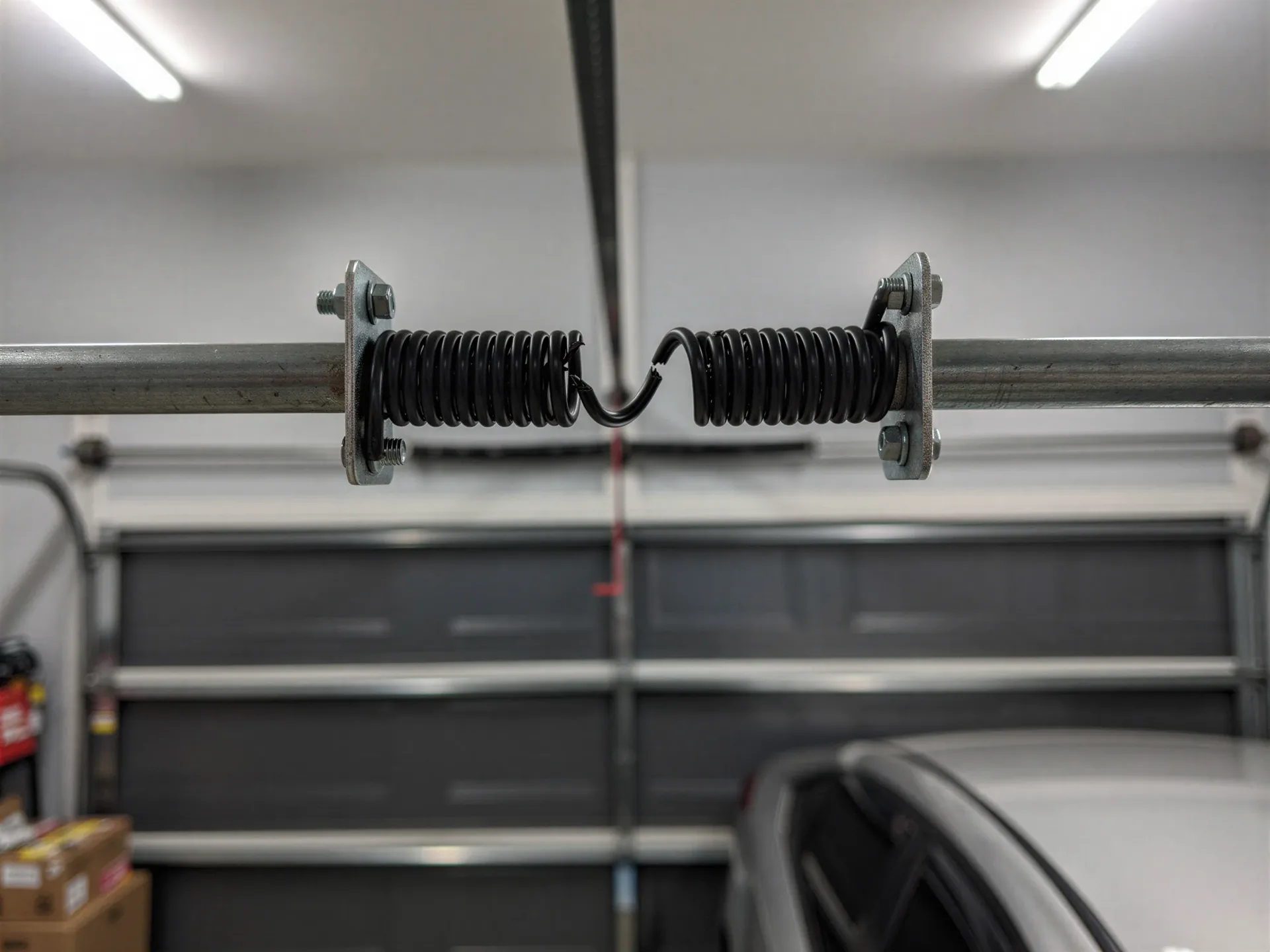
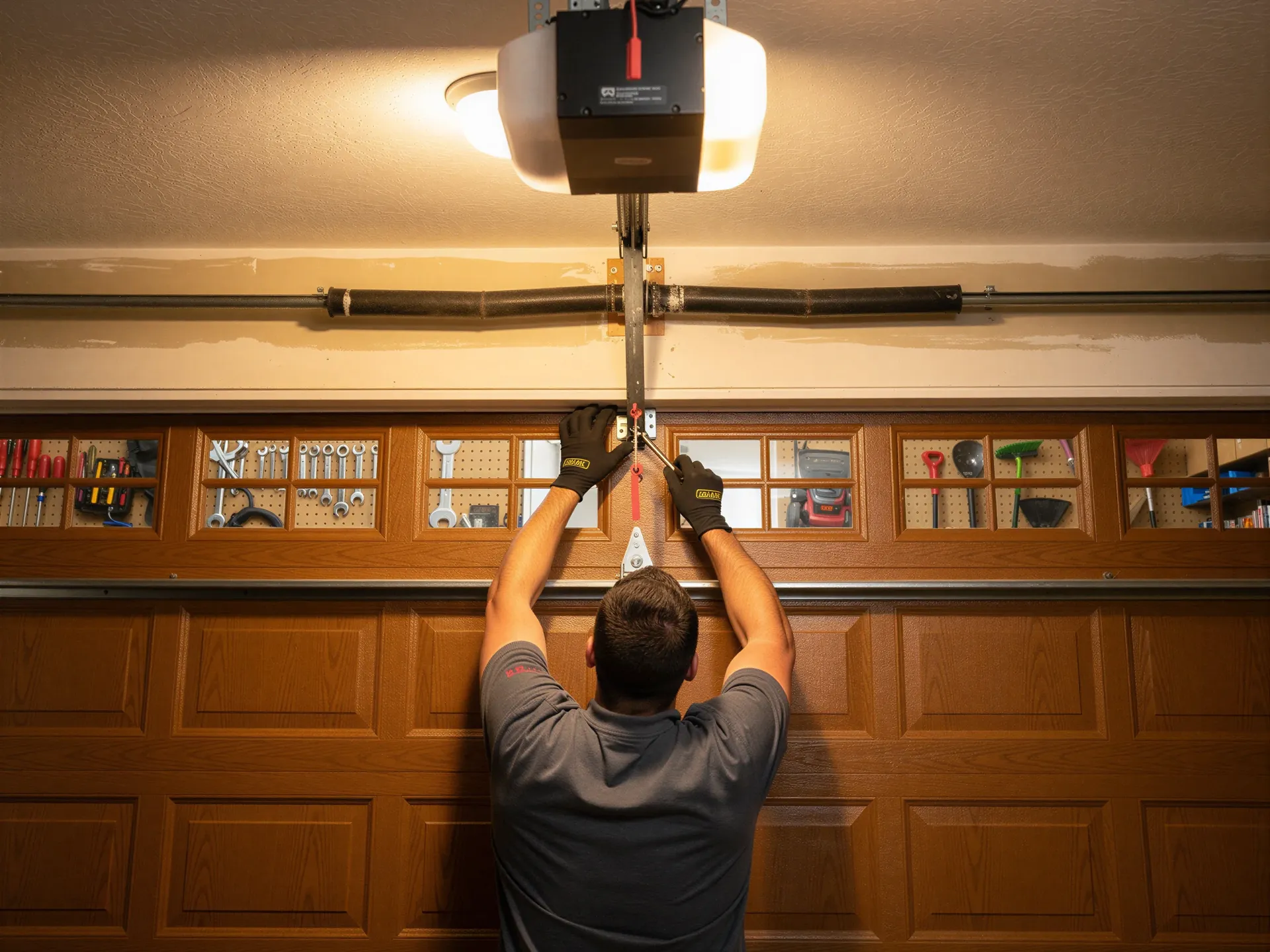
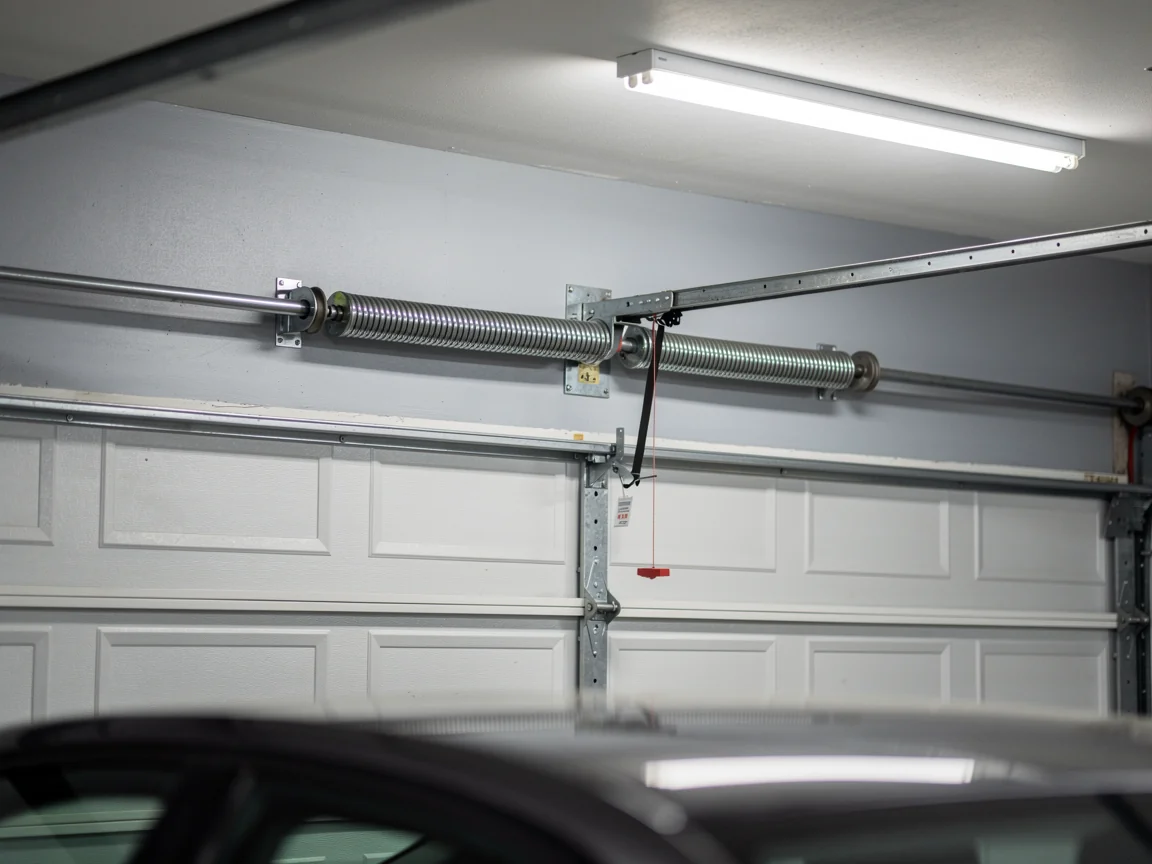
A broken spring or a cable off the drum usually means the door won't move at all, not until someone gets eyes on the torsion system.
Original hardware still present
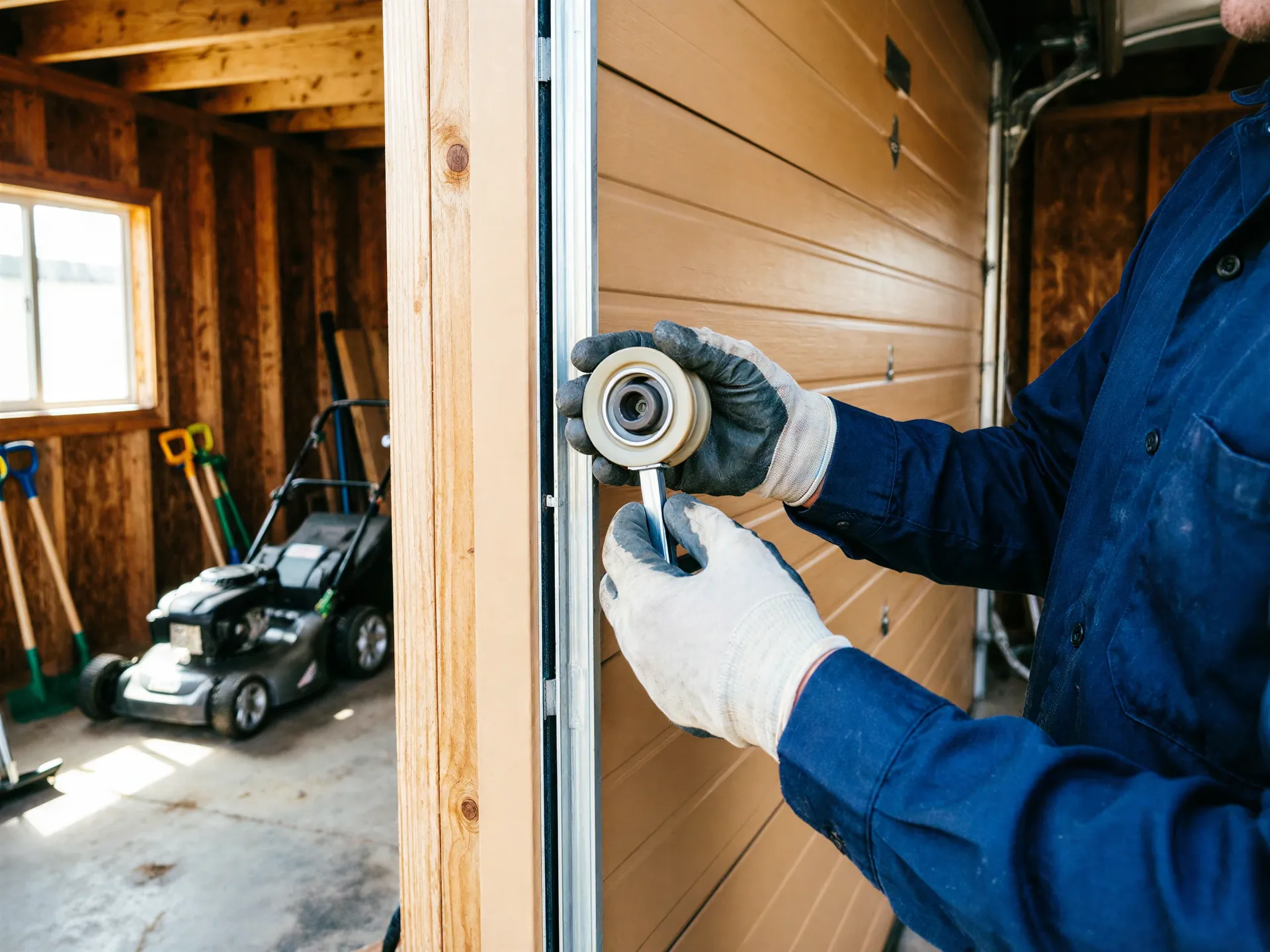
On a lot of the homes around here, built between 1938 and 2014 with most of the stock going up in the 1960s and 70s, the original hardware is still in the opening. That means older torsion springs, older drums, sometimes bar-style openers that don't have a backup release anyone's used in years.
Door stuck mid-travel
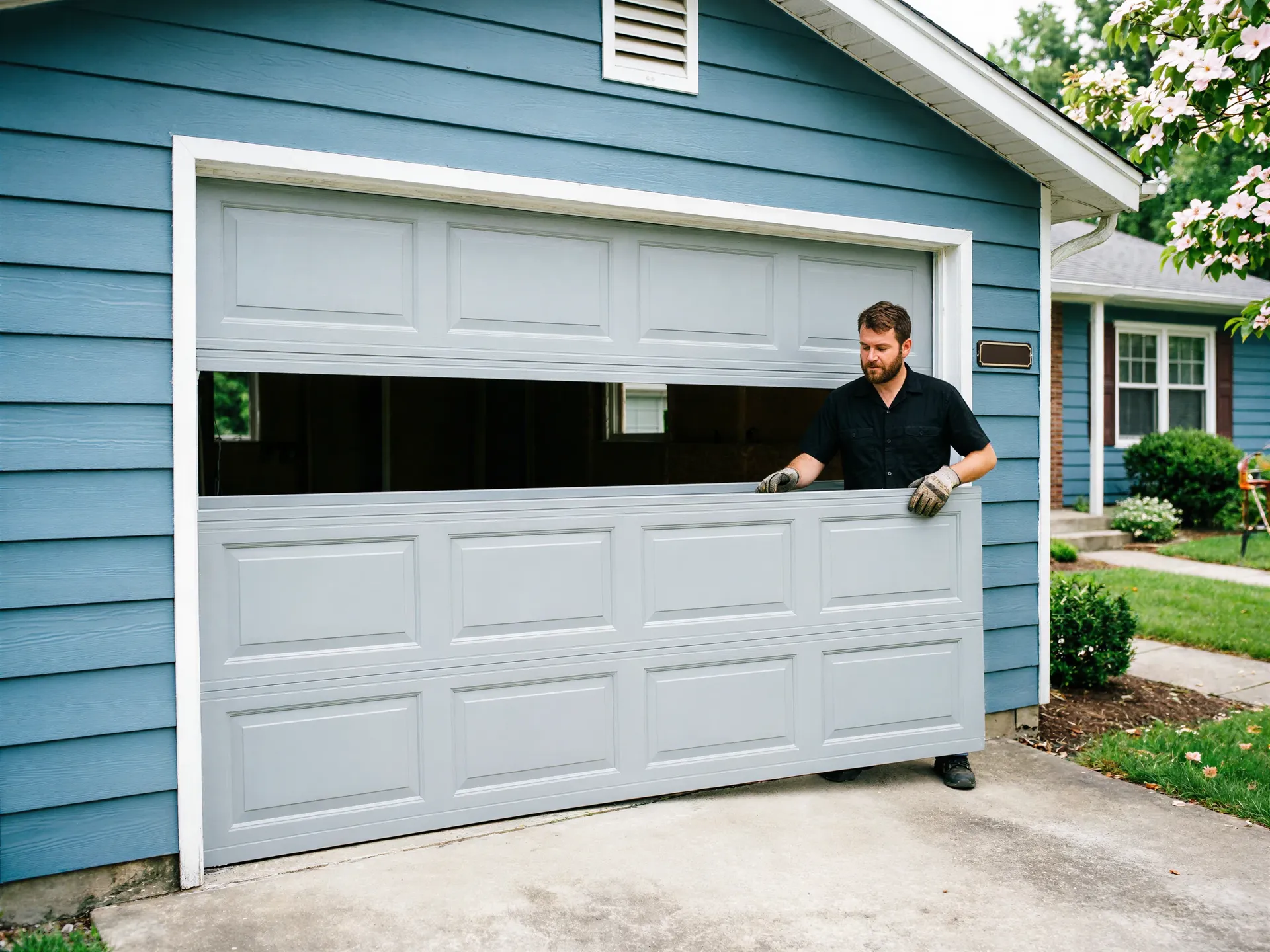
When a spring lets go in a house like that, the door is stuck in whatever position it was in - up, down, or half-open with a car underneath it. We don't sugarcoat the wait: if a part has to be matched to older drum sizing or an opener that's been out of production a while, that can push the job out past a same-day fix. Most jobs aren't that.
Waiting on sourced parts
But a house with original 1960s hardware is more likely to need a part we have to source than a house with a 2015 install, and it's worth knowing that going in. If your opener and springs have already been replaced once, repair tends to be faster because the parts are current. If they haven't, ask what's on the door before you assume it's a quick fix.
How It Shows Up
The signs are pretty consistent across the Potomac housing stock we see. A door that used to glide now jerks or stalls a few inches up - that's usually a spring losing tension, not the opener.
Bang followed by stall
A loud bang from the garage, then the door won't budge, is almost always a spring snapping outright. Doors that reverse halfway down, or that the opener strains to lift, point to the same thing: the spring is no longer doing its job and the opener motor is trying to carry weight it was never built for. Cold is a real factor here.
Winter spring cluster
This area sits in a severe cold climate band, and when temperatures drop, steel springs lose a measure of flexibility and the lubricant in rollers and hinges thickens up. That's why a lot of the spring failures we see cluster in the coldest stretches of winter - a spring that's been cycling fine all year finally gives out on the morning it's 15 degrees out.
Sluggish then sudden quit
If your door has been sluggish in cold snaps and then quits altogether, that's the pattern, not a coincidence. Tracks pulling away from the frame, or a door that looks crooked going up, usually means a cable has slipped off the drum rather than snapped - different fix, same urgency.
What You Pay
We don't post a flat number here because the range on a torsion spring job depends on spring size, door weight, and whether one spring failed or the pair needs replacing together - which is the right call more often than not, since a mismatched pair just means the second one fails a season later. A cable repair without a broken spring is a smaller job. An opener logic board replacement on a older bar-drive unit costs more because the part itself isn't cheap to source anymore.
We'll tell you on the phone what we can, and give you a firm number once we've looked at the door, not after we've started the work. One honest note: if your opener is old enough that replacing one failed part just buys you a few more years before the next part goes, we'll say so. Sometimes the math on an aging opener points to replacement instead of repair, and we'd rather tell you that up front than sell you a patch.
What Causes It Around Here
The main driver is age meeting cold. Housing in this area spans 1938 to 2014, with a median build year around 1970, and across the 61 named areas nearby the stock leans heavily toward 1960s and 70s construction. That means a large share of garage doors still running on original or first-replacement torsion springs - steel that's been cycling for decades, through a severe cold climate that puts real stress on it every winter.
Springs are rated for a number of open-close cycles, and age plus cold cuts that life shorter than it would be in a milder climate. Garages that aren't heated or insulated - common in houses from this era - see bigger temperature swings than the rest of the house, and that's exactly where the spring and track live. Add decades of use and you get the pattern we see: winter spikes in spring failures concentrated in neighborhoods where the original hardware never got swapped out. If your house falls in that build window and nobody's touched the springs, the odds of a sudden failure go up every winter, not down.
Talk to a local pro
Garage door service in Potomac?
Same-day service with honest, upfront quotes.