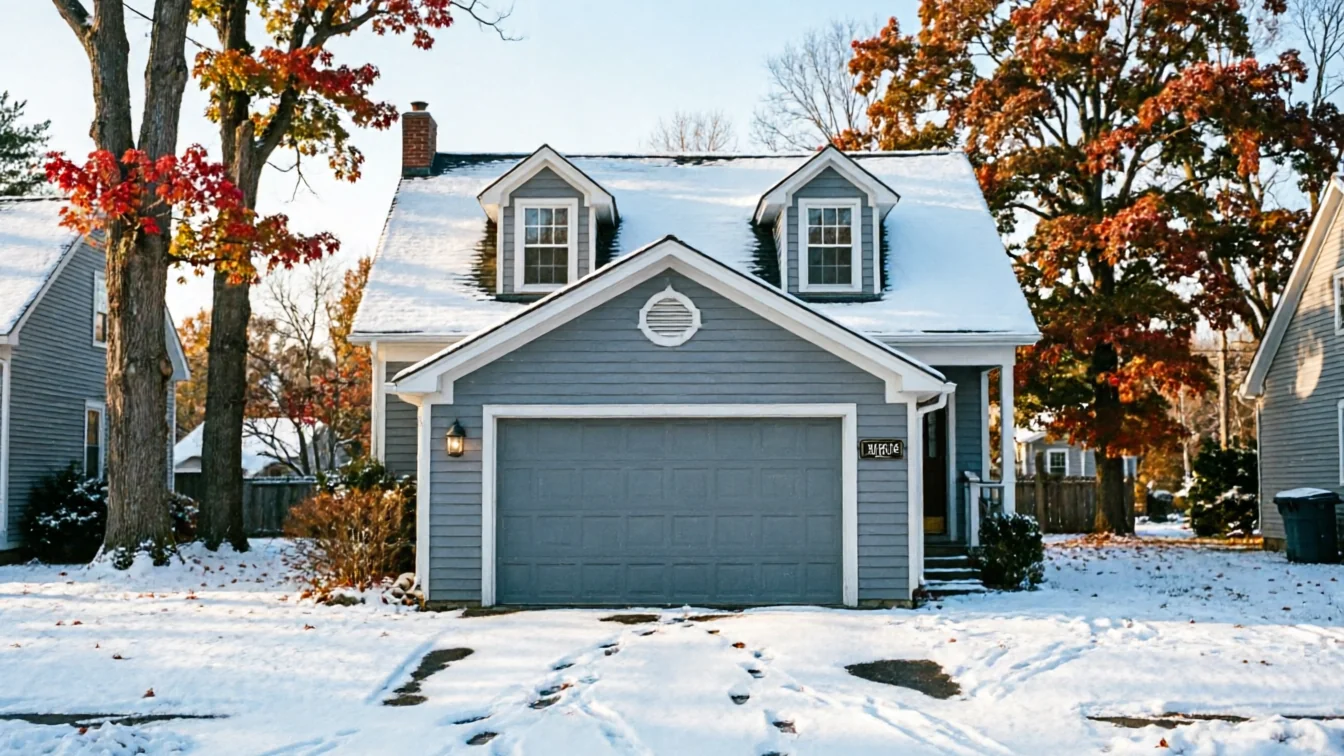
When a Spring Goes in Cold Weather Here in Potomac
Why Potomac's 1960s-70s housing stock and cold winters cause torsion springs to snap, what it costs to fix, and when to call versus wait until morning.
Read moreBlogPotomac, MD · 4 min read
Potomac homes built 1938-2014 lose heat through worn garage door seals in cold winters. Here's what causes draughts and when a seal swap isn't enough.
Local detail
Most of the houses we get called to in this area went up somewhere between 1938 and 2014, with the bulk of that stock dating to the 1960s and 70s. That spread matters because it means the garage door seal on your house is probably not original equipment - it's whatever got swapped in during a repair sometime in the last few decades, and it may or may not fit the track it's sitting in.
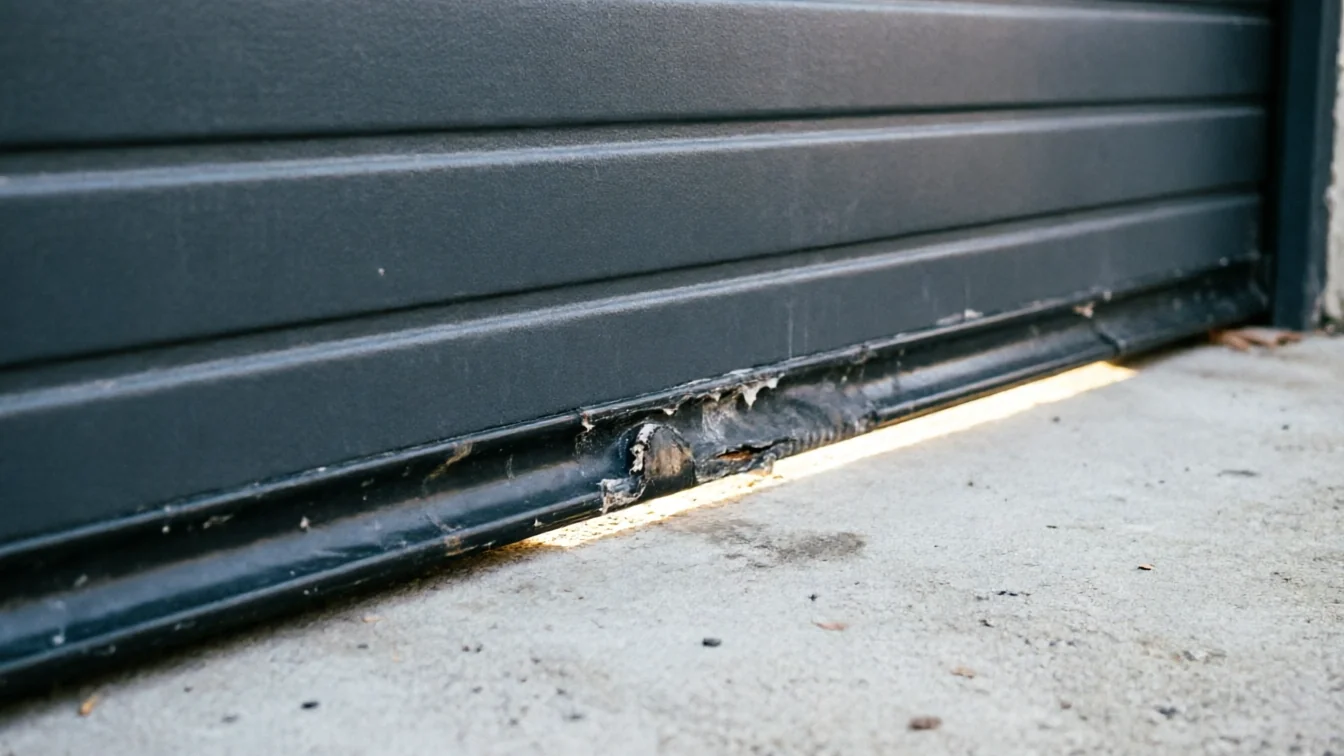
The draught you're feeling along the bottom of the door, or along the sides where the panel meets the jamb, is almost always a worn or compressed vinyl seal, a bent astragal, or a gap where the weatherstrip pulled loose from its retainer. On older framing, the slab itself can be slightly out of square after decades of settling, which means a brand-new seal still won't close the gap evenly on all four sides.
We see this across the 61 or so named neighborhoods we work in, from the 1960s split-levels to the newer builds going up closer to 2014. The fix depends on which part of that range your house falls into - a 1965 door and a 2005 door don't take the same seal, and guessing wrong just means doing the job twice.
The area
We don't have a flat number to quote here without seeing the door - track style, slab material, and how badly the seal track has corroded all change the job. What we can tell you is that a seal replacement is a small job next to a full door swap, and most homeowners in this area treat it as routine maintenance rather than an emergency call.
If your door is on the older end of the 1938-2014 range, parts availability can push the price around - some of the retainer channels used on older doors aren't stocked the way current aluminum extrusions are, so a tech may need to adapt a modern seal to an old track rather than find an exact match. That's a labor difference, not a markup, and we'll tell you up front if that's the situation.
What we find
Call before the next cold stretch if you can feel moving air at the bottom seal with your hand, if the weatherstrip has hardened and cracked rather than staying flexible, or if daylight shows under the door anywhere along its width. Those are seal problems, and they're cheap to fix now and expensive to ignore once the gap lets in enough moisture to start rusting hardware.
Get help sooner, not later, if the draught is coming from a gap at the top corner near the opener rail or from a seam between panels rather than the bottom seal - that can mean the door is out of alignment on its track, which a seal alone won't fix. On a lot of the 1960s and 70s stock we work on, the track itself has shifted slightly over the decades, and chasing the draught with weatherstrip alone just delays the real repair.
One honest limit: if the slab is warped or the panels have separated from age, a new seal won't seal anything. At that point we'll say so rather than sell you weatherstrip that's going to fail again in a season.
How we work
This area sits in a cold, severe winter climate band, and that's the whole reason seals matter as much as they do. Repeated freeze-thaw cycles shrink and harden vinyl weatherstrip faster than a mild climate would, which is why a seal that looked fine in October can be stiff and gapping by February. Cold also makes any existing gap worse to live with - the draught you'd barely notice in a mild climate becomes a real heat loss problem once outside temperatures drop hard.
Houses built earlier in the 1938-2014 range, especially the 1960s and 70s majority, were built to standards that didn't anticipate the kind of weatherstrip performance expected today, so their door frames often have more natural gap to begin with. Combine that with a severe cold band and a seal that's lost its flexibility, and you get the classic symptom: cold air pooling along the garage floor and finding its way into an attached mudroom or utility space. Checking and replacing seals before winter, not during it, is the one piece of maintenance that pays for itself fastest here.
Questions
The cold, severe winter band this area sits in puts seals through repeated freeze-thaw cycles each year. Vinyl weatherstrip that stays flexible in a milder climate hardens and cracks faster under that kind of swing, so a seal that looks fine in fall can be stiff and gapping by the middle of winter.
Yes. A lot of the stock in this area dates to the 1960s and 70s, and door frames from that era often have more natural gap than current builds. A new seal can close most of that, but on older tracks the retainer channel sometimes needs adapting since the original hardware isn't commonly stocked anymore.
Not usually. A gap at a top corner or between panels is more often a sign the door is out of alignment on its track than a seal problem. Replacing the bottom weatherstrip won't fix that - the track or rollers need a look first, or the draught will just come back.
Depends on the slab. If the door is straight and the panels are intact, a seal swap is worth doing and it's a small job. If the slab has warped or the panels have separated with age, no seal will hold a seal against that, and we'll tell you replacement is the better call rather than sell you weatherstrip that won't last.
Recommendation
More garage door guides for Potomac homeowners.
Why Potomac's 1960s-70s housing stock and cold winters cause torsion springs to snap, what it costs to fix, and when to call versus wait until morning.
Read more
How Potomac's 1960s-70s housing stock and cold winters change what detached and attached garage doors need, from insulation to spring sizing to service calls.
Read more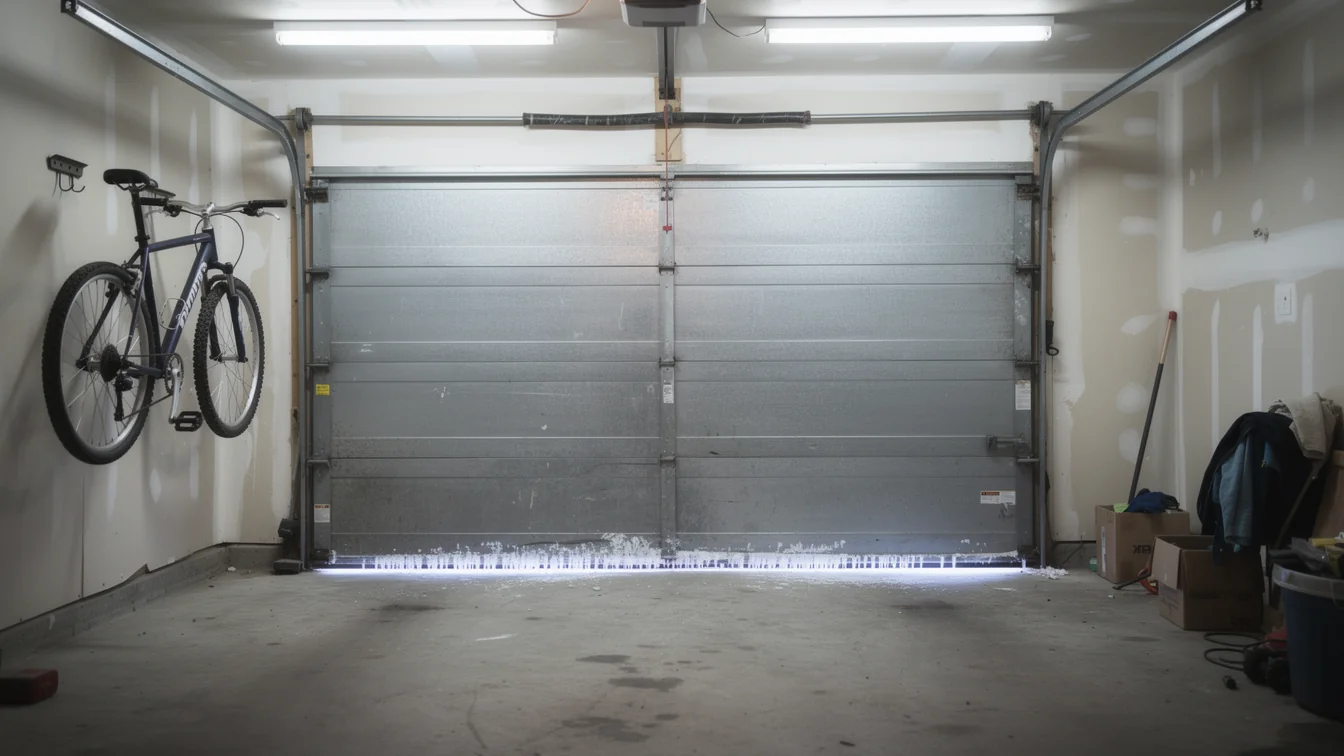
Potomac homes built from 1938 to 2014 often have garage doors with little insulation, built before modern energy codes.
Read moreReady when you are
Potomac Garage Door Pros repairs and installs garage doors, springs and openers in Potomac, MD and the surrounding area.