What That Means for Your Potomac Garage Door
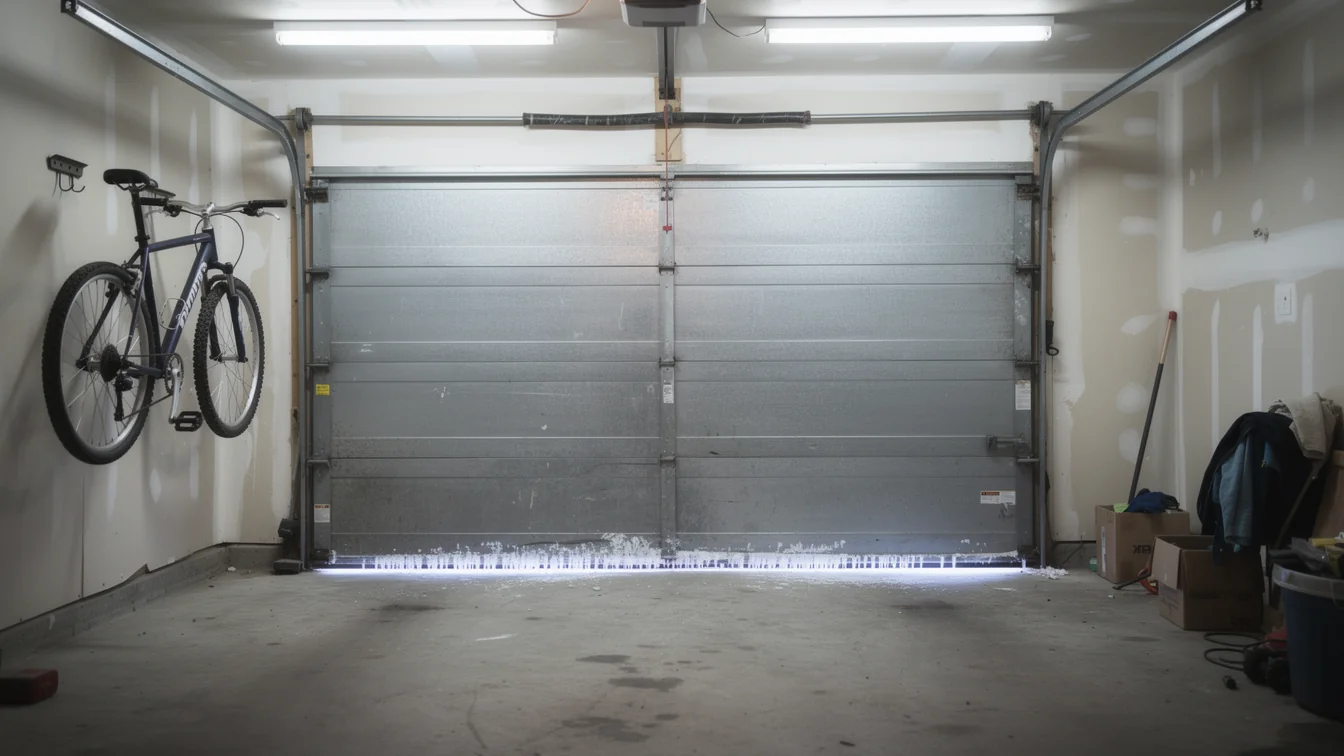
Potomac homes built from 1938 to 2014 often have garage doors with little insulation, built before modern energy codes.
Read moreBlogPotomac, MD · 5 min read
What a grinding, popping, or screeching garage door actually means in Potomac homes built 1938-2014, and when the noise is a $20 fix or a door you replace.
Local detail
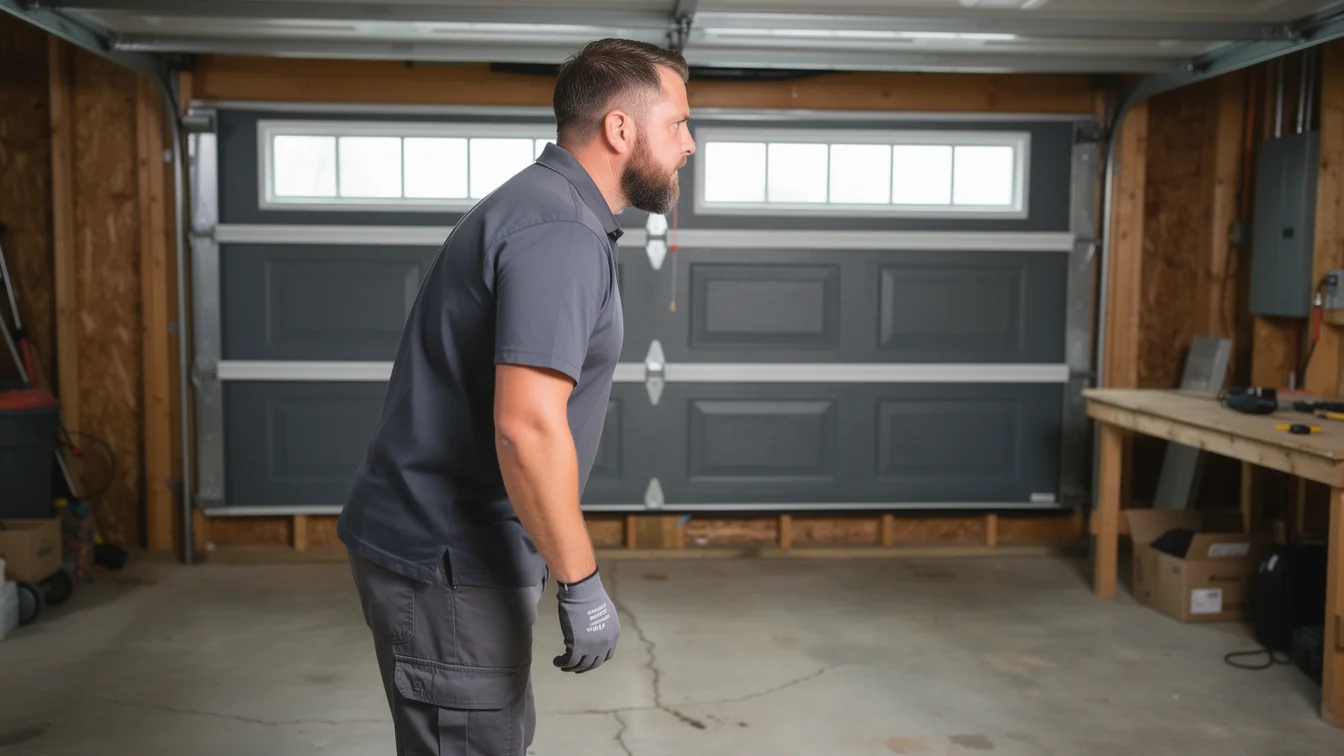
Most garage doors in this area were put up somewhere between 1938 and 2014, with the typical house dating to around 1970. That spread matters because it means you've got three or four generations of hardware still in service across Potomac and the 61 named areas around it - original steel track from the 60s next to a replacement opener from last decade, bolted onto the same jamb. A noise that would be nothing on a 2014 door can mean something different on a 1970 one.
A rhythmic thump once per rotation is almost always a flat spot on a roller, or a roller that's worn enough to knock in its track. A sharp bang, usually followed by the door refusing to move, is a torsion spring letting go - common on the older setups where the spring's been doing the same job since the Nixon administration and nobody's touched it. A grinding whine from the opener head is usually the gear kit, not the door itself, and it's worth telling the difference before you call anyone out.
Squeal on the way up or down, especially at the top of the travel, points to dry hinges or a track that's gone slightly out of plumb - not uncommon on houses from the 60s and 70s where the framing has settled a little over fifty-plus years. None of these are emergencies by themselves. What they tell you is where to look before the part fails outright.
The area
We don't have a flat rate to quote you here because what a noise costs to fix depends entirely on which part it is and how old the rest of the door is. A roller swap on a door that's otherwise sound is a different job from a spring replacement on hardware old enough that the rest of the track is due too. What we can tell you is that in a service area where the median house went up around 1970, we see a lot of doors where fixing the noise properly means replacing more than the one part that's making it - because the bracket or the drum next to it is just as tired.
That's the honest limitation: if you call about a squeal and we find the track bent from decades of settling, a lubrication job isn't going to fix it, and we're not going to tell you it did. Sometimes the right answer costs more than the noise by itself would suggest, because the noise was never really the problem - it was the symptom.
We'll always look at what's actually making the sound before quoting anything, not quote off a description over the phone.
What we find
Call before it fails, not after, if you can help it. A spring that's visibly stretched or a cable with frayed strands on a door from the 60s-70s stock common across this area is a safety problem, not a maintenance item - that's steel under tension, and it doesn't warn you twice. If the door drops instead of lowering smoothly, or one side visibly lags the other on the way up, that's a cable or a drum, and running it again risks the door coming off track entirely.
If the noise is new and the door still opens and closes evenly, you've got time to get it looked at on a normal schedule rather than an emergency one. Grinding from the opener, as long as the door itself still moves square, is usually a gear kit - annoying, not dangerous, and not something that gets worse overnight the way a spring does.
The one thing we'd tell you not to wait on: any door where the noise changed suddenly, rather than gradually. A gradual squeak building over weeks is wear. A sudden new clunk or bang is something that moved or broke, and on hardware that's been in a Potomac garage since the 1970s stock was built, that's exactly the kind of part that doesn't give much warning before it lets go the rest of the way.
How we work
This area sits in a cold, severe climate band, and that shows up in garage door noise in a specific way: metal contracts in the cold, and a track or bracket that was fine in August can develop a knock in January simply because the gaps between fasteners tightened up. Grease that was fine at 70 degrees gets stiff at 20, and a door that opened quiet all summer starts groaning the first hard freeze - that's usually the lubricant, not a broken part, but it's worth checking before you assume the worse.
Springs are the other piece. Steel under tension behaves differently cold, and a spring that's already near the end of its life is more likely to go in a cold stretch than a mild one - which is part of why late-winter spring failures are common on older torsion hardware around here. If your door's noise shows up mainly on cold mornings and settles down by afternoon, that's a strong sign it's temperature-related and not a developing fault, but it's still worth a look before next winter rather than during it.
Questions
Usually not on its own. Cold stiffens grease and shrinks metal slightly, which can bring out a squeal that disappears once things warm up. It's worth a lubrication check, but if the door still opens evenly and the noise goes away by afternoon, it's not an emergency - just note it and get it looked at before next winter.
On older torsion hardware common in this area, a sudden bang followed by the door not moving is almost always a broken spring. Don't try to open the door manually past that point - the spring's job was holding the door's weight, and without it the door is heavier than it looks. Call before you try to force it.
Usually less urgent. Grinding from the opener head, as long as the door itself still travels smoothly and evenly, typically points to the opener's gear kit wearing down rather than anything structural. It's worth fixing before it fails completely, but it's not a same-day safety issue the way a frayed cable or stretched spring is.
Recommendation
More garage door guides for Potomac homeowners.
Potomac homes built from 1938 to 2014 often have garage doors with little insulation, built before modern energy codes.
Read more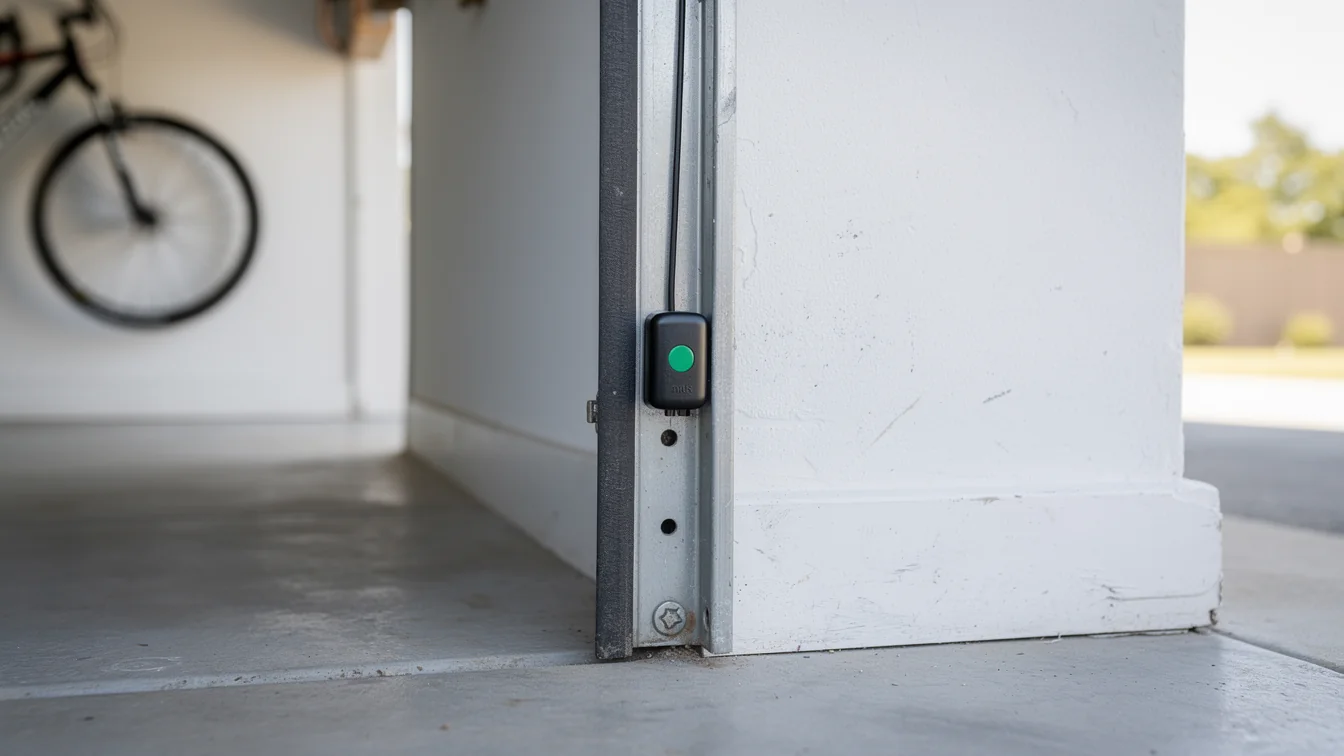
Why garage door safety sensors drift out of alignment in Potomac homes built from the 1930s through the 2010s, and what it takes to fix them for good.
Read more
What a garage door service call actually includes for Potomac homes built from 1938 to 2014, with notes on the 1960s-70s stock and cold-climate wear.
Read moreReady when you are
Potomac Garage Door Pros repairs and installs garage doors, springs and openers in Potomac, MD and the surrounding area.