When a Garage Door Repair in Potomac Stops Being Worth It
Garage door repair for Potomac, MD.
Read moreBlogPotomac, MD · 4 min read
A look at what's worth repairing on the 1960s-70s doors common across Potomac, MD, and when the cold-weather hardware on them finally gives out.
Local detail
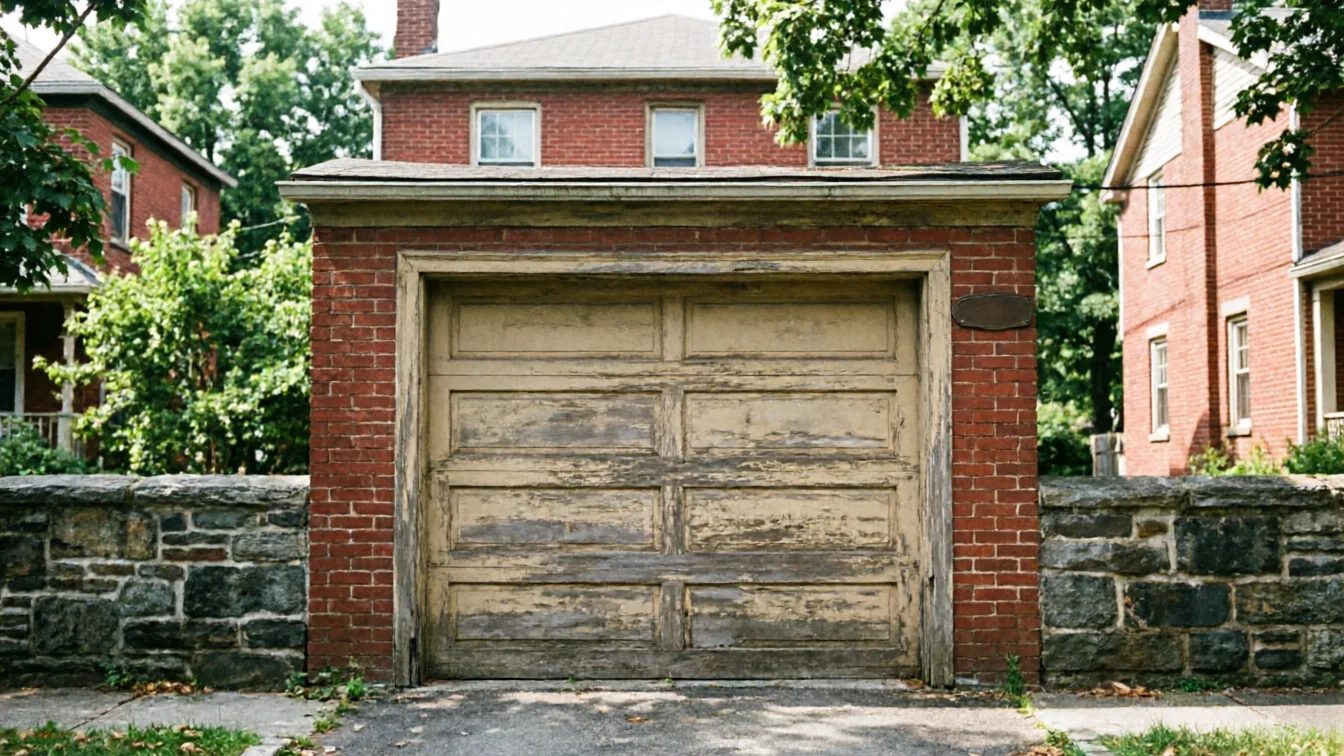
Most of the housing stock around Potomac went up between 1938 and 2014, but the median build year sits around 1970, and a big share of that is the 1960s-70s wave that filled in 61 named areas of this part of Montgomery County. That matters because a door is only as good as the hardware it was built with, and a door from that era is running torsion springs, rollers, and track that were engineered to a different set of expectations than what's sold today. The spring might still lift the door. The opener might still click on. But the galvanizing on an original spring from 1968 has had fifty-plus years to work-harden and fatigue, and that's a different failure mode than a spring that's five years old and just undersized for the door. When we look at an older Potomac door, we're not asking "does it still open." We're asking whether the track alignment, the hinges, and the panel seams have held up to decades of freeze-thaw cycles, because that's what actually decides whether a repair holds or whether you're back out here in eight months.
The area
We don't post flat prices here because what a repair costs depends on what's actually wrong and what's still original versus what's been swapped out in a past repair. A torsion spring swap on a door that's otherwise sound is a different job, and a different bill, than one where the track has shifted enough that the rollers are chewing up the jamb. What we can tell you is that a lot of the doors we see on original 1960s-70s hardware in this area are candidates for a straightforward spring and roller job rather than a full replacement, because the panels themselves - wood or early steel - were built heavier than a lot of what's sold today. That's a point in the door's favor, not against it. Where it tips toward replacement is when the track has been bent and reset more than once, or when a prior owner mixed parts from two different eras of hardware, because at that point you're paying to keep patching a system that was never one system to begin with.
What we find
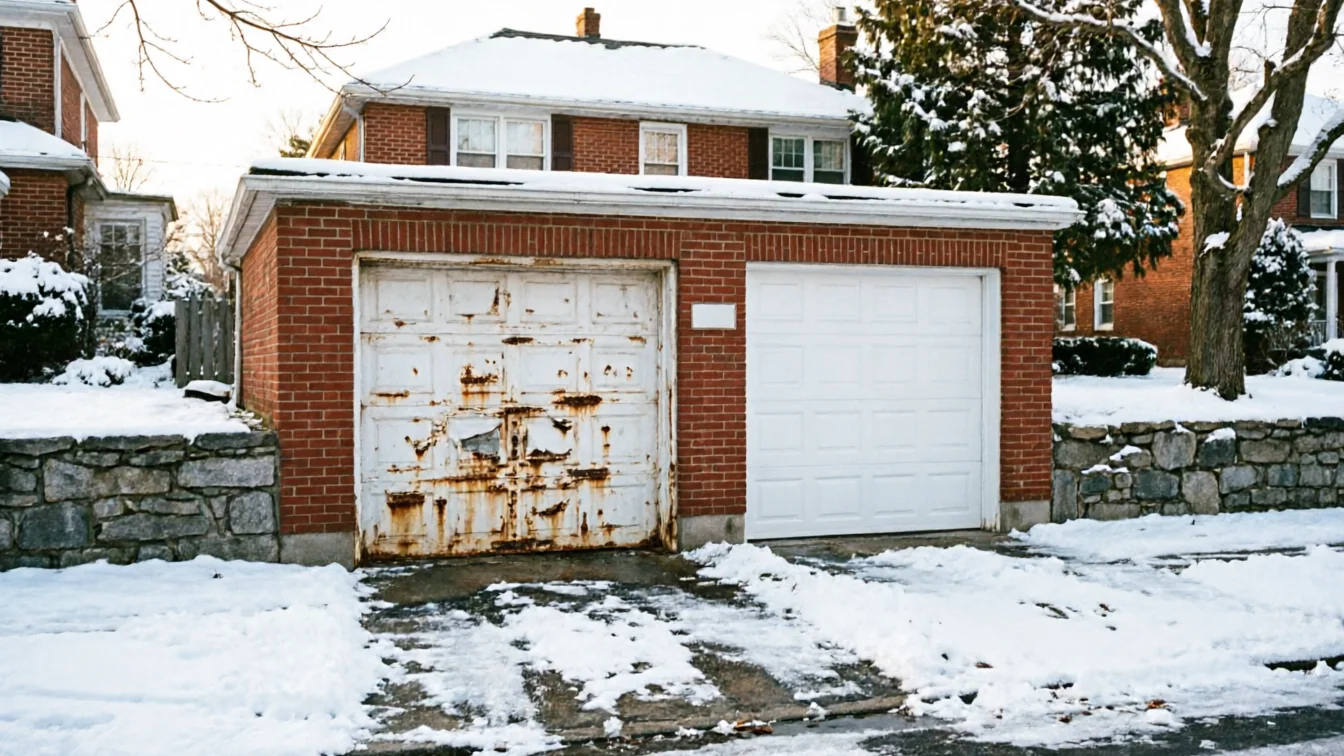
Call before the spring snaps, not after, if you can tell something's off - the door is heavier to lift by hand, it's off level by more than an inch across the opening, or you hear a grinding sound low in the track instead of a smooth roll. Those are the three things that matter most on a door that's been in service since the 1960s or 70s: the spring's tension, the track's alignment, and whether the rollers are original steel or have already been swapped for nylon. An honest limitation here: if the bottom panel has rusted through or the wood has delaminated at the corners, that's not a repair job, that's a door that's done its time, and we'll tell you that instead of billing you for a patch that won't last the winter. A door with sound panels and bad hardware is worth fixing. A door with failing panels is not, no matter how good the spring job would be.
How we work
This area sits in a climate band classed as cold and severe, and that shows up on a garage door in a specific way: the steel contracts in hard freezes, the weatherstripping at the bottom panel hardens and cracks, and any moisture that gets into the track hardware freezes and expands the gap between roller and rail. On a door from the 1960s-70s stock common here, that cycle has been running for fifty winters, which is long enough to have worked every joint loose at least once. It's also why a spring that's near the end of its life tends to fail in the cold rather than in summer - steel is less forgiving of sudden load when it's contracted. If your door feels stiff or slow on the first cold morning after a warm stretch, that's not nothing. That's the hardware telling you where it's worn.
Questions
Often, yes, if the panels are sound. A lot of the stock from that era in this area used heavier steel or wood than what's common now, so a spring and roller job can get years more out of it. The panels, not the hardware, usually decide the answer.
Steel contracts, weatherstripping hardens and cracks, and any moisture in the track hardware freezes and widens the gap between roller and rail. On hardware that's been in place since the 1960s-70s, that cycle has already loosened most joints, which is why cold mornings tend to expose a failing spring.
When the panels themselves have rusted through or delaminated, or when the track has been bent and reset more than once with mismatched hardware from different eras. At that point you're paying to patch a system that was never built as one piece, and replacement is the more honest answer.
Recommendation
More garage door guides for Potomac homeowners.
Garage door repair for Potomac, MD.
Read more
Garage door repair for Potomac, MD.
Read more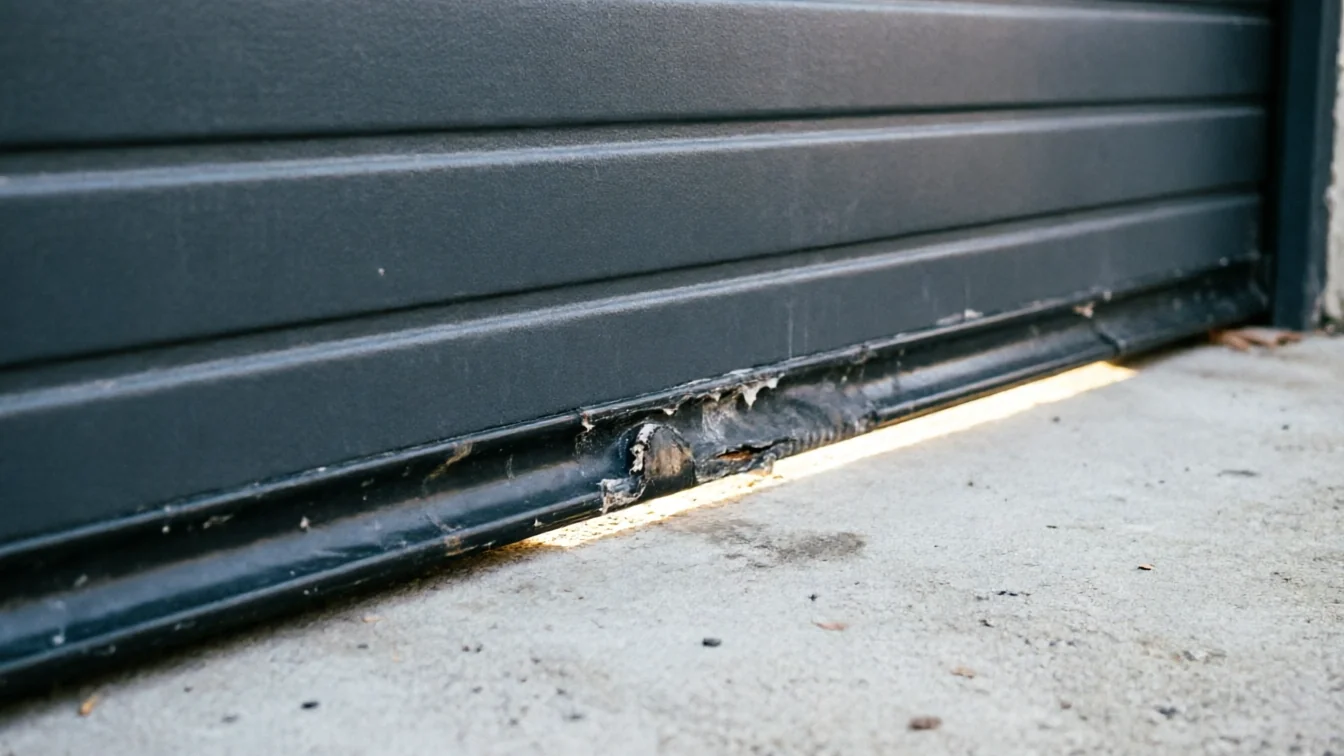
Potomac homes built 1938-2014 lose heat through worn garage door seals in cold winters.
Read moreReady when you are
Potomac Garage Door Pros repairs and installs garage doors, springs and openers in Potomac, MD and the surrounding area.