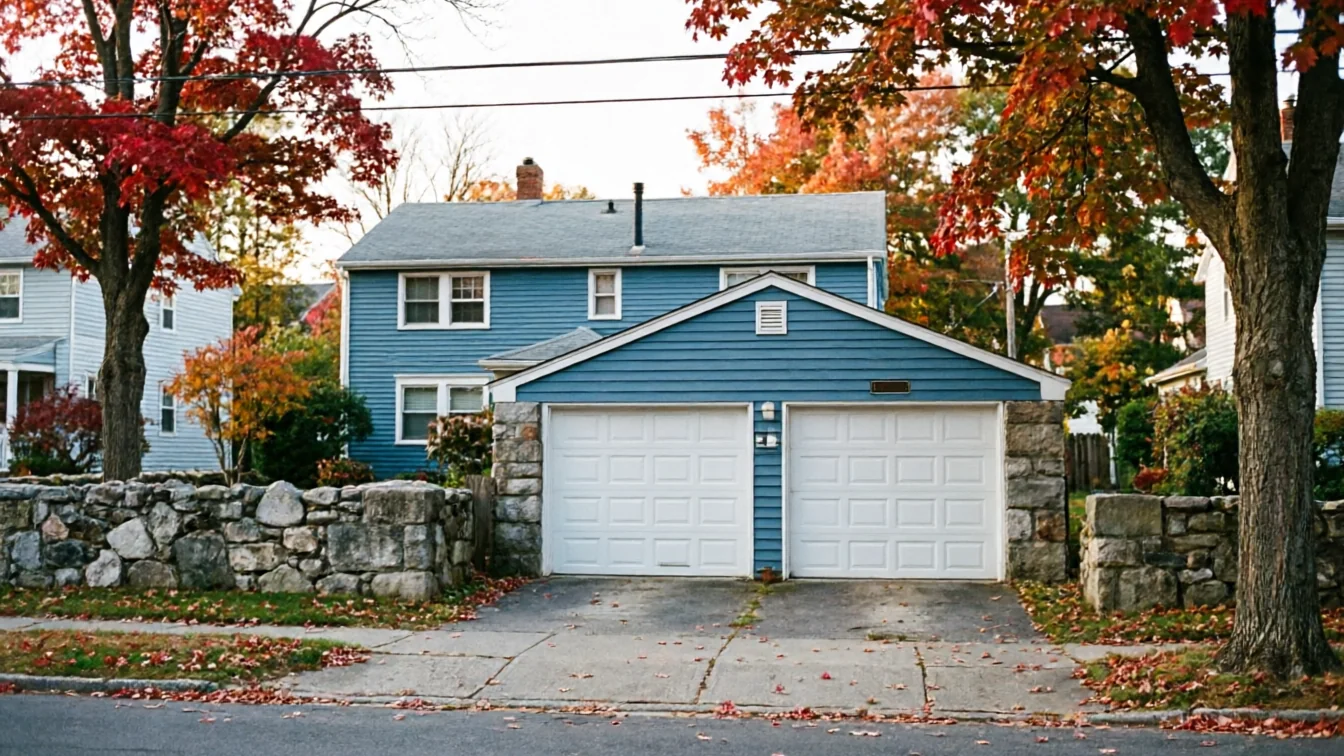
Detached or Attached: Potomac Garages Aren't All Built the Same
How Potomac's 1960s-70s housing stock and cold winters change what detached and attached garage doors need, from insulation to spring sizing to service calls.
Read moreBlogPotomac, MD · 4 min read
Why Potomac's 1960s-70s housing stock and cold winters cause torsion springs to snap, what it costs to fix, and when to call versus wait until morning.
Local detail
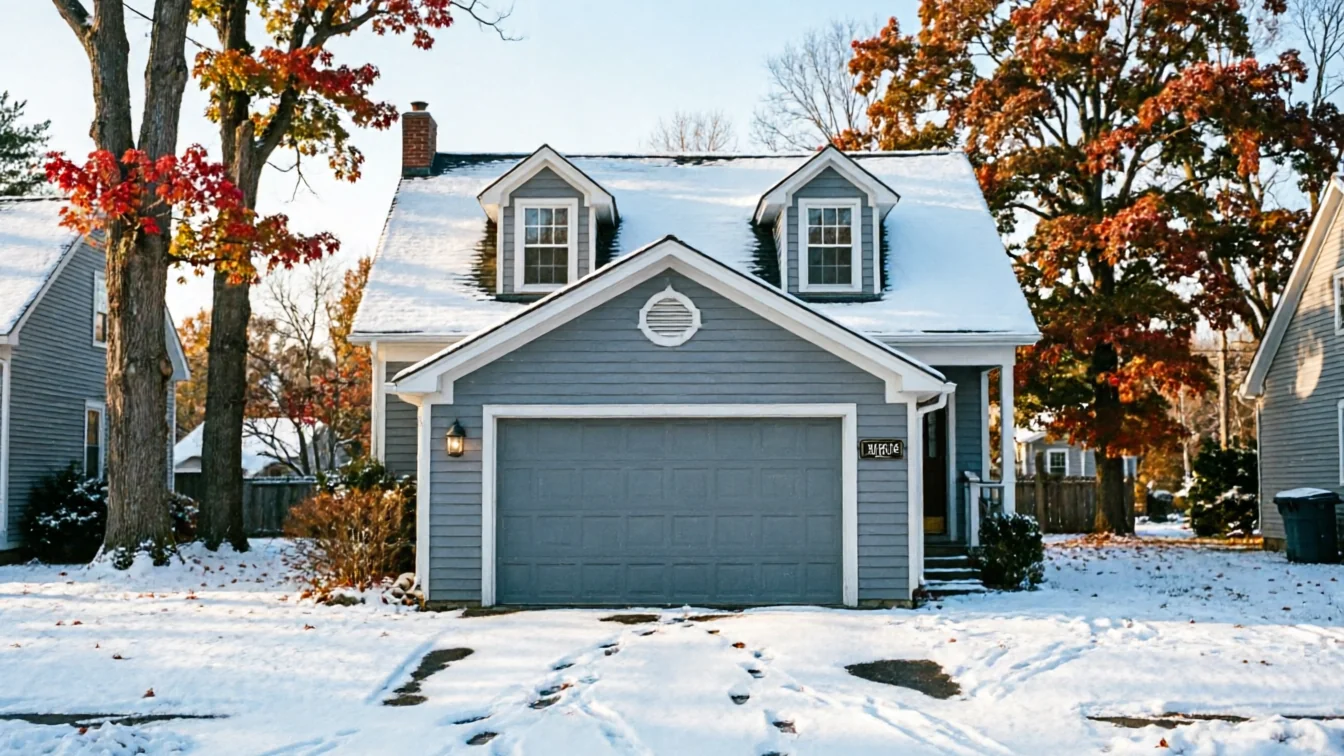
A torsion spring stores tension by twisting around a steel shaft above the door. Cold makes the metal brittle and makes the lubricant inside the coils stiffen, so the spring has less give right when the opener asks the most of it on a frigid morning. In Potomac, most of the housing dates from 1938 to 2014 with the bulk of it going up through the 1960s and 70s. That generation of door came with torsion hardware sized for the door and climate standards of its decade, and a lot of those original springs are still on the house, now four or five decades into a part rated for roughly 10,000 cycles. Add a hard cold snap and a spring that was already near the end of its life finishes the job. You'll usually hear it before you see it: a bang like a shot from the garage, then the door won't lift, or it lifts unevenly and drops on one side. The cable isn't broken, the opener isn't broken, the spring just let go. This isn't a defect in your door, it's wear plus cold meeting at the wrong moment. One spring breaking doesn't always mean the second is far behind, but on a double-spring setup, if one is original-age, the other usually is too.
The area
We don't post a flat number for spring replacement because the right size and wind of spring depends on door weight, spring diameter, and whether the drums and cables need attention too, and we're not going to quote a number before we've seen the door. What we can tell you is what drives the cost up or down on a typical Potomac call: single spring versus a matched pair, whether the shaft or bearings are worn (common once a house is past the 1970s-80s build range common across this area, per F1/F2), and whether you want us to also replace the second spring so you're not back out here in a year when it fails too. Median household income in this service area runs well above the national figure, and we see more owners choose to replace both springs at once rather than patch one and wait on the second - it's a judgment call based on the door's age, not a hard rule. If a shop quotes you an exact price over the phone with no visit, be skeptical.
What we find
A broken spring is not a job to leave for the weekend if the door is stuck down and you've got a car trapped inside, but it's also not something to force open by hand with the opener disconnected - without the spring's counter-tension, a standard door can weigh well over 100 pounds and the cables under a half-wound spring can still whip. If the door is down and stuck, leave it, don't yank the emergency release and try to muscle it up alone. If it's up and stuck, don't park under it and don't run the opener trying to force a cycle, that strains the opener motor and can bend the track. Call when you hear the bang, see an uneven lift, or notice the door sagging on one side under power. We cover Potomac and the surrounding area out to places like Cabin John, Travilah, Brookmont, and North Potomac, so a same-day visit is usually realistic, but we won't promise an exact arrival window here since that's not something we're stating as a fixed fact.
How we work
This area sits in a cold-climate band with severe winter conditions, which means steel hardware on garage doors goes through real freeze-thaw cycling every winter, not just an occasional cold week. Torsion springs lose elasticity as temperature drops, galvanized coating on older springs can develop surface rust where lubrication has worn thin, and nylon rollers common on doors installed through the 1970s-90s get brittle and crack in sustained cold. None of that is unique to one house - it's the pattern across the 1960s-70s housing stock that makes up most of this area. The honest limitation: we can't predict exactly which cold morning a given spring will go, only that age plus cold raises the odds, and a spring that's already groaning or visibly gapped in its coils is worth replacing before a hard freeze rather than after it snaps.
Questions
Cold steel is more brittle and the grease inside the coils stiffens, so the spring has less flex exactly when the opener is asking it to lift a heavy door first thing. If the spring was already near the end of its life, a hard freeze is often what finishes it off rather than a summer afternoon.
We don't recommend it. A wound torsion spring holds enough stored force to cause serious injury, and most homes here still have decades-old shafts, drums, and cables that need inspecting at the same time. This is one job where the risk-to-savings ratio doesn't favor doing it yourself.
Given that most of the housing stock here dates to the 1960s and 70s, yes - a lot of doors are still running hardware well past its rated cycle life. If your spring has never been replaced, age alone is a reason to have it checked before winter, regardless of whether it's showing visible wear.
Recommendation
More garage door guides for Potomac homeowners.
How Potomac's 1960s-70s housing stock and cold winters change what detached and attached garage doors need, from insulation to spring sizing to service calls.
Read more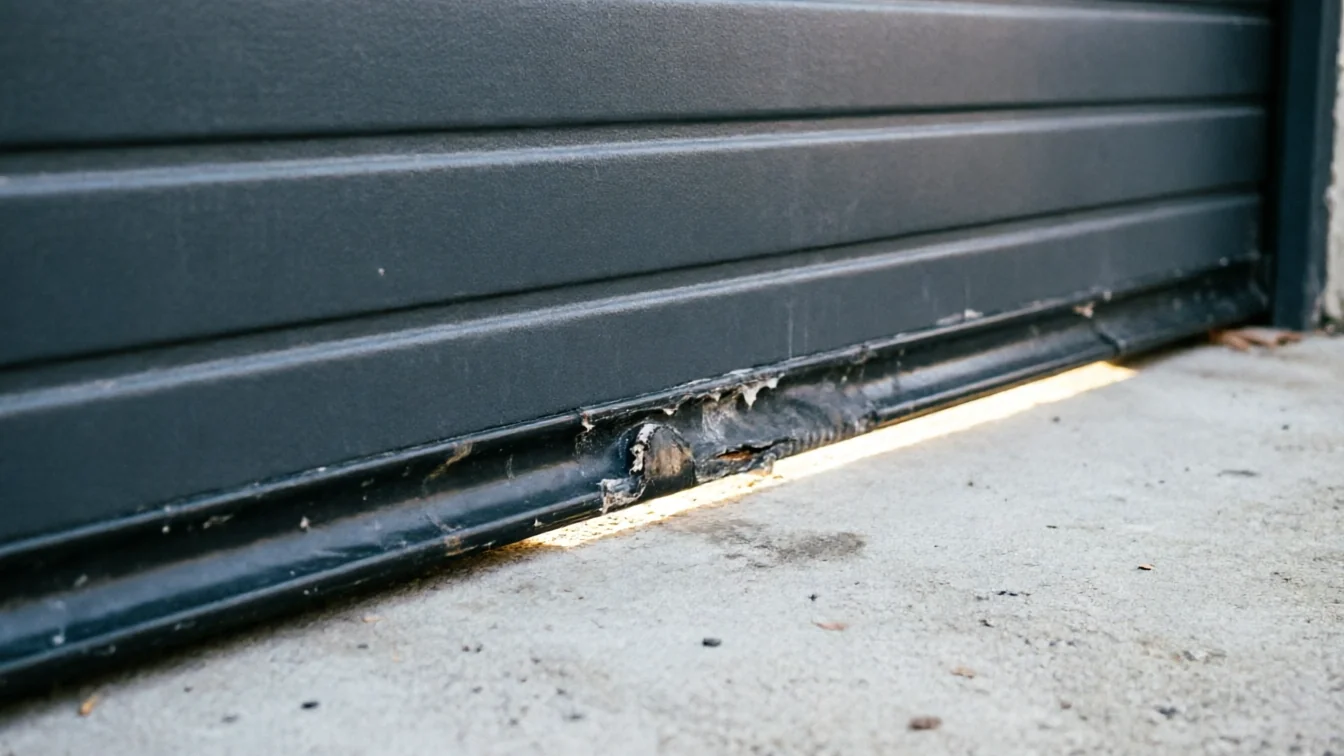
Potomac homes built 1938-2014 lose heat through worn garage door seals in cold winters.
Read more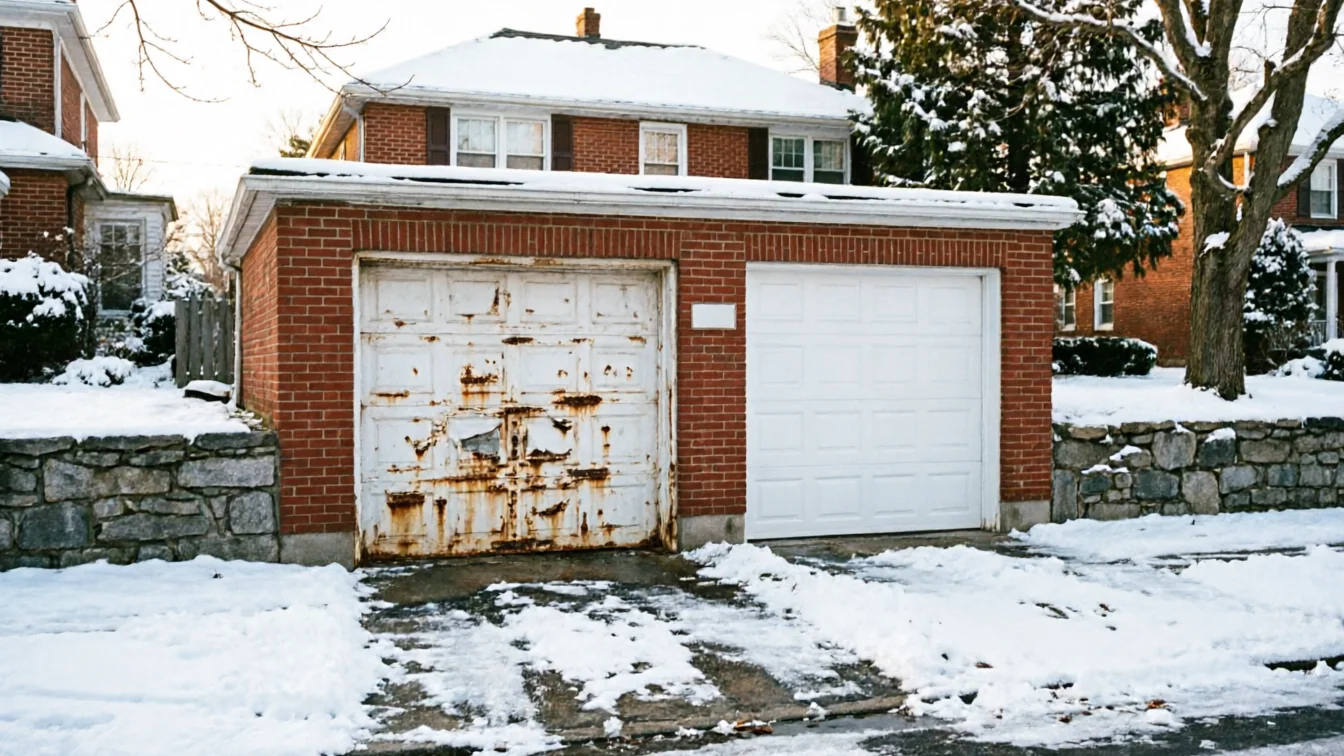
Garage door repair for Potomac, MD.
Read moreReady when you are
Potomac Garage Door Pros repairs and installs garage doors, springs and openers in Potomac, MD and the surrounding area.