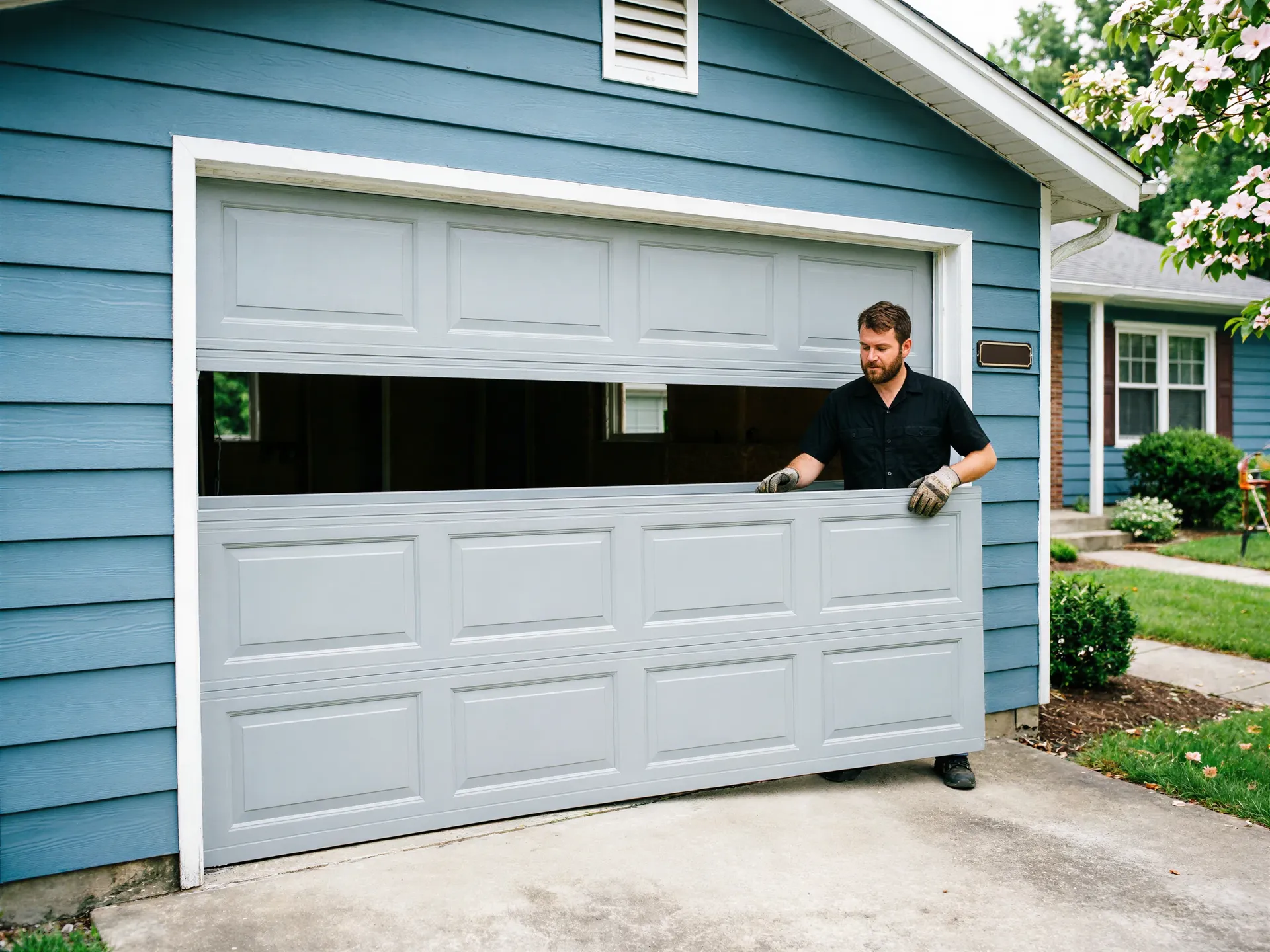
Doing It Yourself
North Potomac is a newer build than the rest of the service area we cover out of Potomac. The median house here went up around 1988, a good two decades after the 1970 median for the wider territory.
Late-80s sectional layout
That gap matters more than it sounds like it should. A house built in the late 80s almost always has a standard 16-foot or 9-foot steel sectional door on torsion springs mounted overhead, not the older one-piece or side-mounted hardware you still find in the pre-1970 pockets closer in.
Spring is the trap
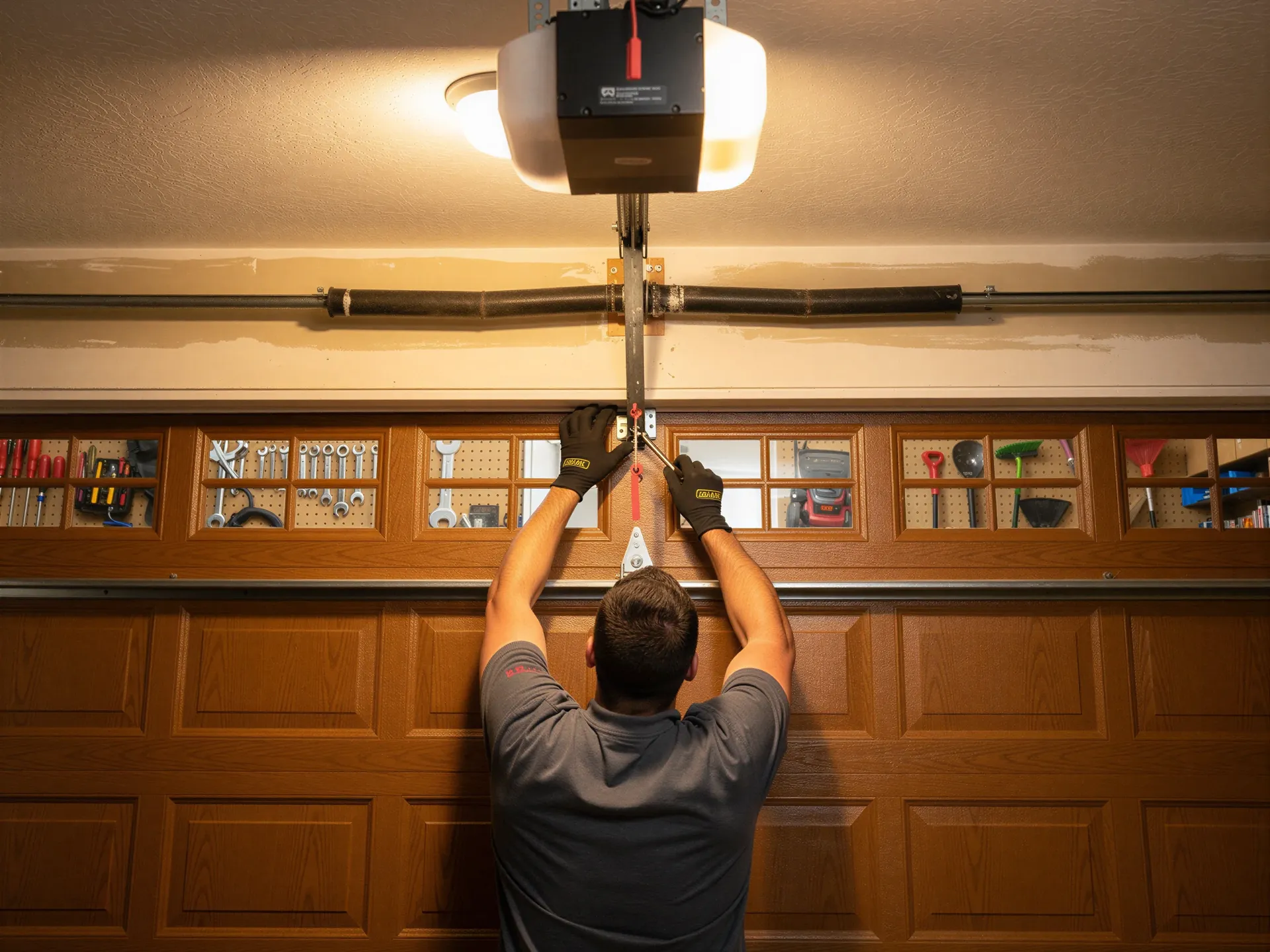
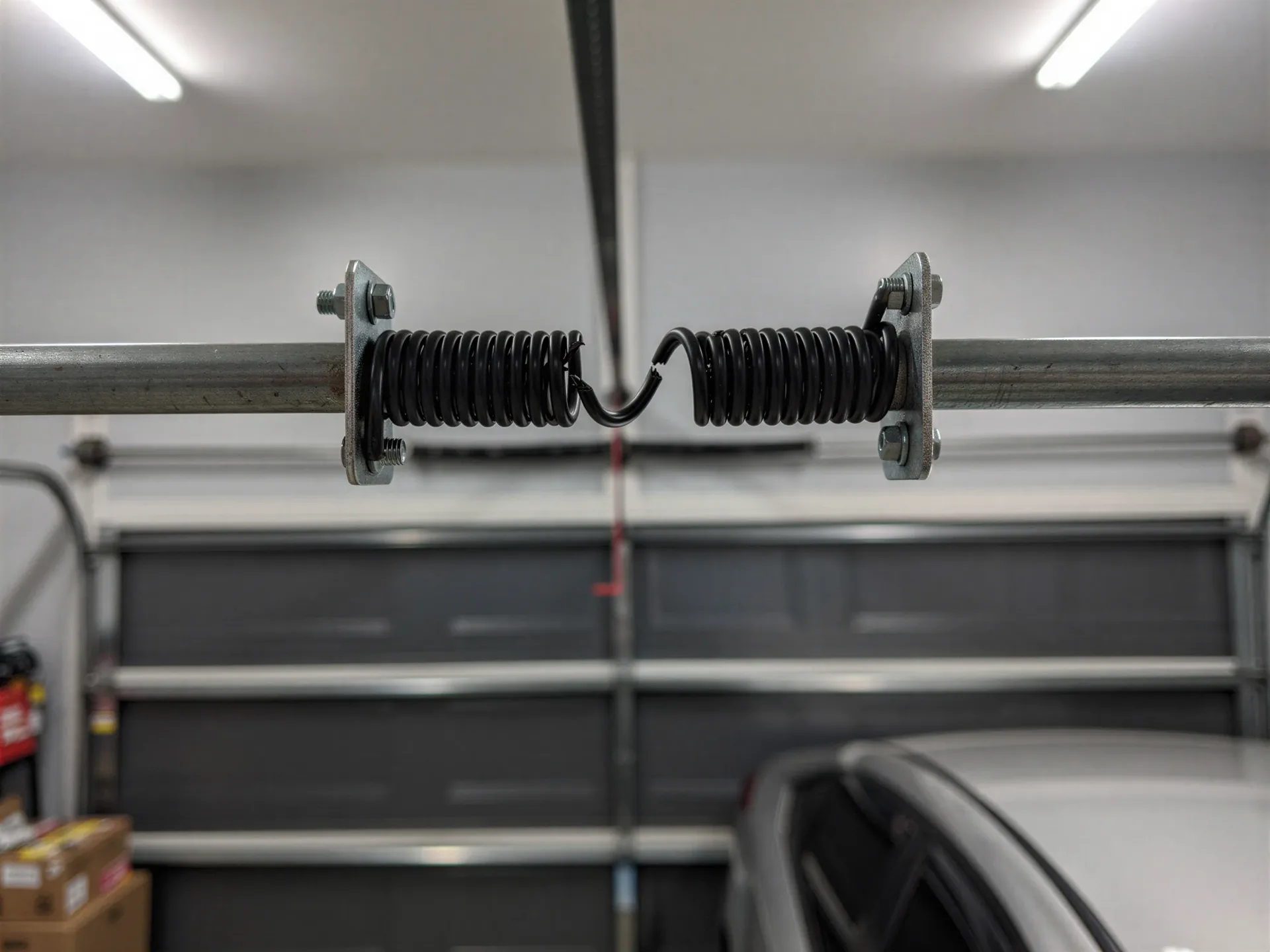
If you're replacing a door here, you're very likely swapping one sectional for another, same rough opening, same track style. That's a straightforward job on paper. Where people get into trouble doing it themselves is the spring. A torsion spring on a double door is wound under serious tension, and the tools to do it safely aren't something most homeowners own or want to learn on.
Measurement and headroom mistakes
Measuring the opening wrong, or ordering a door an inch short on headroom for the opener you already have, are the two mistakes we see most. If you're set on doing the demo and prep yourself to save on labor, that's fine - just don't be the one standing under the spring bar when it comes loose.
What Is on the Truck
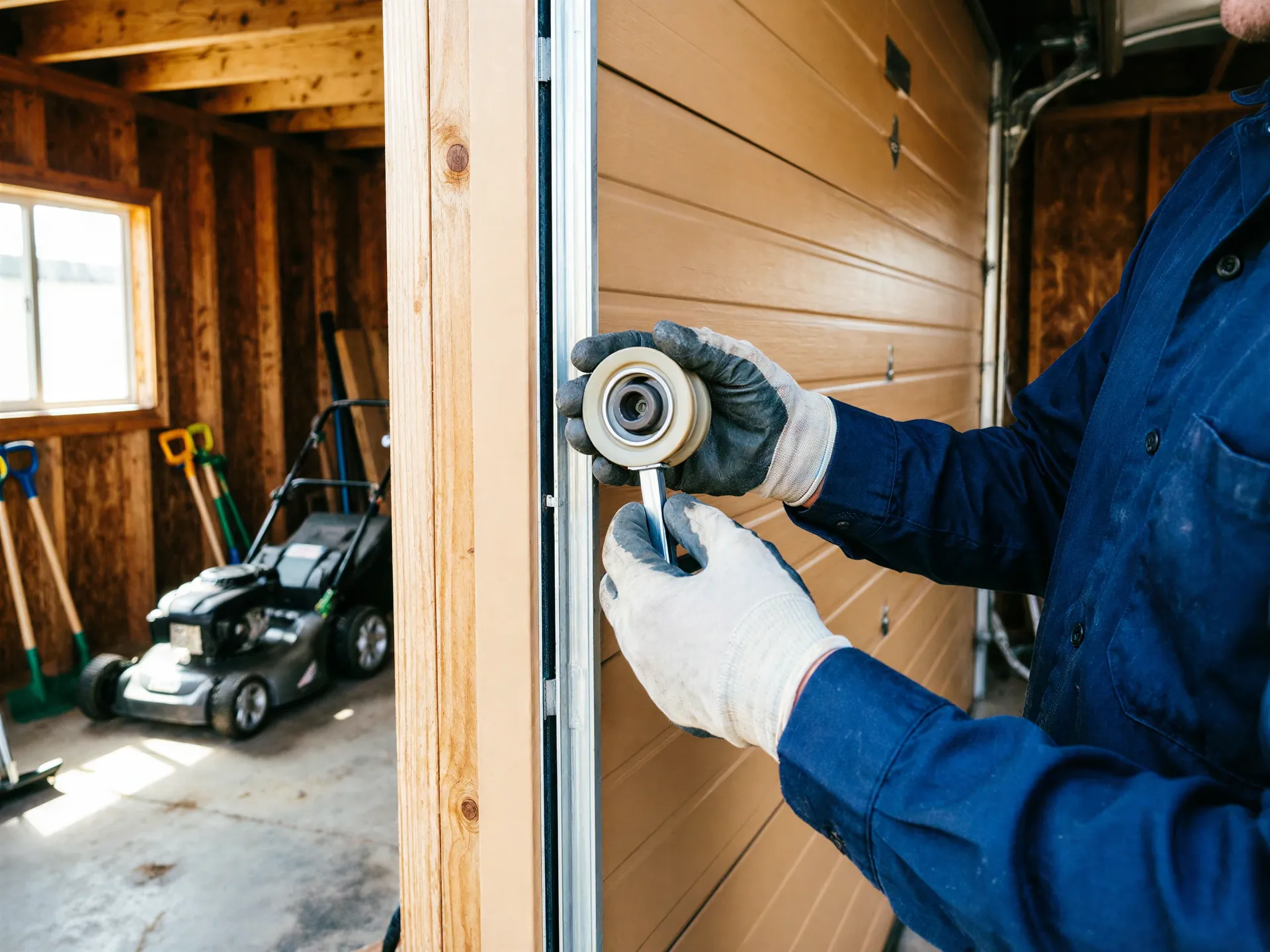
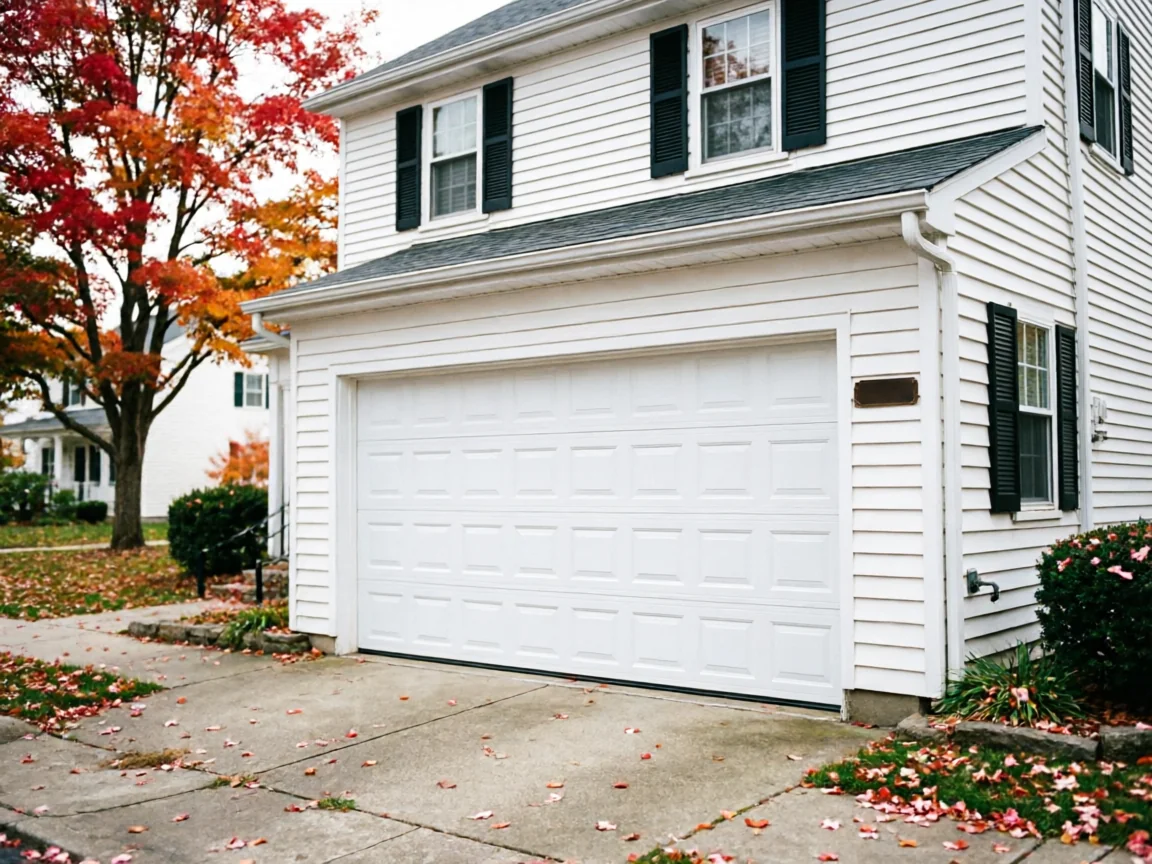
For a house built in this era, we bring steel sectional sections in standard residential widths, torsion springs sized to the weight of an insulated door (worth the upcoint given the cold-climate swings this region gets), new rollers, end bearings, and track sections sized for a standard 7-foot ceiling clearance. We also carry openers compatible with the newer safety-sensor code most builder-grade doors from this period were never fitted with. What we don't carry on a standard run is anything custom - a nonstandard width, a carriage-house-style door, or a wood door needs an order placed ahead, since that's not stock material. If your opening is a true custom size, we'll tell you that at the first look rather than try to force a stock door to fit.
How It Shows Up
The job starts with a look at what's there now - spring type, track style, opener age - before anything gets ordered.
Single-trip installation scheduling
Because North Potomac sits about 6 miles from where we're based in Potomac, we schedule the install as a single trip once the door and hardware are on hand, not two separate visits for measure and install.
Install sequence and testing
Old door and track come out, new jambs get checked for square, new track and springs go up, and the opener gets set and tested on the new door's weight. A standard double-door sectional swap, where the opening doesn't need rework, usually runs the better part of a day.
Where This Job Goes Sideways
The thing that turns a clean swap into a longer job is the opening itself, not the door. Houses from the late 80s sometimes have headroom that was never generous to begin with, and a newer insulated door with thicker panels can need every inch of it. If the track position has to move, or the header needs reinforcing to carry a heavier door, that adds time and material we can't quote until we've seen the opening in person. The other place this goes sideways is on income and expectations - homeowners in this area tend to want a heavier insulated door with a quieter belt-drive opener, which is a longer order lead time than a bare steel door off the shelf. We'll tell you the lead time before you commit, not after.
Booking a Visit
We run installs in North Potomac out of our Potomac base, about 6 miles away, so we schedule the trip once material is confirmed rather than sending someone out on spec. If you want the broader rundown of what we install and service across the area, that's covered on our main installation page. For what we know specifically about this part of the territory, see the North Potomac service area page.
Talk to a local pro
Garage door service in Potomac?
Same-day service with honest, upfront quotes.