What Causes It Around Here
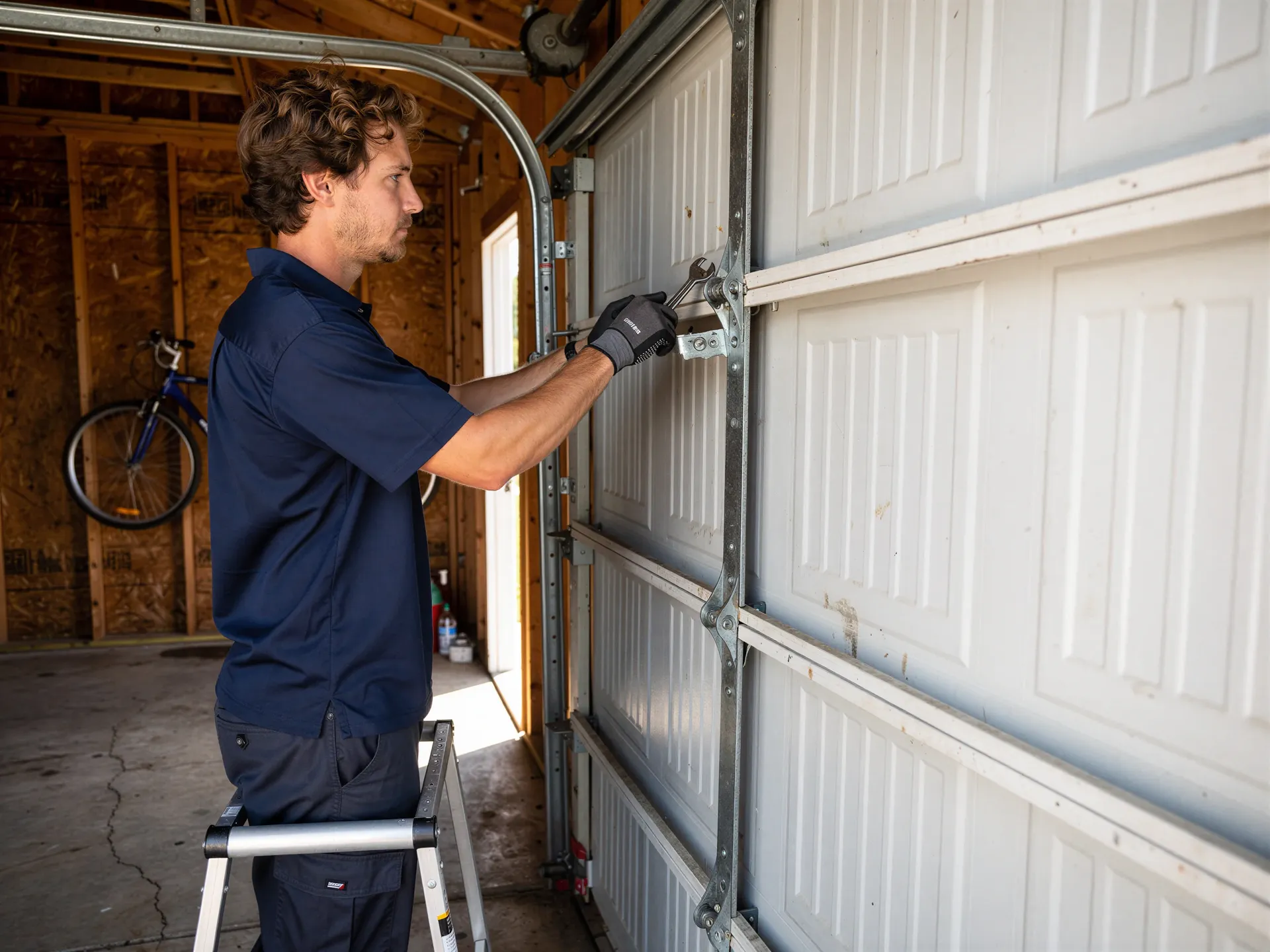
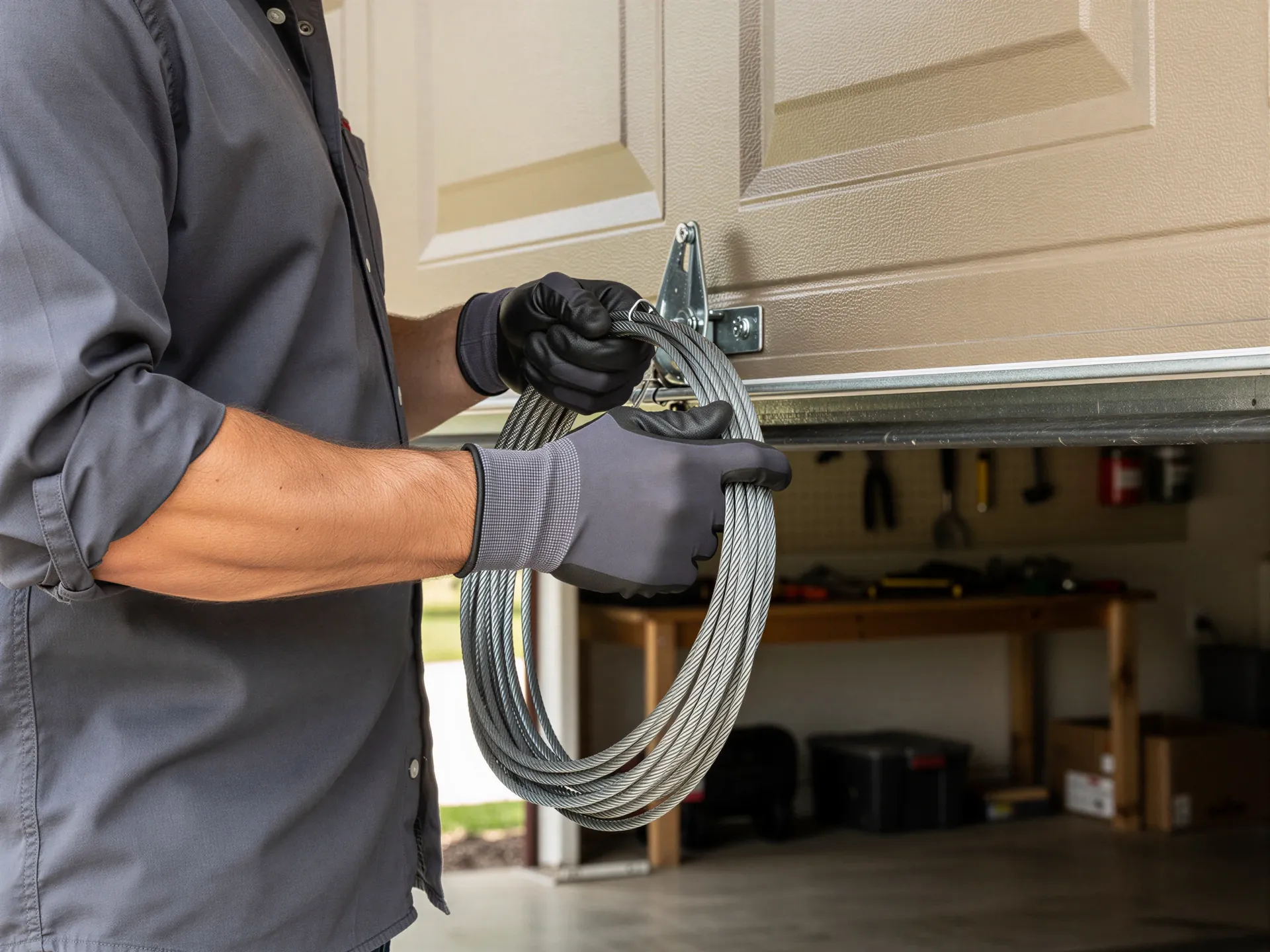
Olney's housing stock centers on 1986, which puts a lot of the doors in this part of the service area on original lift cables that nobody has touched since the house was built. That's close to forty years of galvanized wire doing the same job, usually without a second look unless the door started acting up first. Cable failure at this age isn't surprising - it's overdue. The wire strands fray where they wrap the drum, or corrosion works into the cable where it runs past the bottom roller bracket, especially on doors that sit in an unheated garage through a full winter. We're eleven miles out from our Potomac base to reach Olney, so when we say original, we mean it: these are first-generation cables on first-generation drums, and the drums themselves are often the next thing to go once a cable snaps and the door drops unevenly on one side. A frayed cable rarely fails quietly - it usually takes a hinge or a section of track with it if it lets go while the door's in motion.
How Long You Are Without the Door
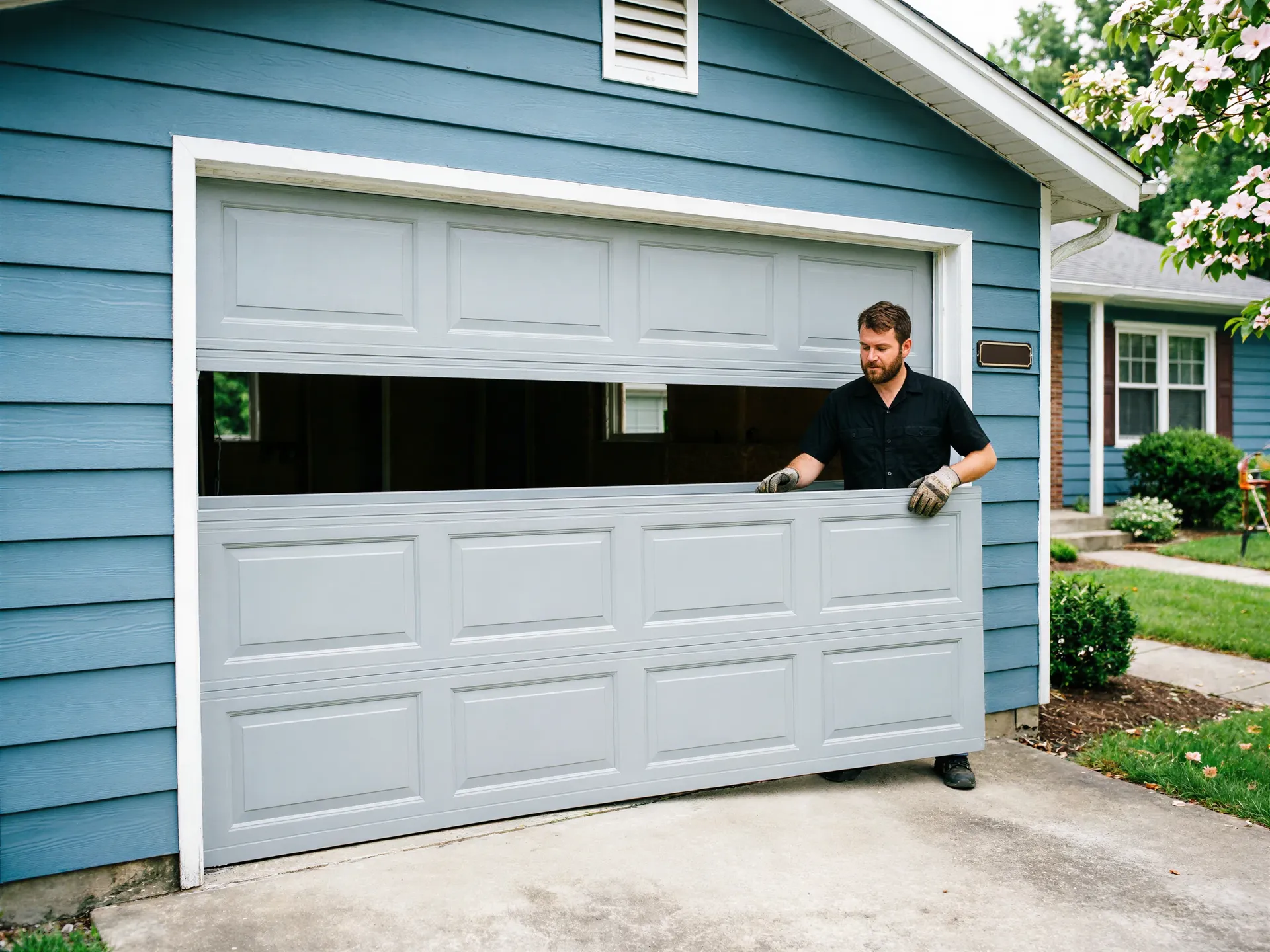
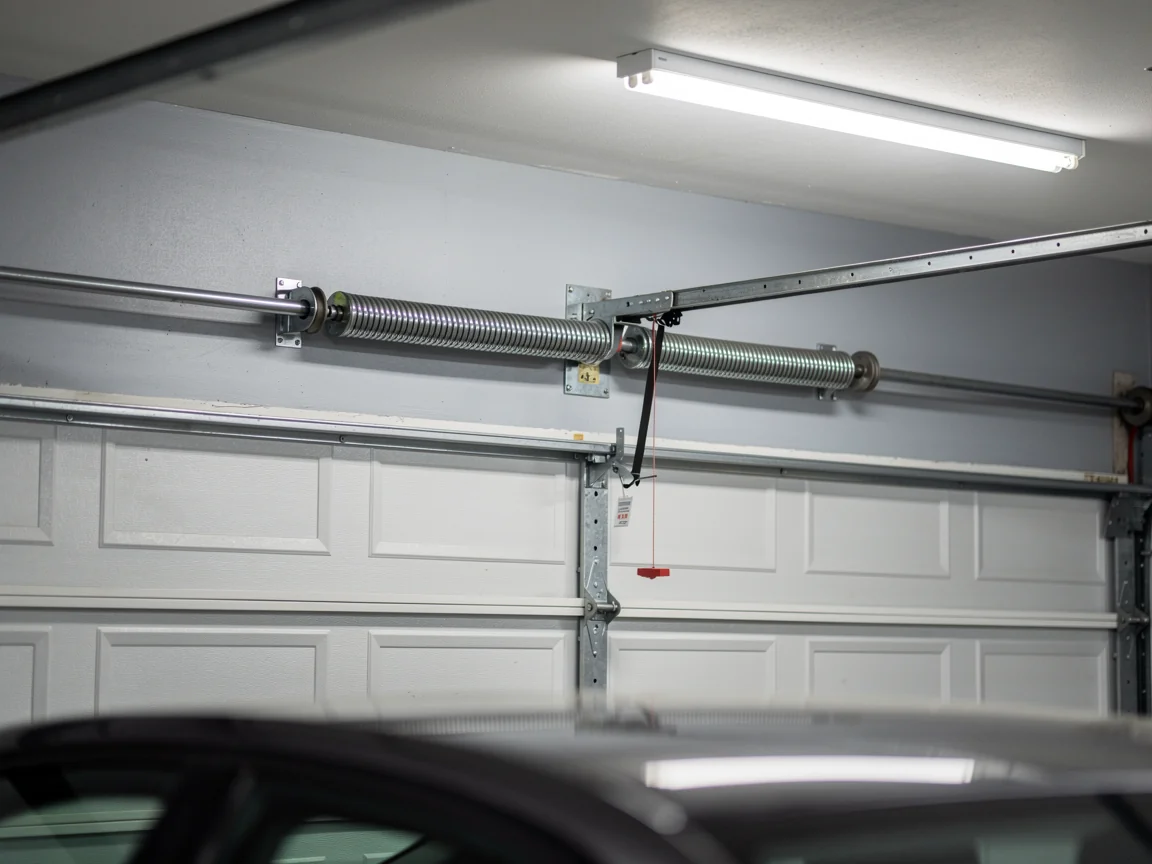
A snapped cable on one side means the door comes down crooked and won't move safely on the opener until someone pulls the drums and re-sets both cables evenly.
Single-cable hazard
That's not a job to leave half-done - a door that looks like it's working but is only hanging on one cable is a hazard, not a convenience.
Dispatch trip timeline
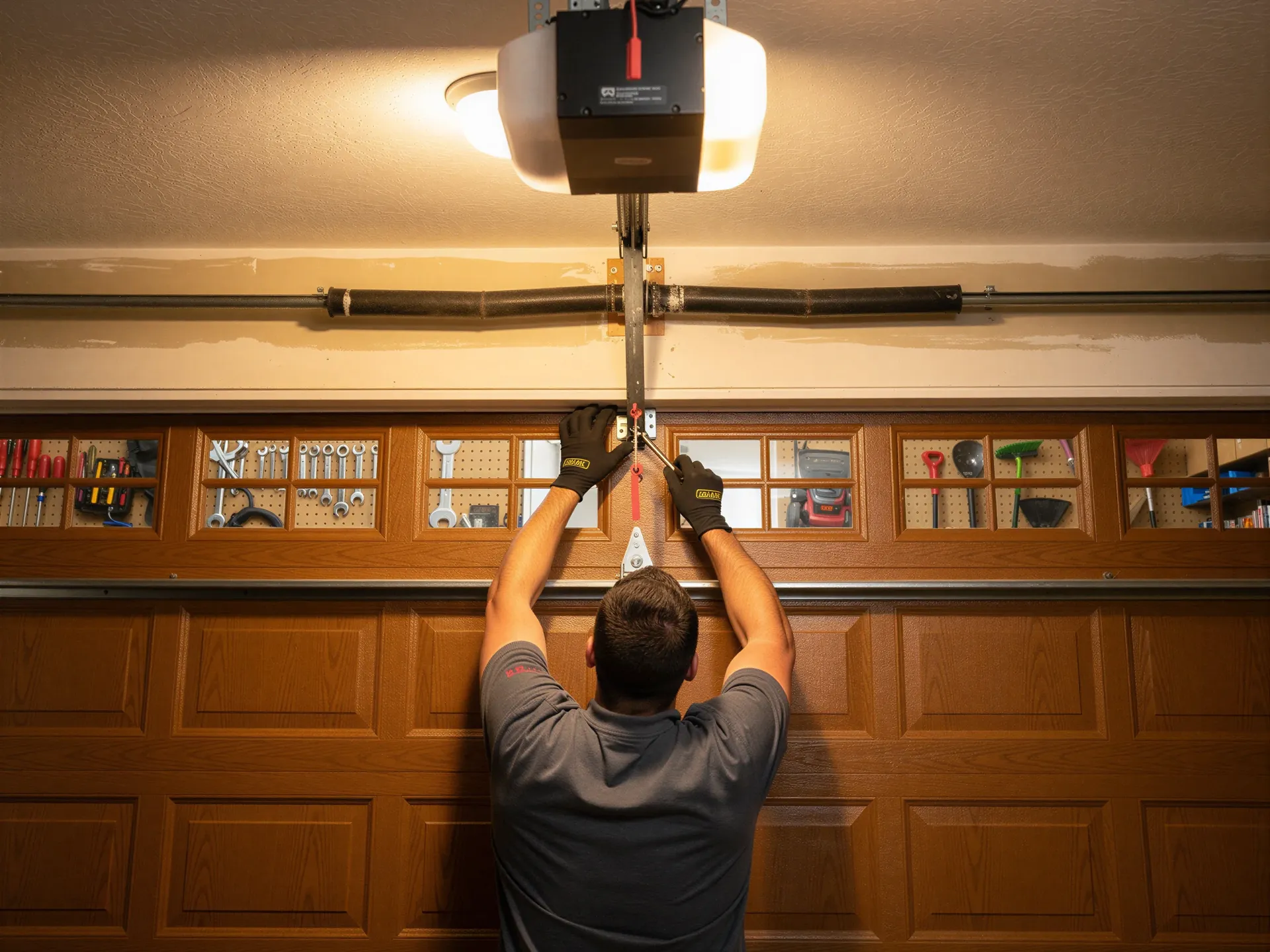
We don't carry a branch in Olney, so the trip itself is part of the timeline; once the truck is on site, a straightforward two-cable swap on a standard torsion system is usually sorted within the hour, assuming the drums and springs underneath are still in decent shape.
Worn drums extend visit
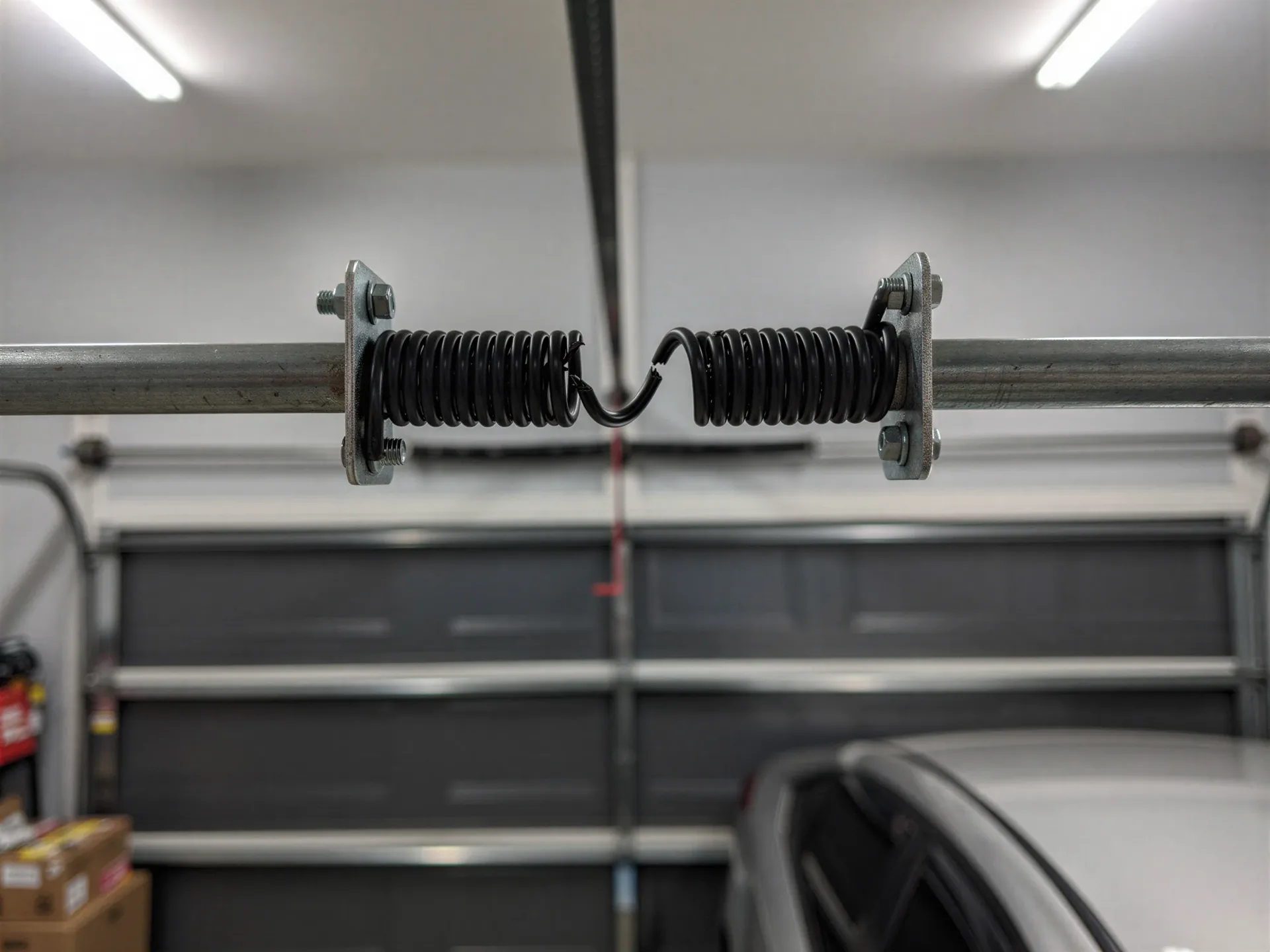
If 1986-era hardware has worn drums or a spring that's also near the end of its life, that adds time, because replacing a cable without checking what it was wrapped around just means we're back for the same complaint in a year.
How It Shows Up
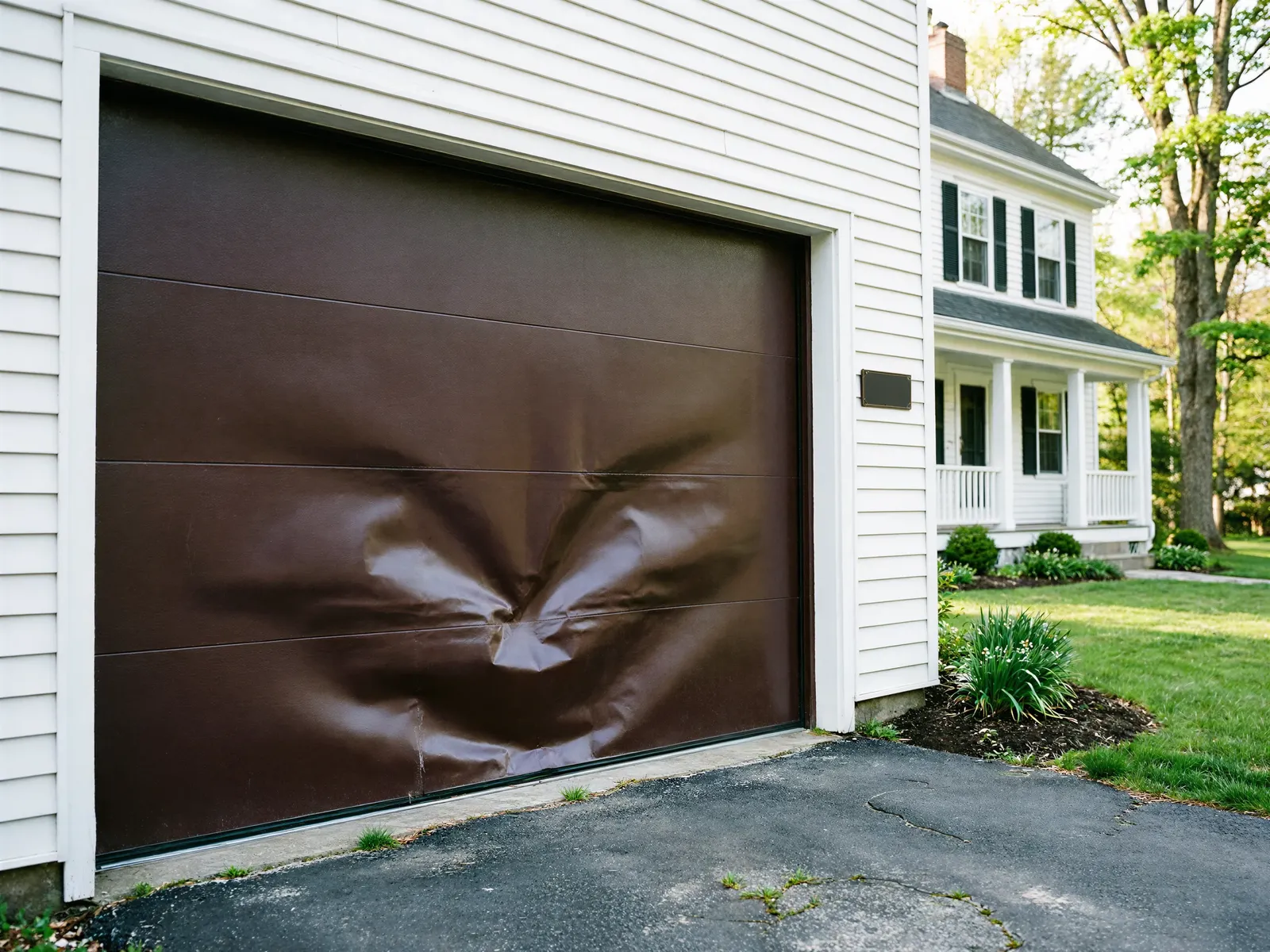
The door looks tilted, one bottom corner hangs lower than the other, or it sticks a few inches off the floor and won't close the rest of the way. Sometimes you catch it early - a visible fray near the bottom bracket, strands starting to separate, a faint grinding sound as the cable rubs against the edge of the drum on its way up. Other times the first sign is the door just stopping mid-travel with a loud snap, and now it won't move in either direction because the opener senses the imbalance and locks out. On the original hardware common to Olney's 1986 build year, we also see cables that have stretched enough to throw the spring tension off, so the door feels heavier to lift by hand than it should, even before anything actually breaks.
What Is on the Truck
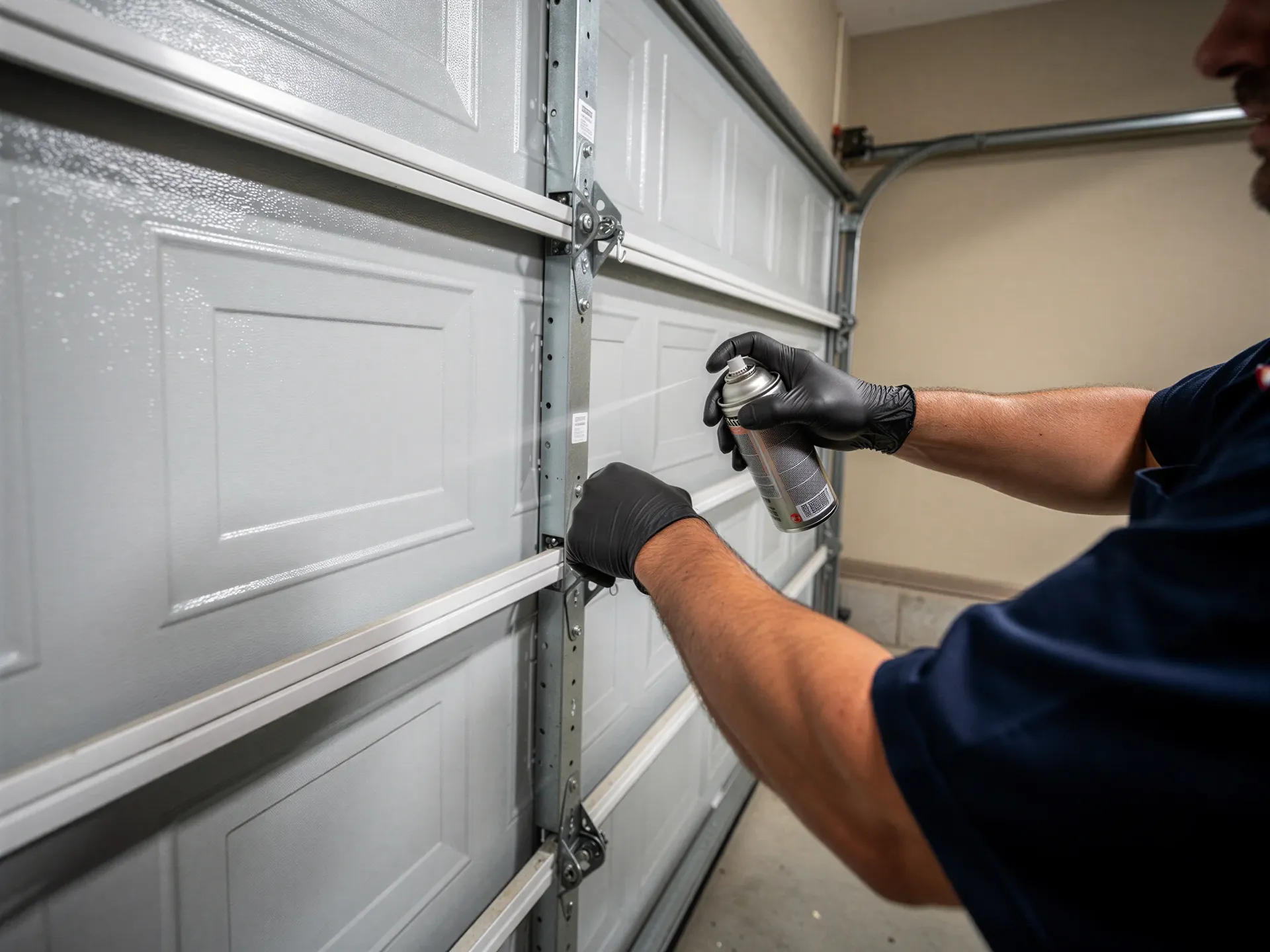
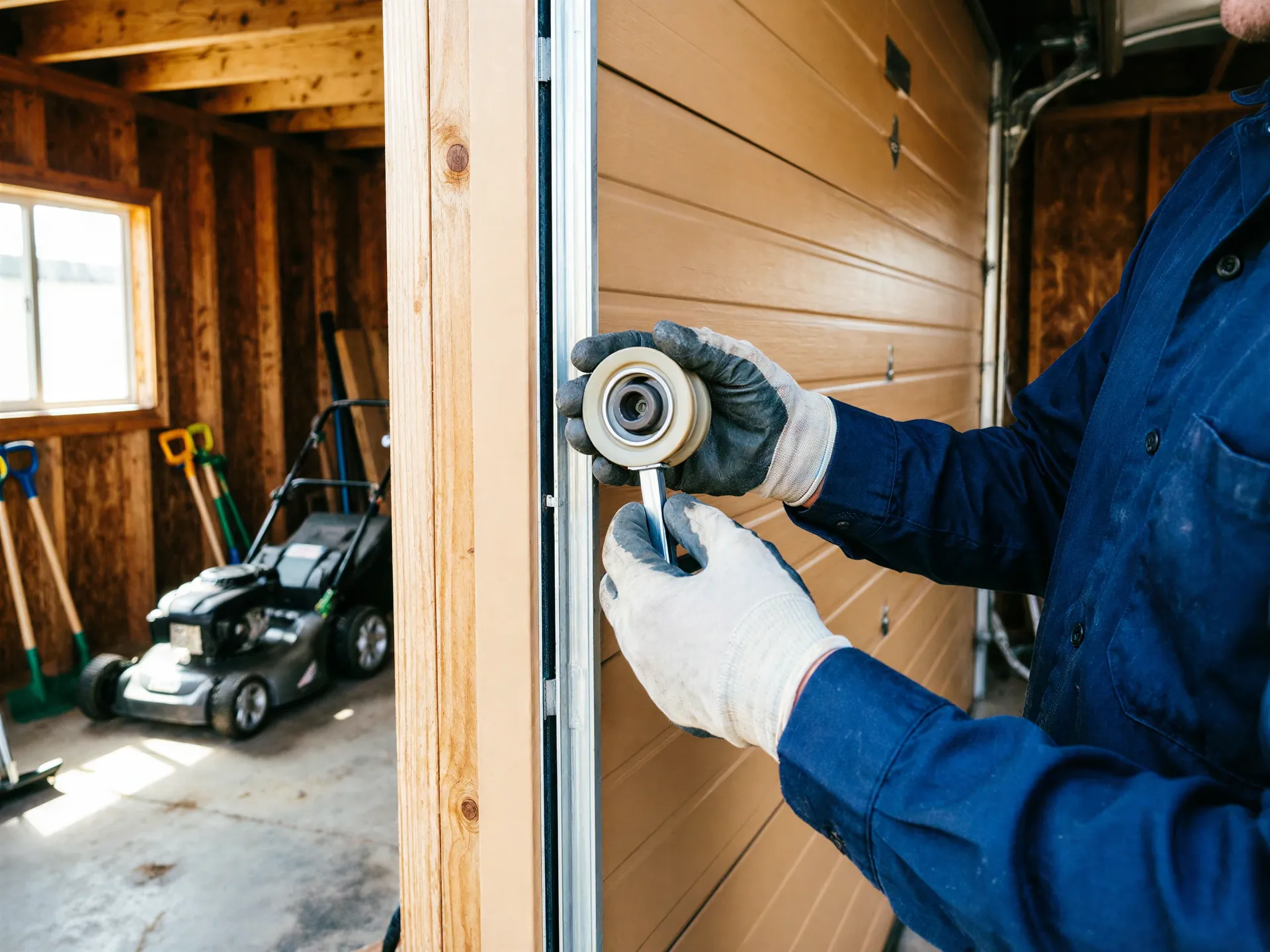
We carry standard-gauge lift cable in the lengths that fit typical residential torsion and extension systems, along with replacement drums, since a cable this old often comes off a drum that's grooved or worn past reuse. What we won't do is replace a cable and leave a spring that's clearly near failure - if the spring's the same age as the cable, which on an original 1986 setup it usually is, we'll tell you straight that doing both at once costs less than a second visit for the spring six months later. One honest limit: if the drums or track brackets are rusted or bent beyond what's on the truck that day, we may need to order a part rather than finish same-visit, and we'll say so before we start rather than after.
Talk to a local pro
Garage door service in Potomac?
Same-day service with honest, upfront quotes.