Booking a Visit
We run this job out of Potomac, about 8 miles from Wheaton, so when you call we're scheduling a drive, not a walk-in from around the corner.
Stocked for local doors
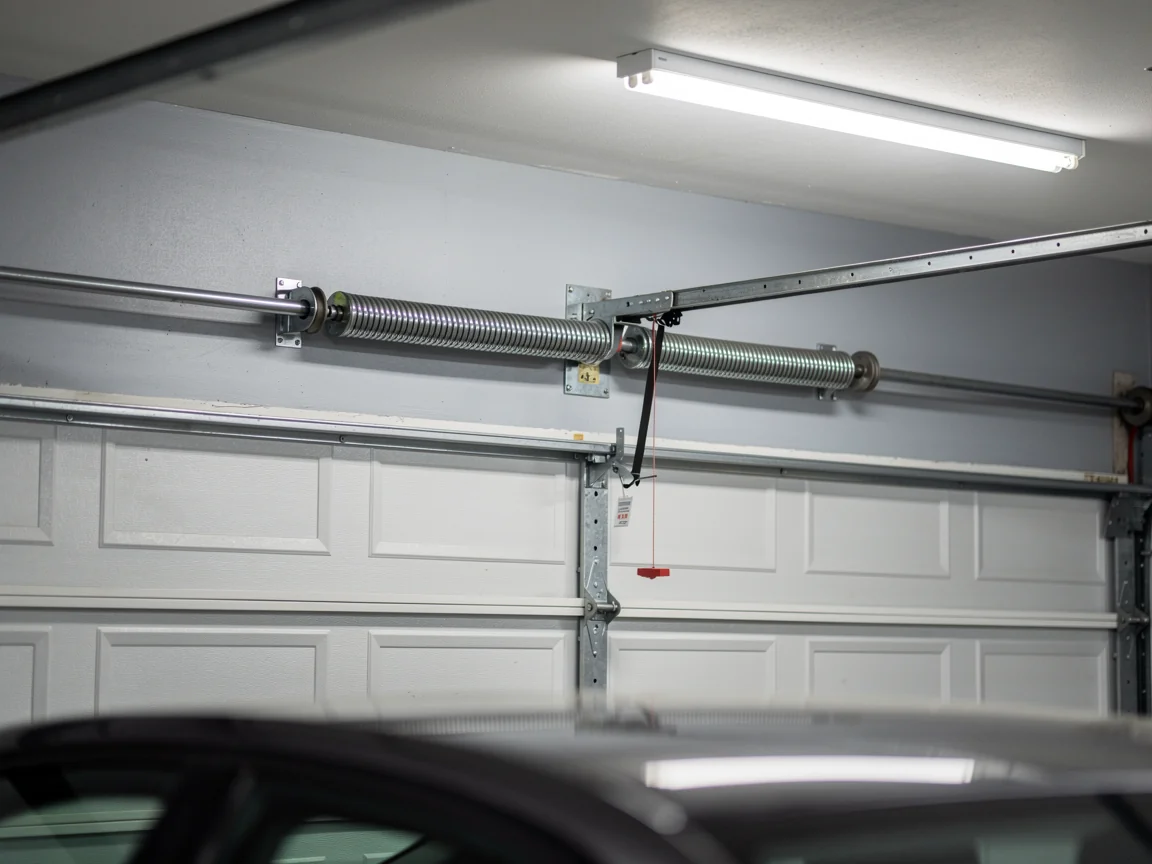
That's worth knowing up front: we don't keep a branch in Wheaton, and we won't pretend to. What we do bring is a truck stocked for the kind of doors this town actually has - mostly single-door garages on houses built when Wheaton was still filling in during the 1950s and 60s, with steel doors on torsion springs sized for a shorter, heavier panel than what gets installed new today.
Spring size pre-loaded
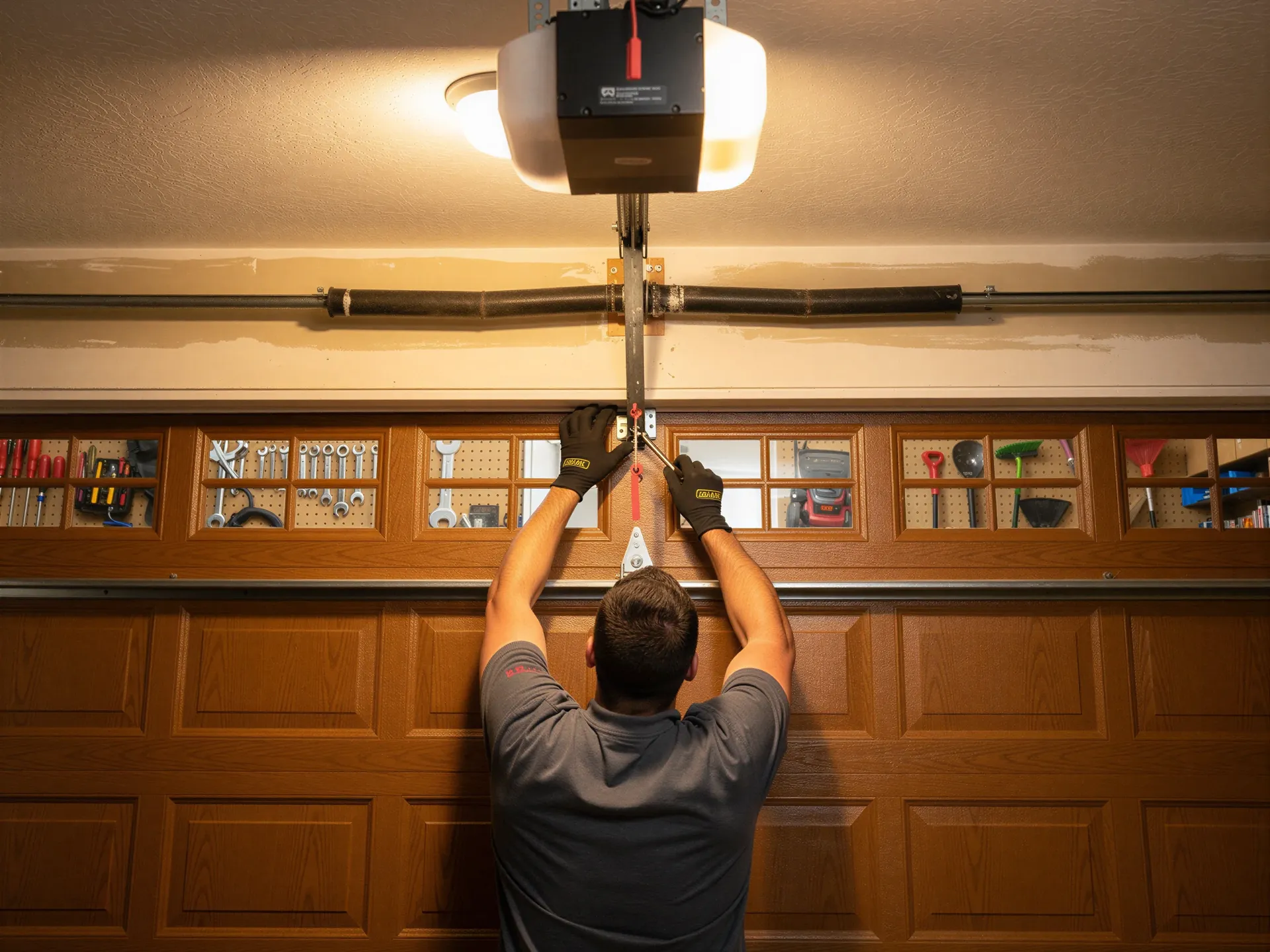
Tell us the door's width and whether it's one spring or two centered on the header, and we'll have the right size spring loaded before we leave Potomac instead of guessing once we're on site.
Winding cone wear
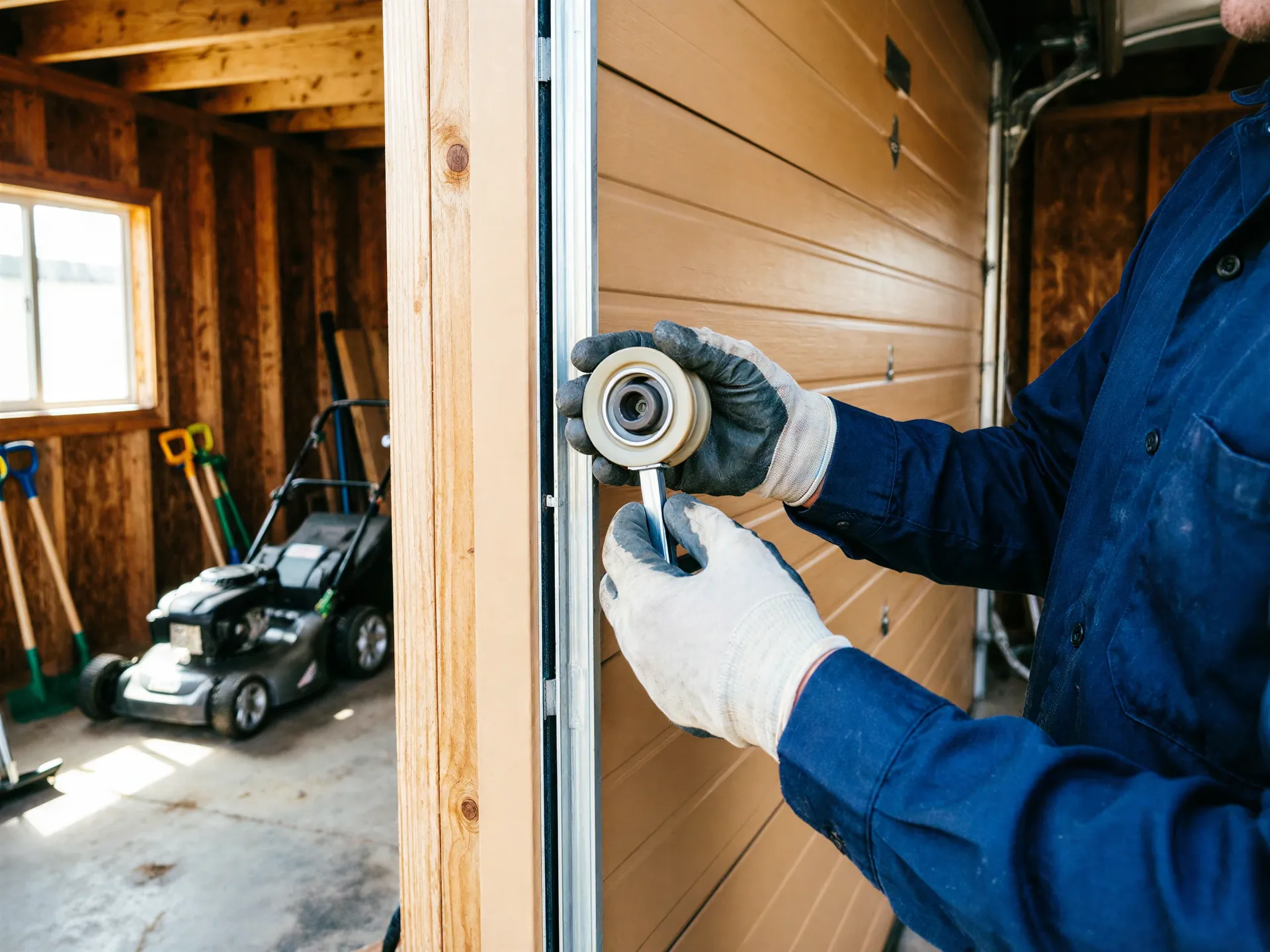
If the spring is original to a 1959-built house, there's a decent chance the winding cone or the center bearing plate is worn past matching parts anyway, so we'll also ask how the door has been sounding lately - grinding, slapping, or just heavy. That tells us whether this is a spring swap or something bigger.
How It Shows Up
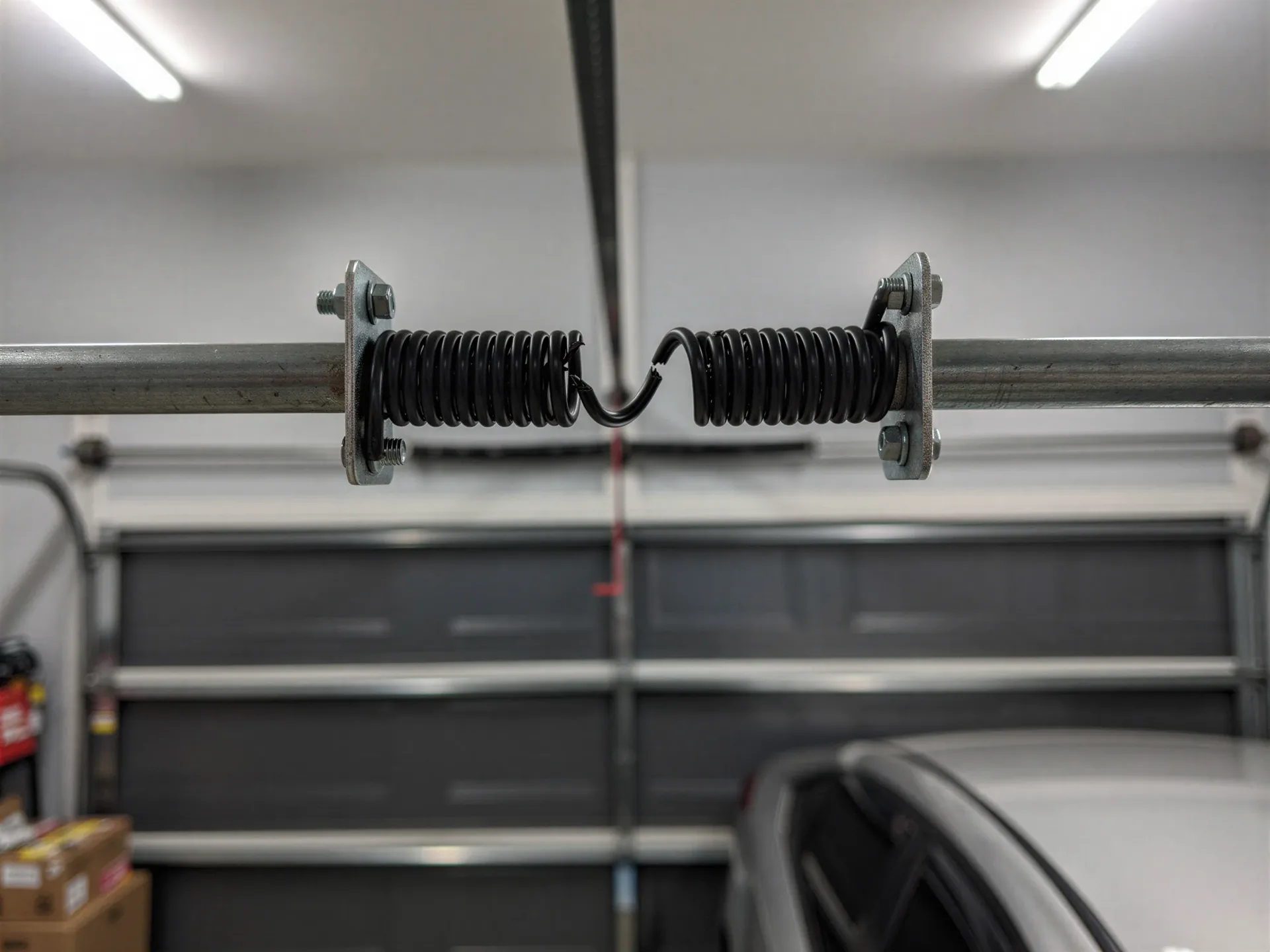
A torsion spring on a door this age usually doesn't snap without warning - it loses tension slowly first, then lets go. You'll notice the door getting heavier to lift by hand weeks before the break, especially on steel doors sized for the narrower garage openings common on Wheaton's older housing stock.
Gunshot-loud spring failure
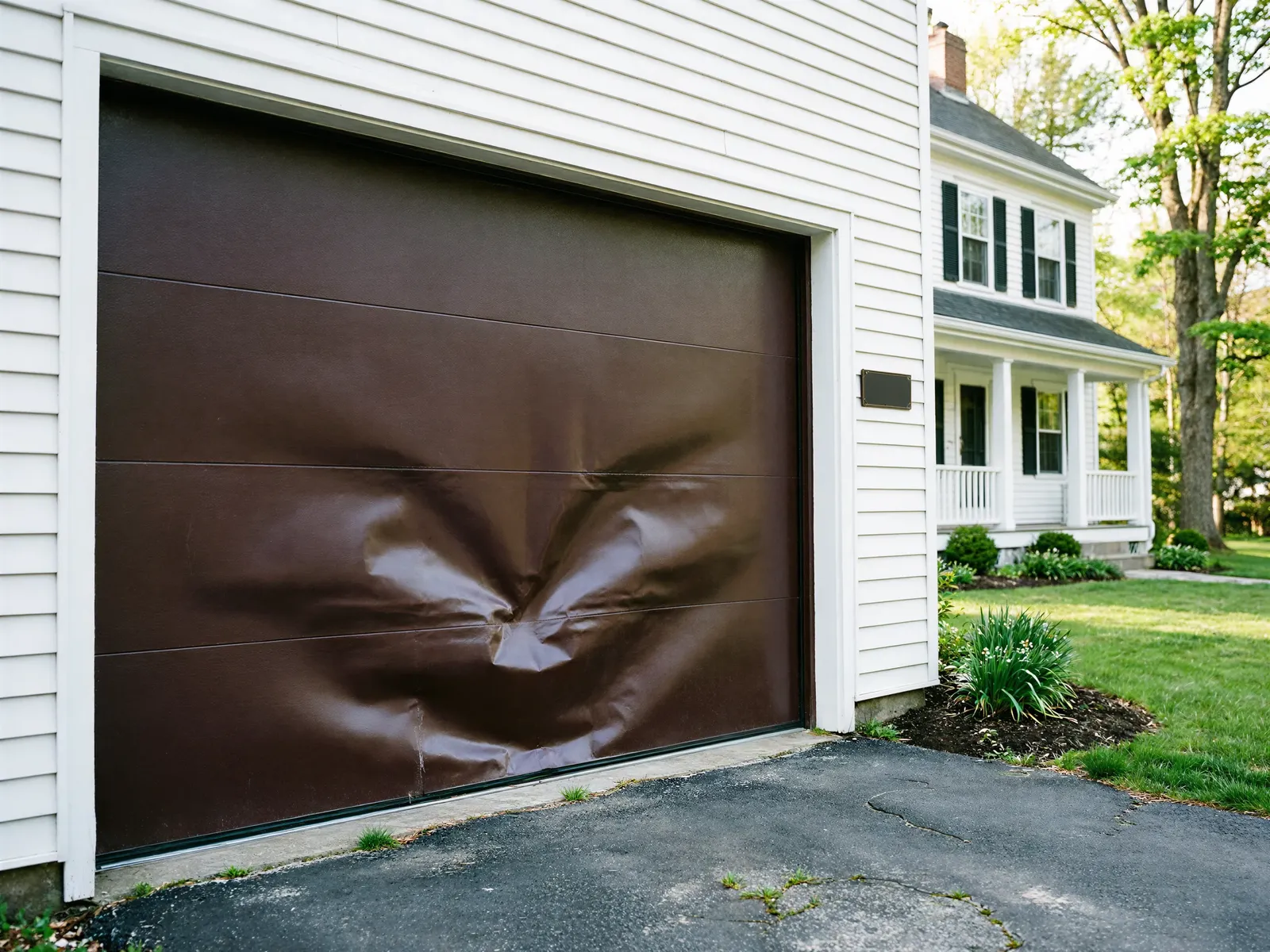
When it finally breaks, the sound is loud, almost like a gunshot inside the garage, and the door won't budge more than a few inches under opener power before the opener strains and stalls.
Lopsided double-spring failure
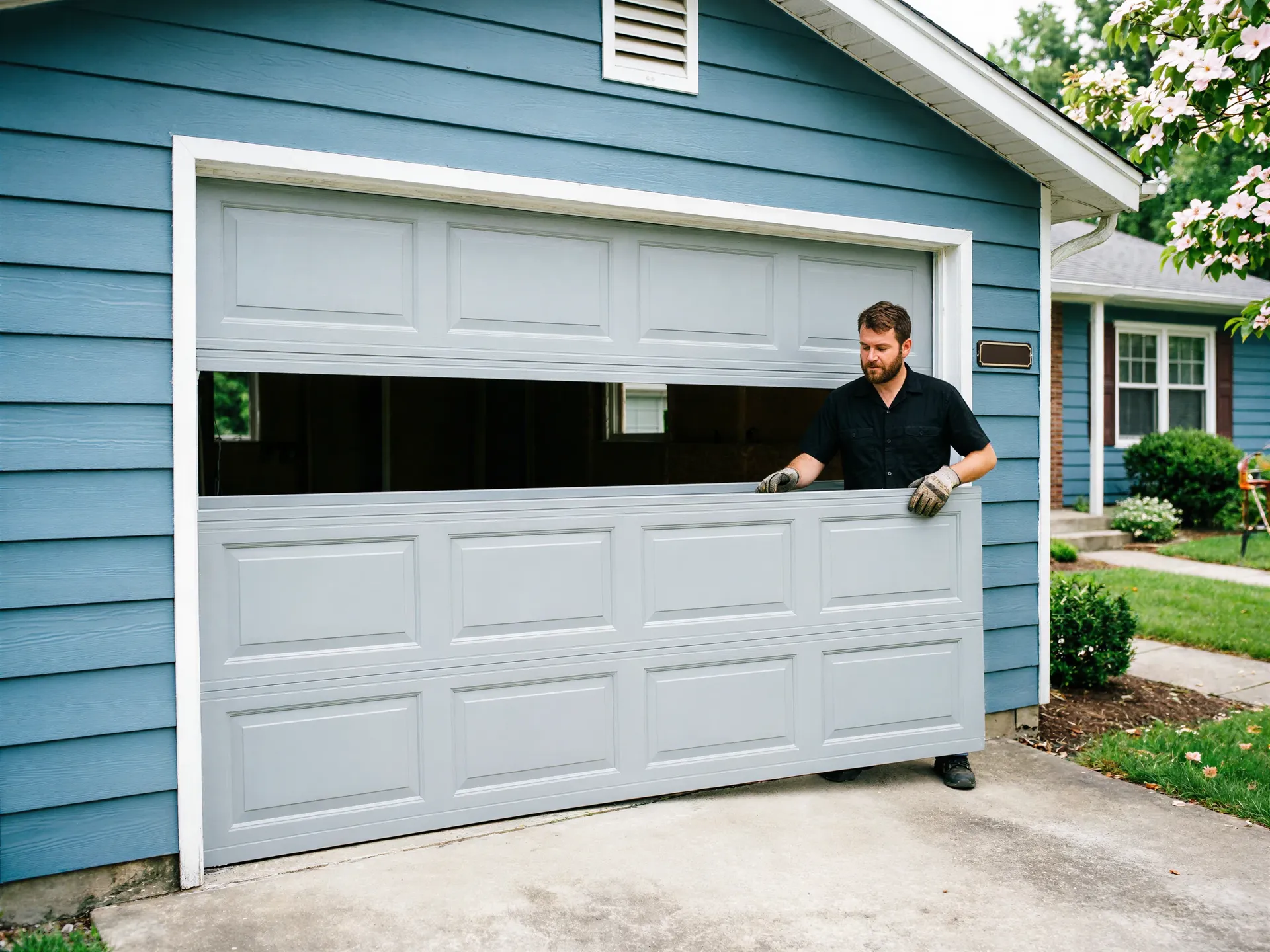
On the double-spring setups found on wider two-car doors, sometimes only one side goes, and the door will look crooked, dropping on the broken side when it runs.
Opener refuses overload
Either way, the opener is not the problem here - it's doing exactly what it's built to do, which is refuse to lift a counterweight it was never meant to carry alone.
How Long You Are Without the Door
Once we're on site, a standard torsion spring replacement on a single door usually runs under two hours, including winding the new spring to the right tension and running the door through a full cycle to check balance. Two-spring jobs on double doors take longer since both get replaced as a set, which is standard practice and keeps one spring from carrying more age and fatigue than the other. The bigger variable for Wheaton isn't the repair itself - it's the drive time baked into scheduling a visit from Potomac, so same-day isn't something we promise here the way a shop based in town could. If the drum, cable, or end bearing plate on a 1959-era door is also worn, which is common at this age, that adds time on top of the spring swap itself.
What Causes It Around Here
Cold winters do real work on spring steel, and Wheaton sits in the same severe-cold climate band as the rest of this part of Maryland, where steel contracts and expands through hard freeze-thaw cycles every year. On a door original or close to original to a house built around 1959, that spring has been through six decades of those cycles, which is well past the design life of the coil regardless of how it looks. We also see more fatigue failures on the narrower single-car doors typical of Wheaton's older blocks than on the wider modern doors, simply because the smaller door openings common here were built with lighter-duty torsion hardware to begin with, and it wasn't sized with sixty years of daily cycling in mind. Here's the honest limit: if the torsion tube itself is rusted or bent, or the drums are cracked, replacing just the spring won't fix the door, and we'll tell you that instead of charging you for a repair that won't hold.
Talk to a local pro
Garage door service in Potomac?
Same-day service with honest, upfront quotes.