What the Repair Takes
Most of Travilah went up around 1989, which puts it on the newer end of the range across this whole service area, where homes date back as far as 1938 and run up through 2014.
Never-swapped original spring
That matters here because a house built in '89 is old enough that its original torsion spring has almost certainly never been swapped - springs are rated for a number of open-close cycles, not years, and a spring installed during the Reagan administration has usually been quietly working past its rated life for a while.
Routine winding procedure
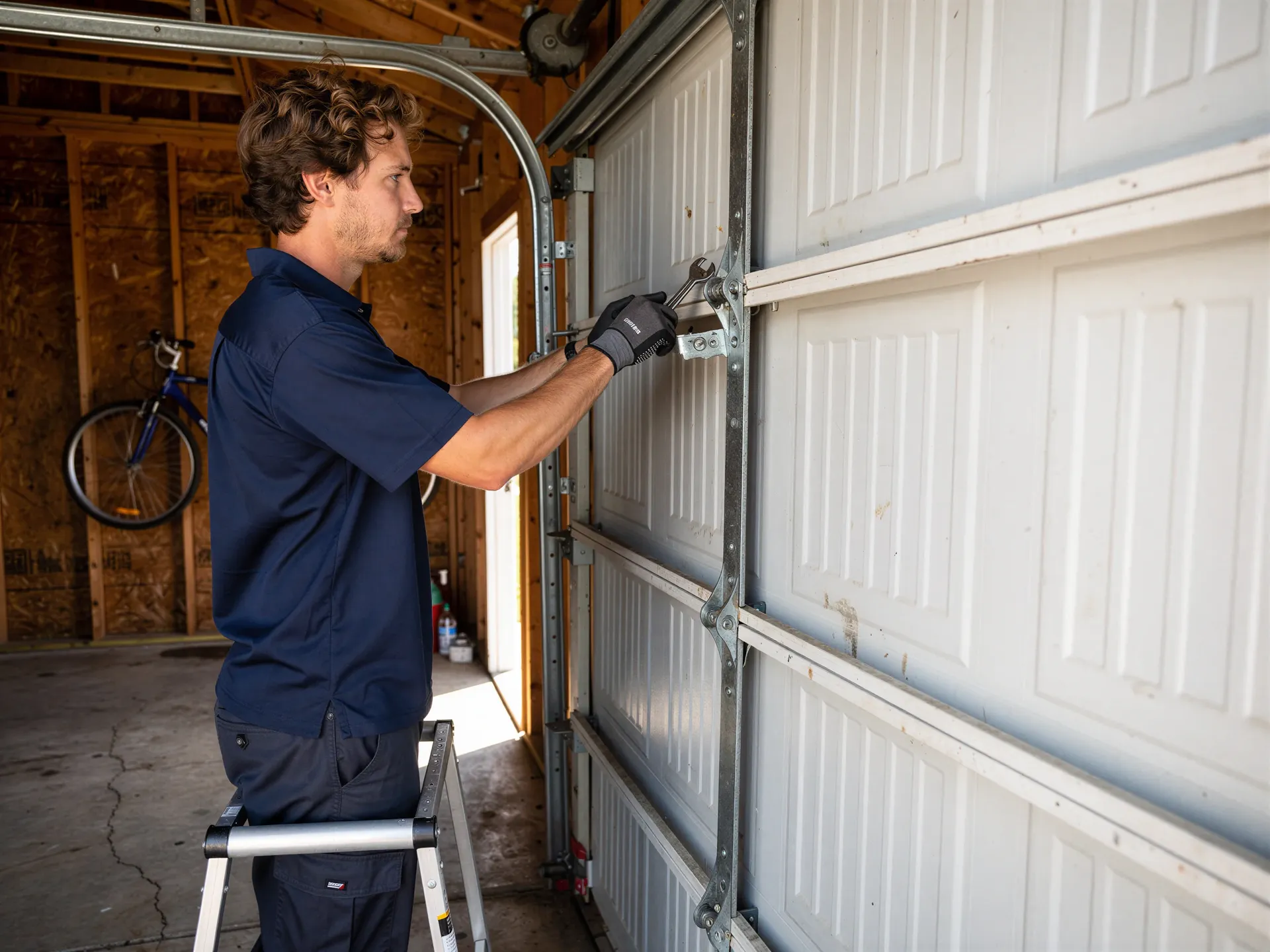
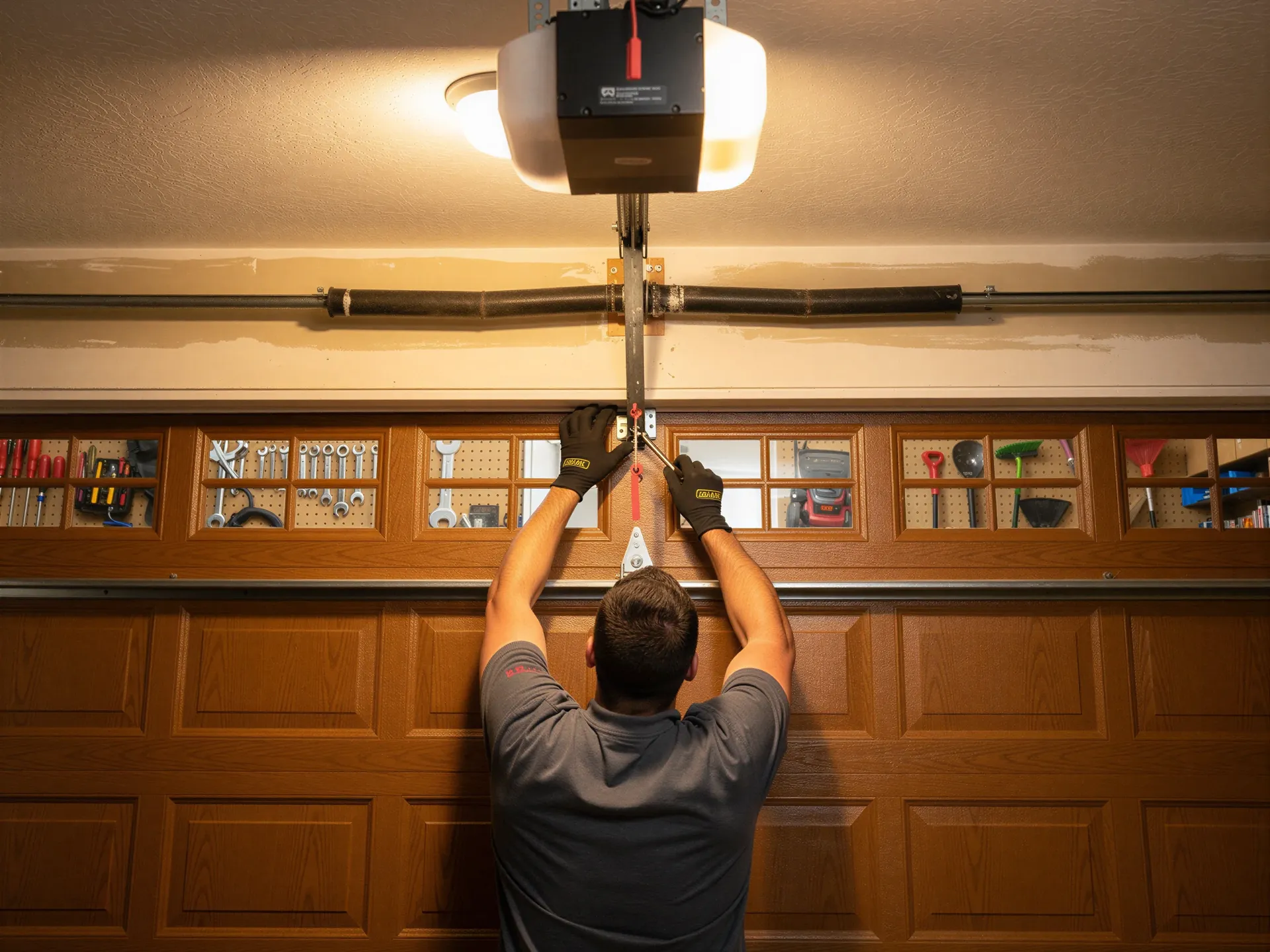
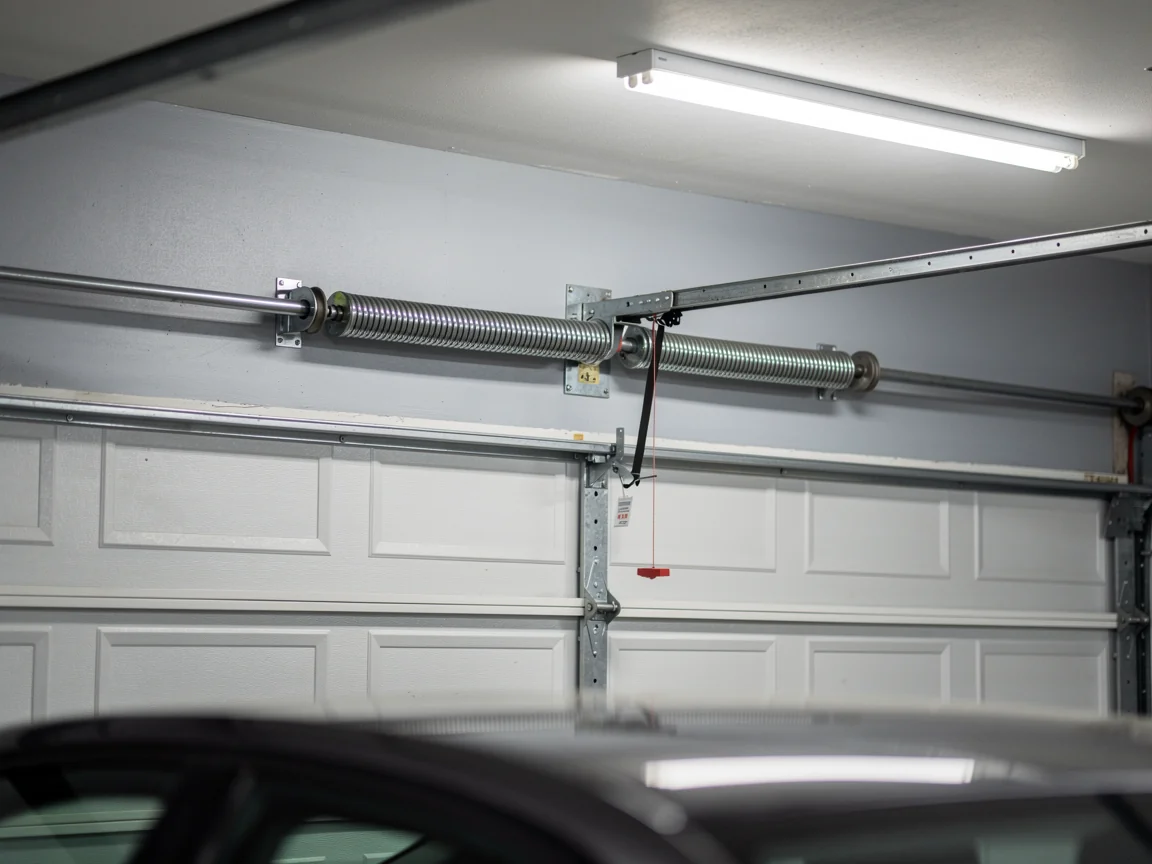
The repair itself is routine: measure wire gauge and wind, pull the old spring off the shaft, wind in the replacement to the right number of turns, check cable drums and bearing plates while the tension is off.
Bearing plates wear together
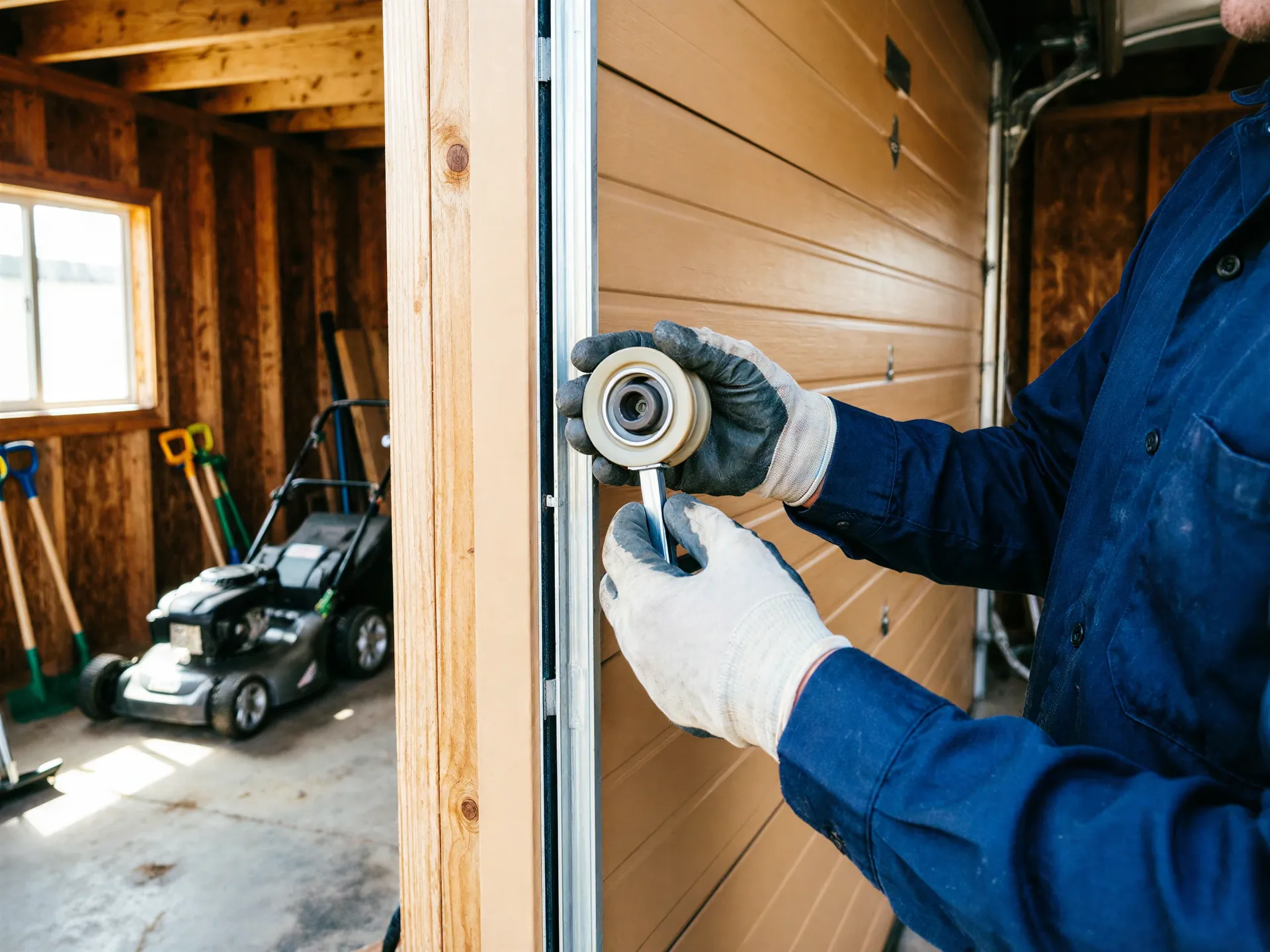
What takes the time in Travilah specifically is that a lot of these doors still have their original end bearing plates and center bracket too, and those parts wear at the same rate as the spring. Replacing just the spring and leaving a worn bearing plate in place is how you end up back out here in eight months. We check the whole shaft assembly, not just the part that broke.
Where This Job Goes Sideways
The service area sits in a cold-severe climate band, and torsion springs lose a measurable amount of lifting power in a hard freeze - steel contracts, tension drops, and a spring that was already near the end of its cycle count is more likely to snap on a cold morning than a mild one. That's a national fact about steel, not a Travilah fact, but paired with housing stock from 1989 it means a specific thing here: original springs are now old enough and have seen enough winters that failure clusters in the coldest stretch of the year. The other way this goes sideways is cost versus value. Travilah's median household income runs well above the service area's $105,966 average, and we see more owners here choose to upgrade the full torsion system - heavier gauge spring, new bearing plates, sometimes a second spring for redundancy - rather than patch the original. That's a reasonable call on a 35-year-old shaft assembly. It's not the only reasonable call, and we'll quote both.
What Is on the Truck
We come out from Potomac, about 4 miles away, stocked for the springs that actually show up on doors this age - standard torsion in the wire gauges common to builder-grade installs from the late '80s and early '90s.
Obsolete parts take longer
What we don't carry is every obsolete bracket or drum from a one-off custom install; if a door's been modified from factory spec at some point, that can mean a short wait on a part instead of a same-visit fix.
Torsion springs and cable
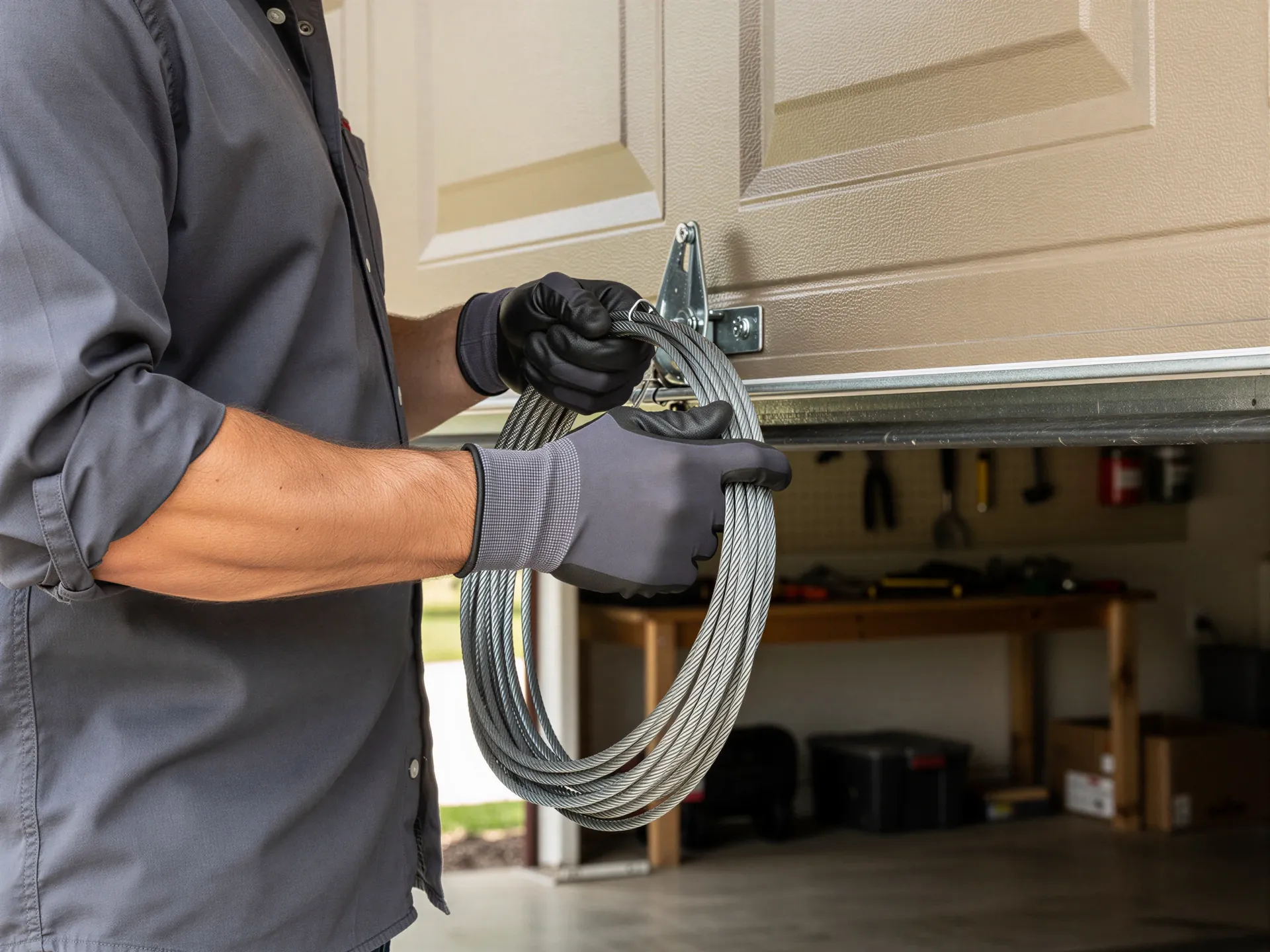
We tell you that on the phone, not after we're already in the driveway with the door apart. Standard torsion, a matching pair when the door needs two, new cable if the old one's frayed from running on a tired spring - that's what's on the truck for most Travilah calls.
How It Shows Up
The door won't move, or it moves and then drops. Sometimes it's a loud bang from the garage - that's the spring letting go, not the opener. Sometimes it's quieter: the door feels heavier than it used to, the opener strains, or it reverses partway up. On a house with original 1989 hardware, a slow decline over a few weeks (heavier door, opener working harder) is actually the better scenario - it gives you time to book a repair before the spring fails completely and the door won't open at all, which usually happens with no warning on the coldest morning of the stretch.
Doing It Yourself
Don't. Torsion springs store enough energy under tension to break a hand or worse if they let go while you're working on them, and the tools to wind one safely - winding bars, a proper ladder setup, a vice grip on the shaft - aren't things most garages have lying around.
Extension spring hazards
If your door has extension springs instead of torsion (less common on 1989-era builds but not unheard of), the risk is lower but still real; a spring under tension that slips off a stretched hook can whip across the garage.
Visual check for separation
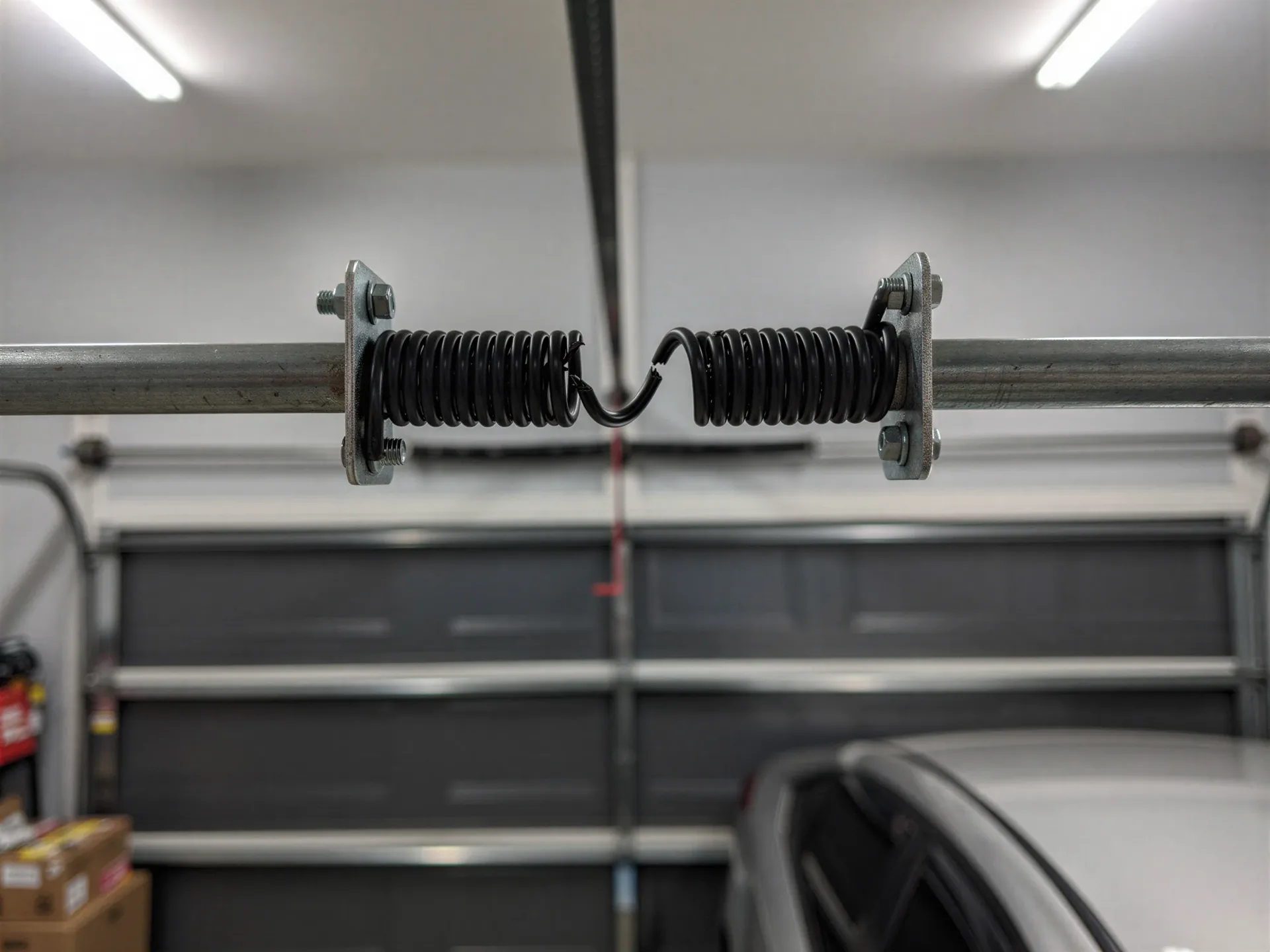
The one thing you can safely check yourself: look at the spring above the door and see if it's separated into two pieces with a gap. If so, that's your answer, and the next step is a call, not a trip to the hardware store.
Booking a Visit
We cover Travilah out of our Potomac location, about 4 miles up the road. On the call, tell us the door's a single or double, torsion or extension if you know, and roughly how old the house is - for most of Travilah that's going to put the hardware at or near original, which changes what we bring on the truck. You can also check our Travilah service area page or look at the full writeup on spring repair from our Potomac page for the general rundown.
Talk to a local pro
Garage door service in Potomac?
Same-day service with honest, upfront quotes.